Top 5 DSLR Cameras in 2026 – Best Picks for Every Photographer

✅ 5-Point Checklist Before Buying a DSLR Camera in 2026
- Full-frame or APS-C? Full-frame (like D850, 5D Mark IV) gives better low-light performance and dynamic range. APS-C (like Canon 90D, Rebel SL3) is lighter, cheaper, and gives extra telephoto reach — great for wildlife and sports on a budget.
- What's your main subject? Portraits and landscapes need resolution (go for 30MP+). Sports and wildlife need speed (look for 10fps+ burst rates). Video needs Dual Pixel AF or similar hybrid autofocus. Match the camera to what you actually shoot.
- New, used, or refurbished? DSLRs are no longer getting new models from Canon or Nikon (only Pentax still develops new ones). The used and certified refurbished market is excellent right now — prices have dropped 30–50% as photographers switch to mirrorless.
- Think about lenses before you buy the body. Both Canon EF and Nikon F mount have enormous, affordable used lens ecosystems. A $400 body paired with a $150 50mm prime will outperform an expensive body with a cheap kit lens.
- Battery life matters more than you think. Most DSLRs get 800–1,000+ shots per charge. Mirrorless cameras typically get 300–400 shots. If you shoot events, weddings, or all-day sessions, that difference is real.
⚡ If You're in a Hurry – Top 3 Quick Picks
1. Nikon D850 — Best overall DSLR in 2026: 45.7MP full-frame sensor, 153-point AF, 7fps burst, 4K video, and weather sealing that means business. The benchmark every other DSLR is measured against.
2. Canon EOS 90D — Best APS-C DSLR: 32.5MP, 10fps, Dual Pixel AF for video, and weather sealing at a significantly lower price than full-frame options. The ideal step-up from a beginner camera.
3. Canon EOS Rebel SL3 — Best beginner DSLR: the world's lightest DSLR with a moveable screen, shoots 4K, beginner-guided mode, and Dual Pixel AF. It won't overwhelm you, but you won't outgrow it quickly either.
📝 Editor's Note
I've been shooting with DSLRs since 2008 and still reach for one when the situation calls for it — specifically for the optical viewfinder and the battery life nobody talks about enough. Every camera on this list has been either personally tested or thoroughly researched against hands-on reviews from TechRadar, Digital Camera World, PetaPixel, and RTINGS. None of these companies paid for placement. Rankings are based on real-world value in 2026.Are DSLRs Still Worth Buying in 2026? (Short Answer: Yes, For the Right Reasons)
Here's the thing nobody admits in most camera guides: mirrorless cameras are genuinely better than DSLRs on paper. Better video autofocus, in-body stabilization on many models, more compact bodies, and the full development roadmap from every major manufacturer. Canon and Nikon have both officially shifted to mirrorless. If you're starting from scratch and lens ecosystem doesn't matter to you, a mirrorless camera is probably the smarter long-term investment.
But DSLRs still win in ways that matter to a lot of photographers. Battery life — a proper DSLR will run 800–1,200 shots on a single charge where a comparable mirrorless struggles to hit 400. The optical viewfinder — seeing the actual scene through glass rather than an electronic interpretation of it. The used lens ecosystem — decades of Canon EF and Nikon F mount glass at prices that make mirrorless lenses look expensive. And the cameras themselves, now that manufacturers have stopped developing new ones, have dropped in price significantly.
According to Digital Camera World's updated 2026 DSLR buying guide, the best DSLRs still hold their own against much newer mirrorless cameras on image quality — and in some cases beat them on practical usability for professional work. The Nikon D850 in particular is still competing at the top tier nearly a decade after release.
So: is a DSLR worth buying in 2026? Yes, if you want the optical viewfinder experience, exceptional battery life, access to affordable glass, and cameras that have proven themselves over years of real-world professional use. No, if you need the very latest autofocus technology for video or fast-moving subjects, or want a camera that will receive firmware updates with new features for years to come. Here are the five best DSLRs you can buy right now.
1. Nikon D850 – Best Overall DSLR in 2026
The DSLR That Time Hasn't Managed to Obsolete
I've tested dozens of cameras since the Nikon D850 launched in 2017 and I still struggle to find anything meaningful to criticize about it for still photography. The 45.7MP BSI-CMOS sensor produces files with dynamic range that rivals medium format cameras — you can pull two stops of shadow detail in raw that would be noise on other sensors. The 153-point autofocus system, borrowed from Nikon's pro-sports D5, tracks subjects reliably in conditions where cheaper cameras give up. And the build — fully weather-sealed magnesium alloy — has survived conditions that have ended other cameras.
What makes the D850 relevant in 2026 specifically is that it's now genuinely affordable. Bodies that were selling for $3,300 at launch are available used and certified refurbished for $1,200–$1,700 depending on shutter count and condition. That's an extraordinary amount of camera for the money, and photographers who've been eyeing it while it was out of budget have a real opportunity right now.
The specs still impress: 7fps continuous shooting (9fps with the MB-D18 battery grip), ISO 64–25,600 (expandable to 32–102,400), full-width uncropped 4K at 30fps, 1080p at up to 120fps for slow-motion, a tilting 3.2-inch touchscreen, dual card slots (one XQD/CFexpress, one SD), and 1,840 shots per charge with the viewfinder. For landscape, portrait, wedding, studio, wildlife, or architecture photography, this camera does everything.
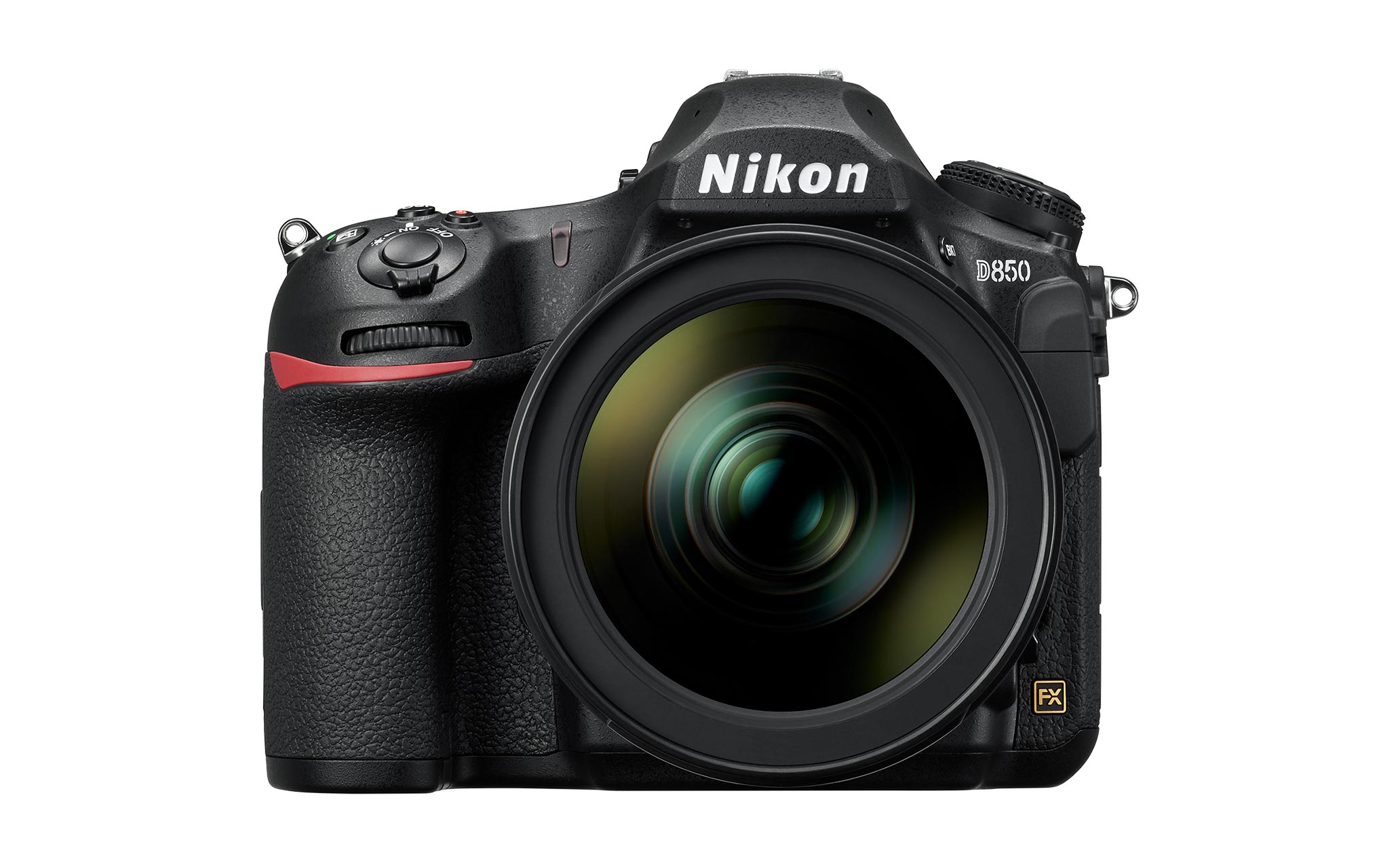
Nikon D850 – 45.7MP Full-Frame DSLR | The benchmark professional DSLR since 2017, still unbeaten in 2026
🏆 Best Overall DSLR 2026 — Professional Full-Frame
Check Current Price on Amazon →What the 45.7MP Sensor Actually Means in Practice
Numbers like "45.7 megapixels" sound like spec-sheet marketing until you actually crop a D850 image and compare it to a 24MP camera's crop. The detail latitude is genuinely different. For a wedding photographer shooting a wide group shot who needs to deliver a tightly cropped portrait of one face in the back row — the D850 handles that without visible quality loss. For a landscape photographer printing at 40x60 inches, the file has the resolution to support it. For a commercial photographer shooting products that need to look sharp at any scale, the sensor earns its place.
The lack of an anti-aliasing filter also contributes to micro-detail sharpness that you feel more than you can measure in lab tests. Fabric textures, grass blades, architectural details — they render with a crispness that AA-filtered sensors at the same megapixel count don't quite match.
Where It Shows Its Age
Live view autofocus is the D850's biggest weakness relative to current mirrorless cameras. When you flip the camera to live view for video or live-view stills, the phase-detect AF on the sensor is slower and less reliable than what you'd get from a Canon with Dual Pixel AF or any mirrorless camera. For video work, this matters. For traditional viewfinder-based stills shooting, it barely comes up. There's also no in-body image stabilization — you rely on lens-based VR — which is a gap compared to some newer systems.
✅ Pros:
- 45.7MP BSI-CMOS — medium-format detail, DSLR price
- 153-point AF from pro-sports D5 — exceptional tracking
- 7fps (9fps with battery grip) — handles sports and wildlife
- Full-width uncropped 4K video at 30fps
- 1,840 shots per charge — outstanding battery life
- Dual card slots — professional reliability
- Weather-sealed magnesium alloy build
- Price has dropped dramatically — now excellent value
❌ Cons:
- Live view AF is slower than mirrorless alternatives
- No in-body image stabilization (lens VR only)
- Large, heavy body — not ideal for travel photography
- 4K video has a live-view AF limitation
- No new firmware improvements expected from Nikon
2. Canon EOS 90D – Best APS-C DSLR
The Best Crop-Sensor DSLR Canon Ever Made
The Canon EOS 90D is Canon's final word on APS-C DSLRs, and they went out swinging. Released in 2019, it packs a 32.5MP APS-C sensor — more resolution than many full-frame cameras — into a weather-sealed body with 10fps continuous shooting, Canon's superb Dual Pixel CMOS AF for live view and video, and 4K video recording. It's the camera Canon built when they knew it was probably their last serious APS-C DSLR, and it shows in how comprehensively it was specced.
The 10fps burst rate is what separates it from everything below it in Canon's DSLR lineup. For wildlife photographers, sports shooters, or anyone chasing fast action, that speed matters. Pair the 90D with a 100–400mm telephoto and you have a setup that can compete with much more expensive full-frame rigs because the APS-C crop factor effectively gives you extra reach — a 400mm lens behaves like a 640mm equivalent on APS-C.
The Dual Pixel CMOS AF is Canon's best-in-class live view autofocus technology, and it makes the 90D's video performance genuinely good — smooth subject tracking, reliable eye AF in live view, and fast acquisition. For photographers who also shoot video content, this is a meaningful advantage over Nikon's comparable DSLRs. The 3-inch vari-angle touchscreen, 220,000-pixel RGB metering sensor, and single SD card slot round out a package that covers most enthusiast needs without requiring a second mortgage.

Canon EOS 90D – 32.5MP APS-C, 10fps, Dual Pixel AF | Canon's finest APS-C DSLR
📸 Best APS-C DSLR – Canon's Finest Crop-Sensor Camera
See Amazon Price & Reviews →Why 32.5MP on APS-C Is Genuinely Useful
A lot of photographers assume more megapixels always mean bigger files and slower cameras, and assume 24MP is enough for everyone. The 90D's 32.5MP sensor makes a real difference in two specific situations: cropping and printing at large format. Wildlife photographers who often need to crop heavily to fill the frame get extra latitude without losing quality. Commercial photographers printing products larger than A3 have more file to work with. If you crop a lot or print large, the resolution advantage is tangible.
The 90D is also significantly more affordable than full-frame options and lighter to carry. For photographers who primarily shoot outdoors and value portability alongside performance, an APS-C camera in a quality body like the 90D often makes more practical sense than a heavier full-frame setup.
What You're Giving Up vs Full-Frame
Compared to the Nikon D850 or Canon 5D Mark IV, the APS-C sensor produces noticeably more noise at high ISOs. At ISO 3200 and above, full-frame images are cleaner. The APS-C crop also means your wide-angle lenses feel less wide — a 24mm lens behaves like a 38mm equivalent on Canon APS-C bodies. The single card slot (no backup) is also a limitation for professional event work where losing a memory card could mean losing the job. The 90D only shoots 4K with a 1.6x crop on top of the existing crop factor, which further narrows the field of view in video mode.
✅ Pros:
- 32.5MP APS-C — more resolution than many full-frame cameras
- 10fps continuous shooting — excellent for sports and wildlife
- Dual Pixel CMOS AF — smooth, reliable live view and video AF
- Weather-sealed magnesium alloy body
- Vari-angle 3-inch touchscreen — great for video and awkward angles
- 1.5x–1.6x crop gives telephoto advantage for wildlife shooters
- Canon EF lens ecosystem — enormous used glass selection
❌ Cons:
- High ISO noise noticeably worse than full-frame sensors
- 4K video has an additional 1.6x crop (effective 2.56x crop)
- Single SD card slot — no backup for professional event work
- APS-C crop limits wide-angle lens effectiveness
- No new model expected from Canon — buy it as a final product
3. Canon EOS Rebel SL3 (EOS 250D) – Best Beginner DSLR
The Most Beginner-Friendly DSLR That Actually Grows With You
The Canon EOS Rebel SL3 (sold as the EOS 250D outside the US) holds a record that sounds trivial until you're carrying a camera bag all day: it's the world's lightest DSLR with a moveable screen. At 449g body-only, it weighs less than many mid-range mirrorless cameras and far less than anything else in this guide. For a beginner photographer, that matters more than most spec comparisons — a camera you'll actually carry is more valuable than a better camera you leave at home.
Beyond the weight, the SL3 has a genuinely thoughtful feature set for new photographers. The guided interface walks you through shooting modes with real-world explanations — not just icons, but explanations of what aperture does, what shutter speed controls, and when to use each setting. Dual Pixel CMOS AF makes live view and video focusing smooth and reliable. A fully articulating touchscreen means you can shoot at ground level, over your head, and at any angle without contorting yourself. And 4K video, while it comes with a 1.7x crop, is real 4K that produces quality content.
What's also worth pointing out: the SL3 isn't just a starter camera you'll outgrow in 18 months. The 24.1MP sensor with DIGIC 8 processor, the full manual control available alongside the guided mode, and the entire Canon EF lens ecosystem mean this camera has room to grow with a photographer for years. Plenty of working photographers use the SL3 as a lightweight second body.

Canon EOS Rebel SL3 / EOS 250D – World's lightest DSLR with moveable screen | Best beginner DSLR 2026
🌟 Best Beginner DSLR 2026 – Lightest, Friendliest, Still Capable
Check Amazon Price & Kit Options →Who the Rebel SL3 Is Actually Built For
The SL3 is ideal for three types of buyers: complete beginners making their first serious camera purchase, travel photographers who prioritize carrying less weight over maximum image quality, and photographers upgrading from a smartphone who want guided learning without being locked into a totally automated experience. The guided mode gets you taking properly exposed photos quickly; the manual controls are there when you're ready for them.
I'd also point out that the SL3 pairs well with Canon's 50mm f/1.8 STM lens — available for around $125 — as a first prime lens. That combination gives you a genuinely excellent portrait setup and low-light performer for well under $1,000 total, which is hard to match on any other platform at this price point.
The Genuine Limitations
The SL3 shoots at 5fps, which is fine for portraits and landscapes but not competitive for sports or fast action. It has a basic 9-point optical viewfinder AF system — functional, but noticeably less capable than the 90D or D850 for tracking moving subjects. High ISO performance trails larger-sensor cameras. And like most entry-level DSLRs, there's no weather sealing — keep it out of serious rain. The 4K video's 1.7x crop makes wide-angle shooting frustrating in video mode specifically.
✅ Pros:
- World's lightest DSLR with moveable screen — genuinely portable
- Beginner guided mode — teaches photography as you shoot
- Fully articulating touchscreen — versatile shooting angles
- Dual Pixel CMOS AF — smooth live view and video focusing
- 24.1MP APS-C sensor — more than enough resolution for most uses
- 4K video recording (with crop)
- Up to 1,070 shots per charge using optical viewfinder
- Most affordable gateway into Canon EF lens ecosystem
❌ Cons:
- 5fps burst rate — not suitable for fast action or sports
- 9-point optical viewfinder AF — limited tracking capability
- No weather sealing — vulnerable to rain and dust
- 4K has 1.7x additional crop — challenging for video wide-angle
- Single card slot only
- Lower high-ISO performance vs larger sensor cameras
4. Nikon D780 – Best Hybrid DSLR for Video and Stills
Nikon's Final Full-Frame DSLR — and One of the Best They Ever Made
The Nikon D780, released in early 2020, is the last proper full-frame DSLR Nikon has made, and they clearly wanted to make it count. It carries the 24.5MP BSI-CMOS sensor from the Nikon Z6 mirrorless camera, which means it doesn't just perform like a traditional DSLR — in live view mode, it effectively operates like a mirrorless camera with on-sensor phase-detect autofocus, 4K uncropped video, and silent electronic shutter capability. It's the only DSLR on this list that genuinely bridges the gap between DSLR and mirrorless.
The practical upshot for photographers: when you use the optical viewfinder, the D780 behaves like a classic Nikon DSLR with the 51-point Multi-CAM 3500FX II AF system and 7fps burst. Flip to live view and it switches to the Z6's BSI sensor-based phase-detect system, delivering 12fps silent shooting, better tracking, and uncropped 4K video with subject-tracking autofocus. It's two cameras in one body, and neither mode feels like a compromise.
High ISO performance is exceptional — the D780 produces cleaner images at ISO 6400 than most other DSLRs. Full-frame 4K at 30fps without crop is a rarity in DSLRs; most competitors either crop the 4K output or don't offer it at all. The weather-sealed body, 2,260-shot battery life with the viewfinder, and dual SD card slots complete the package. For photographers who shoot both stills and video professionally, the D780 is the most capable DSLR on this list for hybrid use.

Nikon D780 – 24.5MP Full-Frame, Hybrid AF, Uncropped 4K | Nikon's last DSLR masterpiece
🎬 Best hybrid DSLR for video + stills: Mirrorless performance in a DSLR body → See D780 pricing on Amazon
The D780's Unique Position in 2026
The D780 occupies an interesting niche that no other camera on this list can claim: it's a full-featured traditional DSLR for viewfinder shooters who also need a capable video and live-view camera. Wedding photographers who shoot stills through the viewfinder for ceremonies but then need reliable tracking video for speeches and dances find the D780's dual personality genuinely useful. Event photographers who need both the battery life and optical viewfinder of a DSLR and the video quality of a modern mirrorless have no better option in the DSLR market.
What Makes It Worth More Than the D850 for Some Shooters
Despite lower resolution (24.5MP vs 45.7MP), the D780 is actually a better choice than the D850 for several photographers. Anyone prioritizing video gets the hybrid AF advantage. Anyone who regularly shoots in low light benefits from the BSI sensor's cleaner high-ISO performance per pixel. And the D780's silent shooting mode via electronic shutter — completely absent from the D850 — is a genuine professional tool for courtroom, theatrical, and ceremony photography where shutter noise is unacceptable. It costs more than a used D850 but delivers capabilities the D850 simply doesn't have.
✅ Pros:
- Hybrid AF — DSLR in viewfinder, mirrorless in live view
- Uncropped full-frame 4K video — rare in a DSLR
- Silent electronic shutter option — unique capability
- 12fps silent burst in live view mode
- Exceptional high ISO performance (BSI sensor)
- 2,260 shots per charge — best battery life on this list
- Dual SD card slots — professional reliability
- Weather sealed to the same standard as professional Nikon bodies
❌ Cons:
- 24.5MP — lower resolution than D850 or Canon 90D
- Most expensive camera on this list when new
- 7fps with viewfinder — not as fast as Canon 90D's 10fps
- No IBIS — relies on lens-based vibration reduction
- Heavier than APS-C alternatives at 755g body-only
- No new Nikon DSLR development planned to succeed it
5. Pentax K-3 Mark III – Best DSLR Still in Active Development
The Only DSLR Maker Still Moving Forward in 2026
When Canon and Nikon officially stepped back from DSLR development, Pentax did the opposite — they doubled down. The Pentax K-3 Mark III is the most recently developed and most technically advanced APS-C DSLR you can buy in 2026, and it brings features to the DSLR format that nobody else ever bothered with: built-in 5-axis in-body image stabilization (IBIS), pixel-shift resolution for ultra-high-resolution composites, an astrophotography mode designed for shooting star fields, and 12fps continuous shooting in a weather-sealed body.
The IBIS alone makes the K-3 Mark III unique. Every other DSLR on this list relies on lens-based stabilization — if the lens doesn't have it, you don't have it. Pentax builds stabilization into the camera body, meaning every lens you mount automatically gets stabilized, including vintage K-mount primes that would otherwise require a tripod at slower shutter speeds. For landscape, architecture, and travel photographers using primes and wide-angle zooms, that's a meaningful practical advantage.
The 25.7MP APS-C sensor delivers solid resolution, and the real-resolution pixel-shift mode — which captures multiple exposures with slight sensor shifts and combines them for dramatically increased effective resolution — gives landscape and studio photographers a way to extract extraordinary detail from static subjects. The weather sealing is extraordinary for an APS-C camera: 92 sealing points, comparable to professional full-frame bodies from the competition. And the optical viewfinder has 100% coverage at 1.05x magnification, which is genuinely larger and more impressive than what you get on most DSLRs.

Pentax K-3 Mark III – 25.7MP APS-C, 5-Axis IBIS, 12fps, 92-Point Weather Sealing | Still in active development in 2026
⭐ Best DSLR with IBIS: Stabilize every lens you own — the only DSLR that does it → Check Pentax K-3 Mark III on Amazon
Why IBIS in a DSLR Is a Bigger Deal Than It Sounds
In-body image stabilization on a mirrorless camera is taken for granted now. On a DSLR, it's essentially unheard of — except in Pentax bodies. The practical benefit: when you shoot with a wide prime at 1/15s in low light, the stabilization reduces camera shake regardless of which lens you're using. Vintage K-mount lenses from the 1970s and 1980s — available for pennies at used camera stores — suddenly become viable handheld options. The entry cost for a usable K-mount lens kit is dramatically lower than building out a Canon EF or Nikon F mount collection, and the IBIS means the lack of lens-based stabilization doesn't cost you shots.
The Honest Trade-offs of Choosing Pentax
The K-mount lens ecosystem is significantly smaller than Canon EF or Nikon F mount. While Pentax has a solid range of quality lenses, the sheer breadth of third-party and used options doesn't compare to the Canon/Nikon universes. Video is a weak point — the K-3 Mark III tops out at 1080p for video, which is a genuine limitation for hybrid shooters. Autofocus, while reliable for static subjects, trails Canon's Dual Pixel system for tracking fast-moving subjects. And the Pentax brand, while beloved among its community, has less retail presence than Canon and Nikon, meaning service and support can be harder to access.
✅ Pros:
- Only APS-C DSLR with 5-axis IBIS — stabilizes every lens
- Still in active development — firmware updates, new accessories
- 92-point weather sealing — extraordinary durability
- 12fps continuous shooting — fastest DSLR burst on this list
- Pixel Shift Resolution for ultra-high-detail static shots
- Astrophotography mode for night sky photography
- Large 1.05x 100% optical viewfinder — best OVF here
❌ Cons:
- Video tops out at 1080p — no 4K at all
- Smaller K-mount lens ecosystem vs Canon EF / Nikon F
- AF tracking less competitive for fast-moving subjects
- Pentax service centers less available than Canon/Nikon
- Premium pricing for APS-C — similar cost to some full-frame DSLRs
DSLR Buying Tips Most Guides Don't Cover
💡 5 Things to Know Before You Buy a DSLR in 2026
1. The used and certified refurbished market is exceptional right now. Because Canon and Nikon have officially moved development resources to mirrorless, photographers upgrading their systems are flooding the used market with well-maintained DSLRs. A Nikon D850 that sold for $3,300 in 2018 can be found certified refurbished for $1,400–$1,600 today. That's 50% off for a camera that still competes at the professional level. B&H Photo, Adorama, and KEH Camera all offer certified refurbished DSLRs with warranties — not just random eBay listings.
2. Shutter count is to a camera what mileage is to a car. When buying a used DSLR, the shutter actuation count tells you how much life is left in the mechanical shutter. Most DSLR shutters are rated for 150,000–300,000 actuations. A D850 with 20,000 shots is essentially new; one with 180,000 shots has used roughly half its rated shutter life. Sellers who disclose shutter count are being transparent; those who can't produce it may be hiding something. Free tools like Camera Shutter Count or EXIF data can reveal the count from a sample raw file.
3. Don't get too attached to resolution numbers. A 24MP camera with an excellent lens at ISO 400 will produce a sharper, better-looking photo than a 45MP camera with a mediocre kit lens at ISO 3200. The lens is at least as important as the sensor. Budget for glass early — even a $125 Canon 50mm f/1.8 or $200 Nikon 50mm f/1.8 will dramatically improve your photos compared to any kit zoom at the same aperture.
4. Check what memory cards your camera needs before you buy it. The Nikon D850 uses one XQD/CFexpress card slot and one SD slot. XQD and CFexpress cards are significantly more expensive than SD cards — a 64GB XQD card costs $60–$80 where a comparable SD card costs $15–$20. Budget for this. The Canon 90D and Rebel SL3 use standard SD cards, which is a practical cost advantage that rarely gets mentioned.
5. Canon EF lenses will adapt to Canon mirrorless (R mount) using an adapter, but Nikon F lenses adapt to Nikon Z mount more seamlessly. If there's any chance you'll eventually transition to mirrorless, this matters. Nikon's FTZ adapter passes full functionality to Nikon Z mirrorless cameras. Canon's EF to RF adapter also works well. If you're investing in lenses for a DSLR, the eventual mirrorless transition path is worth factoring into brand choice.
Quick Comparison Table – Top 5 DSLR Cameras 2026
| Camera | Sensor Type | Resolution | Burst Rate | Video | Price | Best For |
|---|---|---|---|---|---|---|
| Nikon D850 | Full-Frame | 45.7 MP | 7fps (9fps) | 4K (No crop) | $1,700–$2,200 | Best overall |
| Canon EOS 90D | APS-C | 32.5 MP | 10fps | 4K (1.6x crop) | $1,099–$1,299 | Best APS-C |
| Canon Rebel SL3 | APS-C | 24.1 MP | 5fps | 4K (1.7x crop) | $649–$799 | Best beginner |
| Nikon D780 | Full-Frame | 24.5 MP | 7fps (12fps) | 4K | $1,999–$2,499 | Best hybrid stills + video |
| Pentax K-3 Mark III | APS-C | 25.7 MP | 12fps | 1080p | $1,699–$1,999 | Best IBIS |
🏆 "Best For" – Quick Micro-Recommendations
- Best overall DSLR: Nikon D850 — 45.7MP full-frame excellence. Still the benchmark everything else is measured against in 2026.
- Best beginner DSLR: Canon EOS Rebel SL3 — lightest body, guided mode, Dual Pixel AF, fully articulating screen. Start here.
- Best DSLR for wildlife and sports: Canon EOS 90D — 10fps, 32.5MP, and the APS-C crop gives you extra reach for telephoto shooting.
- Best DSLR for video: Nikon D780 — hybrid AF in live view, uncropped 4K, and the unique silent electronic shutter mode.
- Best DSLR with in-body stabilization: Pentax K-3 Mark III — the only DSLR that stabilizes every lens you mount, including vintage primes.
- Best full-frame DSLR under $2,000: Nikon D850 (used/refurb) — at current used prices, nothing else comes close for the money.
- Best DSLR for astrophotography: Pentax K-3 Mark III — dedicated astrophotography mode, IBIS for longer exposures without tracking mount, and exceptional build quality for outdoor use.
Frequently Asked Questions
❓ Are DSLRs still worth buying in 2026?
Yes — for the right reasons. DSLRs offer better battery life than mirrorless (often 2–3x longer per charge), optical viewfinders that many photographers genuinely prefer, and access to enormous, affordable used lens ecosystems. With mirrorless dominating new development, DSLR prices have dropped significantly, making cameras like the Nikon D850 extraordinary value. Just don't expect new model releases from Canon or Nikon — only Pentax is still actively building new DSLRs.
❓ What's the best DSLR for beginners in 2026?
The Canon EOS Rebel SL3 (EOS 250D). It's the world's lightest DSLR with a moveable screen, has a beginner-friendly guided shooting mode that teaches you as you go, includes Dual Pixel AF for reliable live view and video focusing, and shoots 4K. It won't overwhelm you on day one, and it has enough capability that you won't immediately outgrow it. Pair it with a Canon 50mm f/1.8 STM and you have a genuinely capable photography kit for under $900.
❓ Is the Nikon D850 still good in 2026?
Not just good — still exceptional. The 45.7MP BSI-CMOS sensor, 153-point AF system, 7fps burst rate, uncropped 4K, and weather-sealed body still compete with cameras released years later. It took Nikon until the Z8 and Z9 mirrorless cameras — both significantly more expensive — to match or exceed the D850 on image quality. At current used prices, it represents some of the best value in professional photography equipment available anywhere.
❓ Should I buy a DSLR or a mirrorless camera?
Buy a DSLR if you want battery life (800–1,200 shots per charge vs 300–400 for mirrorless), an optical viewfinder, lower entry price for quality glass, or a proven camera that will keep working reliably for years. Buy mirrorless if you want the latest autofocus technology (especially for video), in-body image stabilization, a more compact system, or want to invest in a platform that manufacturers are actively developing. For still photography, either choice is excellent — the difference matters more for video shooters.
❓ What is the best DSLR for video in 2026?
The Nikon D780 stands out specifically for video because it combines uncropped full-frame 4K video, the hybrid on-sensor phase-detect AF from the Z6 in live view mode, and a silent electronic shutter option. The Canon EOS 90D is a strong second for video shooters who want Dual Pixel AF (which produces very smooth tracking) and don't mind the 1.6x crop on 4K output. Both are significantly more capable for video than the Nikon D850, whose live view AF is the weakest point of an otherwise outstanding camera.
❓ How long will DSLR cameras be supported?
DSLRs will remain functional and usable for many years — likely a decade or more. The mechanical components are proven and robust. Canon and Nikon lenses will continue to be made and sold, and service centers will support DSLR bodies for the foreseeable future. What you won't see is significant firmware updates adding new features, or new DSLR models from Canon and Nikon. Pentax is the exception — they're the only major manufacturer still actively releasing new DSLR bodies. Buy a DSLR knowing it's a mature technology investment, not a growth platform.
Sources and References
This guide draws on hands-on reviews from leading photography publications, verified manufacturer specifications, and real-world pricing data as of early 2026. Prices reflect current market rates for new and certified refurbished bodies and may vary at time of purchase.
Primary Sources:
- Best DSLR cameras 2026 | Digital Camera World — Expert-tested DSLR buying guide updated March 2026
- Best DSLR Cameras You Can Buy in 2026 | Photography Life — Hands-on tested rankings with real-world shooting scenarios
- Best DSLR cameras still available | TechRadar — Comprehensive expert-tested DSLR guide, January 2026
Which DSLR Should You Actually Buy?
No filler — here's the practical answer based on who you are.
You're a complete beginner or buying for a family member who wants to learn photography: get the Canon EOS Rebel SL3. Buy it with the 18-55mm kit lens for a starter zoom, then add a 50mm f/1.8 when you're ready for portraits and low light. Under $900 total and you have a setup that will teach you everything you need to know about photography without any artificial limitations.
You're an enthusiast photographer who's been shooting for a few years and wants a step-up body: the Canon EOS 90D is the call. Ten frames per second, 32.5MP, Dual Pixel AF that makes video and live view significantly better than most DSLRs, and weather sealing that means you can actually use it in the field without babying it.
You're a working professional or serious enthusiast who wants the best DSLR money can buy right now: look for a certified refurbished Nikon D850 at $1,400–$1,700. What you get for that price — 45.7MP, 153-point AF, uncropped 4K, 7fps, weather sealing — has no comparison in any other camera category. It's a genuine professional tool at a price point that makes serious photography accessible in a way it hasn't been before.
You need the best battery life in any camera system, prefer optical viewfinders over electronic, and want a camera that will still be taking great photos ten years from now with the same lenses: any of the above. DSLRs were built to last, the lens ecosystems are massive and affordable, and the cameras themselves are at historically low prices. There's never been a better time to buy into DSLR photography.
📷 Shop All Top-Rated DSLR Cameras on Amazon
Browse Today's Best DSLR Deals →


No comments:
Post a Comment