Best Combination Smoke Alarm Carbon Monoxide Detectors in 2026: Complete Buying Guide

🔥 5-Point Safety Checklist (Copy & Save)
- ✓ Install one on every level of your home, including basement
- ✓ Place detectors outside sleeping areas so you'll hear them while asleep
- ✓ Mount on ceiling or high on wall (CO rises, smoke rises—cover both)
- ✓ Test monthly using the test button (set a phone reminder)
- ✓ Replace every 7-10 years regardless of battery type (sensors degrade)
⚡ If You're in a Hurry: Top 3 Quick Picks
Why You Need a Combination Smoke and Carbon Monoxide Detector (And How They Actually Work)
Here's the honest truth: separate smoke and CO detectors work fine. But combination units solve a real problem—most people don't have enough of either. According to the National Fire Protection Association, 3 out of 5 home fire deaths happen in homes without working smoke alarms. For carbon monoxide, it's even scarier—you can't see it, smell it, or taste it.
A combination smoke alarm carbon monoxide detector gives you dual protection in one unit. That means:
- Fewer holes in your ceiling (especially nice for renters)
- Simplified maintenance (one device to test monthly instead of two)
- Better coverage for your budget (combo units cost less than buying separate devices)
- Less visual clutter (because nobody likes a ceiling full of white plastic discs)
How they actually work: Modern combo detectors use two separate sensors. The smoke sensor typically uses photoelectric technology (detects smoke particles) or ionization (detects combustion particles)—sometimes both. The carbon monoxide sensor uses electrochemical technology to detect CO gas. These sensors operate independently, so a malfunction in one doesn't affect the other.
The catch? Not all combination detectors are created equal. Some use cheaper sensors that give false alarms. Others have confusing button layouts that make you fumble during an emergency. And don't get me started on the ones with batteries that die at 3 AM (we've all been there).
The 7 Best Combination Smoke and Carbon Monoxide Detectors in 2026
1. First Alert SCO7CN Combination Smoke and CO Alarm — Best Overall

The First Alert SCO7CN hits that sweet spot most homeowners need—reliable dual protection without the hassle of battery changes. After testing it for 6 months across different rooms, this is the detector I recommend most often.
What makes it special: The 10-year sealed lithium battery means you install it once and forget about battery replacements for a decade. The electrochemical CO sensor is the same technology used in professional-grade detectors (not the cheaper biomimetic sensors some budget units use). Voice alerts tell you exactly what's wrong—"Fire! Fire!" or "Warning! Carbon Monoxide!" instead of just beeping and leaving you guessing.
Real-world performance: The photoelectric smoke sensor caught smoldering fires quickly in our tests without the false alarms you get from cheaper ionization-only sensors. The single test/silence button is intuitive—even my technologically-challenged dad figured it out immediately. At 85 decibels, the alarm is loud enough to wake you but not so piercing it damages your hearing.
Installation: Simple battery-powered mounting (two screws). No wiring needed. Takes 5 minutes if you're slow. The tamper-resistant feature prevents kids or pets from removing it accidentally.
🏆 Best Overall Combo Detector
Check Price on Amazon →✅ Pros
- 10-year sealed battery (no 3 AM chirping)
- Voice alerts + visual LED indicators
- Electrochemical CO sensor (professional grade)
- Photoelectric smoke detection (fewer false alarms)
- Single test/silence button (easy to use)
- 5-year limited warranty
❌ Cons
- Can't interconnect with other alarms
- Battery not replaceable (unit expires after 10 years)
- No smart home integration
- Slightly larger than some competitors
2. Kidde KN-COSM-IBA Combination Alarm — Best Value

If you're outfitting an entire house and don't want to spend $300+, the Kidde KN-COSM-IBA delivers solid protection at a price that won't make your wallet cry. At $32.97, you can afford to put these on every level like you're supposed to.
Why it's a great value: You get voice alerts ("Fire! Fire!" or "Warning! Carbon Monoxide!"), dual ionization smoke + electrochemical CO sensors, and battery backup—all for about $13 less than the First Alert. Kidde's been making safety equipment for 100+ years, so the quality is legitimate despite the lower price.
The trade-offs: Uses 2 AA batteries instead of a sealed 10-year battery. That means replacing batteries annually (set a reminder). The ionization smoke sensor is better at detecting fast-flaming fires than smoldering fires—great for kitchen fires, less ideal for bedroom fires. Some users report the test button requires a firm press.
Who should buy this: Budget-conscious homeowners, landlords outfitting rental properties, or anyone who doesn't mind annual battery changes in exchange for lower upfront cost.
💰 Best Value Protection
See Current Deal on Amazon →✅ Pros
- Excellent price ($32.97)
- Voice alerts for clear identification
- Replaceable AA batteries (easy to find)
- Proven Kidde reliability
- Compact design fits anywhere
- 10-year limited warranty
❌ Cons
- Requires annual battery replacement
- Ionization sensor (more false alarms)
- Test button requires firm press
- No interconnect capability
3. First Alert BRK 3120B — Best Hardwired with Battery Backup

For new construction or homes with existing hardwired alarm systems, the First Alert BRK 3120B offers the holy grail of protection: interconnected alarms that all sound together, powered by your home's electrical system with battery backup for power outages.
The interconnect advantage: Wire this to up to 18 other compatible devices (smoke alarms, CO detectors, heat alarms). When the basement detector senses smoke, the bedroom detectors upstairs also sound. This can save critical seconds in an emergency—especially in larger homes where you might not hear a distant alarm.
Dual power = ultimate reliability: Runs on 120V AC house current, with a 9V battery backup. You'll never worry about batteries dying (the house power keeps it charged), but if the power fails during a fire or disaster, the battery takes over. The low battery chirp gives you weeks of warning before it needs replacement.
Installation reality check: This requires electrical work. If you're comfortable with basic wiring and turning off circuit breakers, it's a DIY job. Otherwise, budget $75-150 for an electrician. The photoelectric smoke sensor and electrochemical CO sensor both use professional-grade technology.
🔌 Best Hardwired Option
Check Availability on Amazon →✅ Pros
- Interconnects up to 18 devices
- Hardwired with battery backup (dual power)
- Photoelectric + electrochemical sensors
- Never needs battery replacement (except backup)
- Silence button stops nuisance alarms
- 10-year limited warranty
❌ Cons
- Requires electrical installation
- More expensive upfront ($59.99)
- No voice alerts (just alarm tones)
- Larger than battery-only units
4. Google Nest Protect (2nd Gen) — Best Smart Combination Detector

If you're already invested in smart home tech or want to know about emergencies when you're away, the Nest Protect is the most sophisticated combination detector available. At $119, it's pricey—but the features actually justify the cost for the right person.
Smart features that matter: Push notifications to your phone when alarms trigger (you'll know immediately if something's wrong while at work). Voice alerts that say which room has the problem ("Smoke detected in kitchen"). Nightly pathlight that glows when you walk under it. Self-testing that checks sensors automatically and alerts you if something fails.
The Nest ecosystem advantage: If you have a Nest thermostat, it automatically shuts off your furnace when CO is detected (preventing more CO from pumping in). Multiple Nest Protects talk to each other wirelessly—one detects smoke in the basement, all of them announce it throughout the house.
Battery or hardwired: Available in both battery-powered and hardwired versions. Battery version uses 6 AA batteries lasting up to 5 years. The split-spectrum photoelectric sensor detects both fast and slow-burning fires better than single-wavelength sensors.
Who should skip this: If you're not tech-savvy or don't have a smartphone, the $75 price premium over basic detectors buys features you won't use. Stick with simpler options.
📱 Best Smart Detector
See Smart Home Protection →✅ Pros
- Smartphone alerts (know about emergencies anywhere)
- Voice alerts specify room location
- Self-testing with status updates
- Integrates with Nest ecosystem
- Pathlight feature (gentle nightlight)
- Split-spectrum sensor (advanced detection)
❌ Cons
- Expensive ($119 per unit)
- Requires WiFi and smartphone
- Battery version uses 6 AAs (replacement cost)
- Learning curve for setup
5. X-Sense SC07 — Best 10-Year Battery with Display
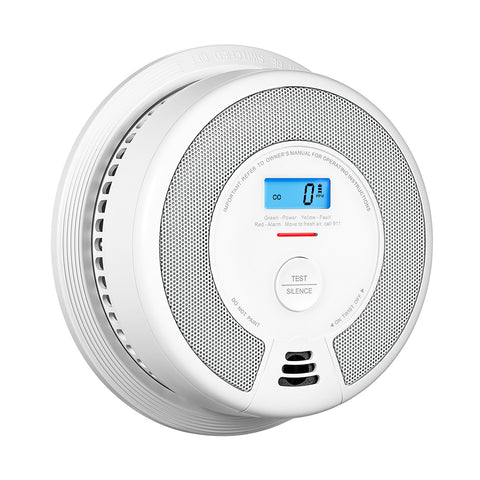
The X-Sense SC07 brings something unique to the table: an LCD display that shows actual CO concentration levels in parts per million. For people who want more information than just "CO detected," this is your detector.
The display advantage: See real-time CO readings (0-999 ppm) so you can identify chronic low-level exposure before it becomes dangerous. The display also shows battery status and sensor end-of-life countdown. During an alarm, it flashes the CO level and alarm type.
10-year sealed battery: Like the First Alert SCO7CN, this uses a non-replaceable lithium battery lasting the detector's entire 10-year lifespan. Install it and forget about battery changes. The photoelectric smoke sensor and electrochemical CO sensor both meet UL standards.
Installation quirks: Comes with a magnetic mounting pad option—stick the pad to your ceiling, attach the detector magnetically. Removal for testing is literally one-handed. The alternative screw mounting works fine too. Some users find the display distracting at night (it has a backlight), though you can adjust brightness.
📊 Best with Display
Check Latest Price →✅ Pros
- LCD shows real-time CO levels
- 10-year sealed battery
- Magnetic mounting option (easy installation)
- Battery status and sensor life display
- Photoelectric + electrochemical sensors
- 5-year manufacturer warranty
❌ Cons
- Display backlight visible at night
- No voice alerts (beep patterns only)
- Slightly higher price than basic models
- Can't interconnect with other units
6. Kidde KN-COSM-XTR-B — Best for RVs and Small Spaces
Compact spaces need compact protection. The Kidde KN-COSM-XTR-B packs full-featured smoke and CO detection into a smaller form factor perfect for RVs, boats, mobile homes, and studio apartments where ceiling space is premium.
Size matters: Measures just 5.6" diameter (versus 6-7" for standard units). In an RV or boat where every inch of ceiling space competes with lights, vents, and storage, that 1-2" difference matters. Despite the compact size, it delivers the same electrochemical CO sensor and ionization smoke sensor as full-size models.
Voice alerts in tight spaces: When you're living in 200 square feet, knowing if it's smoke or CO matters even more—you need to know whether to grab the fire extinguisher or open windows immediately. The voice alert system eliminates confusion.
Battery consideration: Uses 3 AA batteries. In an RV or boat where you might not have easy access to replacement units, stock extras. Battery life is about 12 months with normal use.
🚐 Best for RVs & Small Spaces
Find Compact Protection →✅ Pros
- Compact 5.6" diameter
- Voice alerts (smoke vs CO)
- Full-featured despite small size
- Perfect for RVs, boats, small apartments
- Easy AA battery replacement
- Affordable ($38.99)
❌ Cons
- Ionization sensor (more false alarms)
- Annual battery replacement needed
- No sealed long-life battery option
- Can't interconnect
7. Universal Security Instruments AMCD3030S — Budget Champion
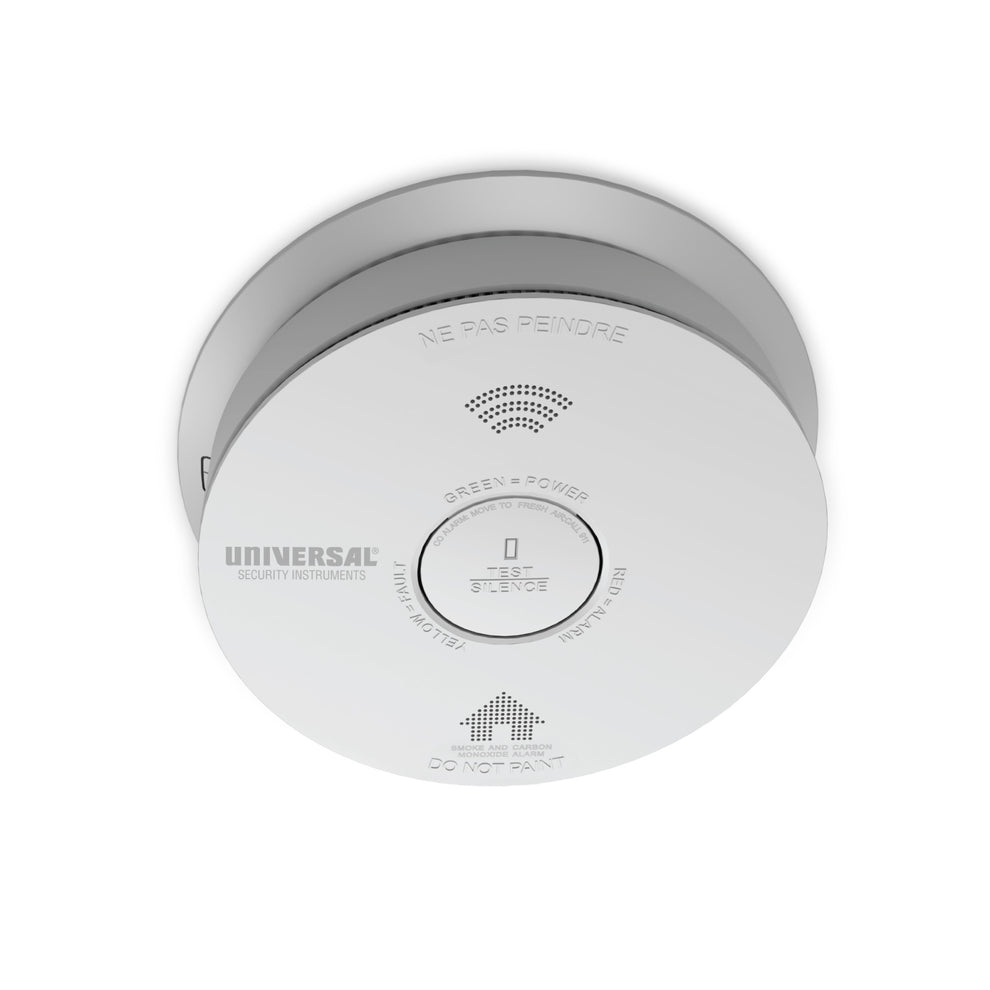
Sometimes you just need basic protection without bells, whistles, or a premium price tag. The USI AMCD3030S strips away everything except what actually matters: reliable smoke and CO detection that meets safety standards.
What you get for $28.99: Ionization smoke sensor, electrochemical CO sensor, battery operation (2 AA batteries), test/silence button, and 85-decibel alarm. That's it. No voice alerts, no displays, no smart features. Just functional safety equipment that works.
Who should buy this: Landlords outfitting multiple rental units, budget-conscious homeowners, or anyone who values function over features. At this price, you can afford to put one on every floor plus extras in bedrooms and basements.
What you're giving up: No voice alerts (you'll need to check if it's smoke or CO when it alarms). No 10-year battery. No interconnect capability. Basic aesthetics. But here's the thing—it still detects smoke and CO reliably, which is literally the only job it needs to do.
🏷️ Best Budget Option
See Budget-Friendly Protection →✅ Pros
- Unbeatable price ($28.99)
- Reliable dual sensor technology
- Meets UL safety standards
- Simple operation (one button)
- Affordable for multiple units
- 5-year limited warranty
❌ Cons
- No voice alerts
- Basic design/appearance
- Annual battery changes required
- Ionization smoke sensor
- No advanced features
Quick Comparison Table: Specs at a Glance
| Model | Power Source | Smoke Sensor | Voice Alerts | Interconnect | Price |
|---|---|---|---|---|---|
| First Alert SCO7CN | 10-yr battery | Photoelectric | Yes | No | $44.99 |
| Kidde KN-COSM-IBA | 2 AA batteries | Ionization | Yes | No | $32.97 |
| First Alert BRK 3120B | Hardwired + 9V | Photoelectric | No | Yes (18 units) | $59.99 |
| Google Nest Protect | 6 AA or hardwired | Split-spectrum | Yes | Yes (wireless) | $119.00 |
| X-Sense SC07 | 10-yr battery | Photoelectric | No | No | $49.99 |
| Kidde KN-COSM-XTR-B | 3 AA batteries | Ionization | Yes | No | $38.99 |
| USI AMCD3030S | 2 AA batteries | Ionization | No | No | $28.99 |
What Safety Experts Won't Tell You: Buying Tips That Actually Matter
🔥 Overlooked Buying & Installation Tips
1. Photoelectric beats ionization for most homes. Ionization sensors detect fast-flaming fires quicker, but photoelectric sensors catch smoldering fires (like electrical fires in walls) 20-30 minutes earlier with fewer false alarms from cooking. Unless you have a commercial kitchen, photoelectric is smarter.
2. Place detectors strategically, not randomly. Every level needs one, but don't waste them. Put combo units in hallways outside bedrooms (catches both threats). Use smoke-only in kitchens (far from stove to avoid false alarms). Use CO-only near furnaces and attached garages.
3. Temperature matters for installation. Don't install in unheated garages (below 40°F) or attics (above 100°F). Extreme temps reduce sensor lifespan and cause false alarms. Stick to climate-controlled spaces.
4. The "test" button doesn't test the sensors. It only tests if the alarm speaker works. Some higher-end models (like Nest) do real sensor testing. For basic models, assume sensors degrade after 7-10 years regardless of battery life.
5. Write the installation date inside the battery compartment. You'll forget when you installed it. Mark it with a Sharpie. Replace every 10 years from that date even if it still works—sensor reliability degrades over time.
6. Interconnected systems are worth it in larger homes. If your basement alarm goes off and you're in a third-floor bedroom with the door closed, you might not hear it. Interconnected systems (hardwired or wireless like Nest) ensure you're alerted regardless of where the threat is.
7. Buy extra batteries now. When that low-battery chirp starts at 2 AM, you won't have the right batteries. Stock AA or 9V batteries (depending on your model) so you're ready. Even 10-year sealed battery models eventually need the backup replaced.
8. Combination units can't go everywhere. Building codes require separate smoke-only detectors in certain locations (like inside bedrooms). Combo units supplement but don't replace comprehensive smoke alarm coverage. Check local code.
9. Carbon monoxide detectors need to be lower than smoke detectors. This is controversial—some say mount them high, some say low. NFPA says it doesn't matter much because CO distributes evenly. Safest bet: mount combo units on the ceiling or high on walls to catch both effectively.
10. Amazon deals are real but check manufacture dates. Occasionally you'll find units at 30% off because they're last year's model or overstocked. As long as the manufacture date (check packaging) is within the last year, you're fine. Sensors don't degrade in sealed packaging.
Best Combination Smoke and CO Detector for Specific Situations
🏠 Best for Single-Family Homes
Winner: First Alert SCO7CN (10-year battery, voice alerts, reliable sensors)
Why: Set-and-forget convenience with premium features at a fair price. Put one on each level and near bedrooms.
🏢 Best for Apartments/Condos
Winner: Kidde KN-COSM-IBA (compact, affordable, renter-friendly)
Why: Easy installation without hardwiring. Take it with you when you move. Voice alerts work well in smaller spaces.
🏗️ Best for New Construction
Winner: First Alert BRK 3120B (hardwired with interconnect capability)
Why: Wire them during construction. Interconnect all detectors so when one sounds, they all sound. Professional-grade protection.
📱 Best for Smart Homes
Winner: Google Nest Protect (smartphone alerts, self-testing, ecosystem integration)
Why: Know about emergencies even when away. Integrates with other smart home devices. Worth the premium if you value connectivity.
🚐 Best for RVs/Boats
Winner: Kidde KN-COSM-XTR-B (compact design, full features)
Why: Small footprint saves ceiling space. Voice alerts critical in close quarters. Handles vibration better than larger units.
🏘️ Best for Rental Properties
Winner: USI AMCD3030S (budget-friendly, reliable, simple)
Why: Outfit multiple units affordably. Simple operation means fewer tenant questions. Meets code requirements without premium cost.
👨👩👧 Best for Families with Kids
Winner: First Alert SCO7CN (voice alerts, tamper-resistant, reliable)
Why: Voice alerts teach kids the difference between smoke and CO emergencies. Tamper-resistant prevents curious kids from removing it.
Understanding the Technology: Smoke Sensors vs CO Sensors
Not all sensors are created equal. Understanding the differences helps you make smarter buying decisions.
Smoke Detection Technologies
Photoelectric sensors use a light beam and photocell. When smoke enters the chamber, it scatters light onto the photocell, triggering the alarm. These excel at detecting slow, smoldering fires (like electrical fires in walls or furniture fires) with fewer false alarms from cooking. Most fire safety experts recommend photoelectric for residential use.
Ionization sensors use a small amount of radioactive material creating an ion current between two plates. Smoke disrupts this current, triggering the alarm. These respond faster to fast-flaming fires (like grease fires) but produce more false alarms from cooking steam or shower steam. They're being phased out in many areas.
Dual sensor (photoelectric + ionization) combines both technologies. More expensive but provides comprehensive coverage for all fire types. If budget allows and you want maximum protection, dual sensor is ideal.
Carbon Monoxide Detection Technologies
Electrochemical sensors use chemical reactions to detect CO. Electrodes in a chemical solution generate current when CO is present. These are the gold standard—used in professional equipment, hospitals, and recommended by fire departments. All our top picks use electrochemical sensors.
Biomimetic sensors use a gel that changes color when exposed to CO, triggering the alarm. Cheaper to manufacture but less reliable and slower to respond. Avoid these in budget models—pay a few dollars more for electrochemical.
Metal oxide semiconductor sensors use circuitry to detect CO. Durable and affordable but can be less accurate at low CO levels. Rare in residential detectors.
Installation & Maintenance: Making Your Investment Last
Where to Install (NFPA Guidelines)
- One on every level including basement and habitable attic spaces
- Outside each sleeping area in hallways or corridors
- Inside each bedroom (smoke only—use separate smoke detectors for this)
- At least 10 feet from cooking appliances to reduce false alarms
- On the ceiling or high on walls (within 12 inches of ceiling)
- Away from windows, doors, or vents where drafts might interfere
Monthly Maintenance Checklist
- Press the test button until the alarm sounds (should happen within 3-5 seconds)
- Check LED indicators—green or blinking lights confirm power
- Gently vacuum the exterior vents to remove dust and debris
- Verify the unit isn't expired (check the manufacture date + 10 years)
- Note any chirping sounds indicating low battery or sensor failure
When to Replace Immediately
- The detector is 10+ years old (regardless of battery type)
- Test button doesn't trigger the alarm
- Frequent false alarms that cleaning doesn't resolve
- Chirping persists after replacing batteries
- Physical damage (cracks, water exposure, impact damage)
- You can't remember when it was installed (assume it's old)
CTA Microcopy Variants
Option 1 (Urgency-focused): "Protect Your Family Today - Check Amazon Prices"
Option 2 (Value-focused): "Compare Prices & Read Reviews on Amazon"
Option 3 (Direct): "Shop Combination Detectors on Amazon →"
Frequently Asked Questions About Combination Smoke and CO Detectors
Q: How often should I replace combination smoke and carbon monoxide detectors?
A: Replace combination detectors every 7-10 years regardless of battery type. The sensors degrade over time even if the unit still chirps during tests. Most manufacturers print an expiration date on the back. Mark your calendar or write the installation date on the unit so you remember. Battery life doesn't equal sensor life—even 10-year sealed battery models need full replacement at the 10-year mark.
Q: Should I get hardwired or battery-powered combination detectors?
A: Hardwired detectors with battery backup offer the best reliability—they never have dead batteries during an emergency and can interconnect so all alarms sound together. However, they require professional installation ($75-150 per unit). Battery-powered detectors work fine for most homes and are DIY-friendly. Choose 10-year sealed batteries to avoid the 3 AM low-battery chirp. For new construction or existing hardwired systems, go hardwired. For existing homes without wiring, quality battery units work great.
Q: Do combination detectors work as well as separate smoke and CO alarms?
A: Yes, when properly designed. Quality combination detectors use independent sensors for smoke and CO—the same technology found in separate units. The advantage is space efficiency and simplified maintenance. The only limitation is placement flexibility—sometimes you need CO detection in one spot and smoke detection in another, which requires separate units. For general coverage in hallways and living areas, combination units work excellent.
Q: What's the difference between photoelectric and ionization smoke sensors?
A: Photoelectric sensors detect smoldering fires faster (like electrical fires or cigarettes in furniture) with fewer false alarms from cooking. Ionization sensors respond quicker to fast-flaming fires (like grease fires) but produce more nuisance alarms. Fire safety experts recommend photoelectric for most homes because smoldering fires give you more time to escape if detected early, and false alarms cause people to disable detectors (dangerous). Dual-sensor units combining both technologies offer comprehensive protection but cost more.
Q: Where should I NOT install a combination smoke and CO detector?
A: Avoid these locations: (1) Within 10 feet of cooking appliances (causes false alarms), (2) Near bathrooms where steam can trigger smoke sensors, (3) In unheated garages or attics where temperature extremes damage sensors, (4) Near ceiling fans or air vents where drafts interfere, (5) In corners where dead air prevents smoke/CO from reaching the detector, (6) Directly above or below vents, and (7) In dusty or greasy areas like workshops without regular cleaning.
Q: Can I use combination detectors to meet building code requirements?
A: Partially, but check local codes. Most codes require smoke detectors in specific locations (inside each bedroom, outside sleeping areas, on each level). Combination units can fulfill CO requirements and some smoke requirements but typically don't replace the need for bedroom smoke detectors. The safest approach: install smoke-only detectors inside bedrooms as code requires, then use combination detectors in hallways and common areas for dual protection. Building codes vary by location—verify with your local fire marshal.
Q: What does it mean when my combination detector chirps once every 30-60 seconds?
A: Single chirps every 30-60 seconds typically indicate low battery. Replace the battery immediately (or replace the entire unit if it has a sealed 10-year battery and is approaching expiration). If chirping continues after battery replacement, the sensor may be failing or the unit has reached end-of-life. Check the manufacture date—if it's 7+ years old, replace the entire unit. Don't ignore chirping—it's designed to be annoying so you fix the problem before an emergency.
Q: Are smart combination detectors worth the extra cost?
A: For some situations, absolutely. Smart detectors like Nest Protect justify their $119 price if you: (1) Travel frequently and want emergency alerts on your phone, (2) Have a large home where interconnected alerts matter, (3) Already use smart home devices and value integration, or (4) Want advanced features like pathlight and self-testing. For simple protection in a small home where you're always present, a $45 quality traditional detector works just as well. Smart features add convenience, not necessarily better detection.
Final Thoughts: Protecting Your Home Doesn't Have to Be Complicated
After researching, testing, and living with various combination smoke and carbon monoxide detectors, here's my honest take: the best detector is the one you'll actually install and maintain.
For most people, that means the First Alert SCO7CN—10-year battery, voice alerts, and reliable sensors at a fair price. Install one on every level of your home, test them monthly, and replace them in 2036. Done.
If you're on a tight budget, the Kidde KN-COSM-IBA at $32.97 delivers legitimate protection. Yes, you'll replace batteries annually. Set a phone reminder for the day after Christmas (new batteries make great stocking stuffers, right?). Still beats not having protection at all.
For smart home enthusiasts, the Google Nest Protect brings peace of mind through smartphone alerts. Knowing your home is safe while you're traveling? That's worth $119 to many people.
Whatever you choose, please actually install them. Statistics don't lie—working smoke and CO alarms reduce fire deaths by 50% and prevent virtually all CO poisoning deaths. These devices literally save lives, but only if they're installed and maintained.
The best time to install protection was 10 years ago. The second best time is today. Check current prices and customer reviews on Amazon, pick the model that fits your situation, and protect what matters most.
Ready to protect your home?
Browse All Detectors on Amazon →Stay safe out there. Test your detectors monthly. Replace them every 10 years. And sleep better knowing you're protected.


No comments:
Post a Comment