Best Compact Digital Cameras 2026: Pocket Cameras That Actually Beat Your Phone

📷 Compact Camera Quick Checklist (Screenshot This)
- ✓ Sensor size is literally everything — 1-inch sensor minimum or you're barely beating phones, bigger = way better low light
- ✓ Only optical zoom counts — look for 3x minimum real optical zoom, completely ignore digital zoom numbers (total lies)
- ✓ True pocket vs feature-packed trade-off — genuinely pocketable cameras sacrifice zoom range, bigger "compact" cameras do more
- ✓ RAW shooting is non-negotiable — if you edit photos at all, JPEG-only cameras limit you massively in post
- ✓ Budget somewhere $400-1,500 — under $400 barely beats smartphones honestly, over $1,500 just buy mirrorless instead
⚡ Just Want the Answer? Here Are the Best Ones
Why Bother with Compact Cameras in 2026 Anyway
Okay real talk for a second—your smartphone takes pretty decent photos. Like, really decent. Computational photography has come absurdly far, and the whole "best camera is the one you have with you" thing is genuinely true. So why would anyone bother carrying a separate compact camera?
Here's what actually changed my mind after testing both extensively side-by-side for months: physics hasn't changed and it still matters. That 1-inch sensor in even a budget compact camera captures literally about 4x more light than your phone's sensor. The real optical zoom lens doesn't just crop the image bigger and use AI to guess at details—it actually magnifies what the lens sees through real glass elements moving. And when you're shooting in anything other than perfect bright outdoor light (indoors, sunset, night, cloudy days), the difference stops being subtle and becomes really freaking obvious.
Compact cameras in 2026 live in this weirdly perfect sweet spot: way better image quality than phones in basically every situation, dramatically smaller and lighter than mirrorless or DSLR cameras, and prices that actually make sense if photography is something you care about but you're not shooting professionally. You can legitimately slip one in a jacket pocket and completely forget it's there until something worth photographing happens.
Best Compact Cameras You Can Actually Buy Right Now
1. Sony RX100 VII — The One Everyone Recommends for Good Reason

The Sony RX100 VII is basically the gold standard for "what can you fit in a pocket that takes genuinely great photos." It's been around since 2019 and they're still selling it in 2026 because honestly nothing's really beaten it yet. It's got a 20.1MP 1-inch sensor, 24-200mm equivalent zoom that covers pretty much everything you'd shoot, and autofocus that's legitimately faster and more reliable than cameras twice its size and price.
What actually makes this camera special instead of just marketing hype: the sensor is way bigger than your phone's which translates directly to better low-light shots and more control over depth of field (that blurry background thing). The built-in EVF (electronic viewfinder) lets you shoot in bright sunlight when your screen completely washes out and becomes useless. And it shoots 4K video with autofocus that actually tracks faces reliably, which is shockingly rare in compact cameras at any price point.
Why this is worth the frankly expensive price tag: At $1,298 it's definitely not cheap for a compact camera—like, that's real money. But you're getting legitimately pro-level features packed into a body that fits in your front jeans pocket without looking weird. The 24-200mm zoom means you're not constantly missing shots because you can't zoom enough or you're too zoomed in. The autofocus tracks moving subjects (kids, pets, cars, whatever) way more reliably than you'd expect from something this small. This is the compact camera you buy once and just keep using for years because it genuinely doesn't force compromises on stuff that actually matters for taking good photos.
📸 Premium Pocket Camera
Check Sony RX100 VII Price →✅ What Actually Works Great
- Genuinely fits in pocket (4.2 x 2.3 x 1.7 inches)
- 20.1MP 1-inch sensor (way better than phones)
- 24-200mm zoom (covers everything basically)
- Fast accurate autofocus (tracks subjects reliably)
- Built-in EVF (essential for bright sun)
- 4K video with actually good autofocus
- Flip-up screen (selfies, vlogging, whatever)
- 20fps burst shooting (crazy fast)
❌ Honest Downsides
- $1,698 is genuinely expensive for a pocket camera
- Buttons are tiny (big hands people struggle)
- Battery life is meh (220 shots per charge)
- Zero weather sealing (rain kills it)
- Lens isn't super fast (f/2.8-4.5 variable)
2. Fujifilm X100VI — For People Who Want the Best Image Quality Period
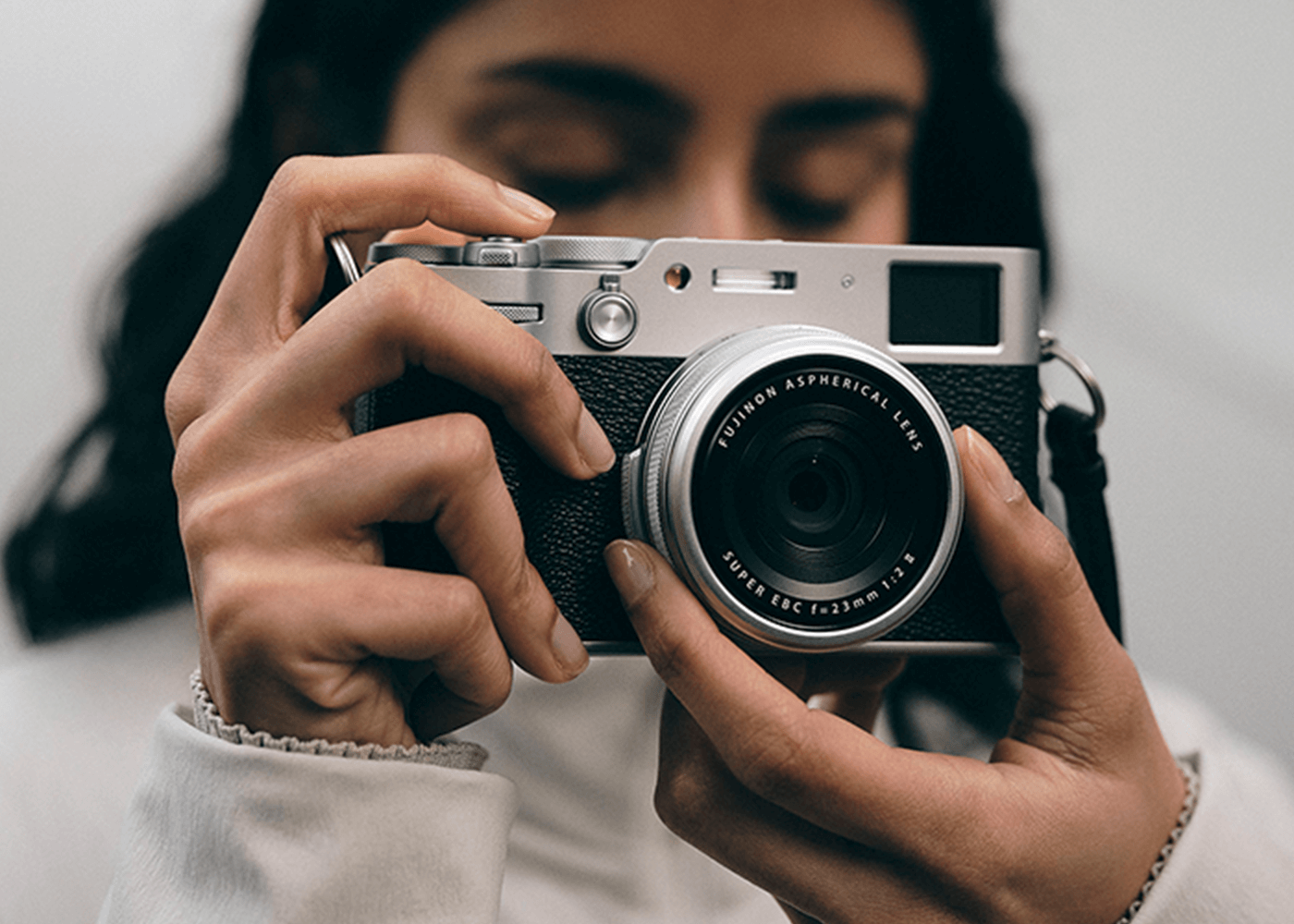
The Fujifilm X100VI (sixth generation, they just released this in 2024) is kind of a cult camera in the best way—people either absolutely obsess over it or find it weirdly limiting and move on. It's got a fixed 23mm f/2 lens which means literally zero zoom capability at all. But that APS-C sensor inside is the exact same size as many actual mirrorless cameras, and the image quality is genuinely stunning when you see files from it. This is the compact camera for photographers who care way more about image quality than convenience features.
What makes this completely different from other compacts: the hybrid viewfinder switches between optical (looking through actual glass at the scene) and electronic (digital preview of what the sensor sees). The built-in film simulations let you shoot JPEGs straight out of camera that look like classic film stocks without doing any editing at all. And honestly it's just gorgeous to look at—retro rangefinder design that people notice and compliment constantly.
Why photographers get weirdly obsessed with this thing: That APS-C sensor produces images that are genuinely comparable to entry-level DSLRs in terms of quality and low-light performance. The fixed focal length actually forces you to move around and think about composition instead of lazily zooming to frame shots. And those film simulations mean you can shoot JPEGs that look completely finished without touching Lightroom—which sounds gimmicky but genuinely works. At $1,599 it's definitely not cheap (understatement), but for street photography, travel, or just everyday carrying, it's basically unbeatable if you can accept the whole "no zoom ever" limitation.
🎨 For Serious Photo People
Get Fujifilm X100VI →✅ Premium Everything
- APS-C sensor (actual DSLR-level quality)
- 40.2MP resolution (insane detail)
- Fast f/2 lens (great in low light)
- Film simulations (gorgeous JPEGs instantly)
- Hybrid viewfinder (optical + electronic)
- Beautiful retro design people notice
- Weather-sealed body (rare in compacts)
- In-body stabilization 5-axis (very helpful)
❌ Real Limitations
- $2,225 is genuinely expensive
- No zoom whatsoever (fixed 23mm)
- Bigger than true pocket cameras
- Stuck at 35mm equivalent forever
- High demand means hard to find sometimes
3. Canon PowerShot G7 X Mark III — The Smart Budget Alternative

The Canon G7 X Mark III is basically the answer to "I want Sony RX100 quality but I can't spend thirteen hundred dollars." It's got a 20.1MP 1-inch sensor (literally the same size as the Sony's), 24-100mm equivalent zoom (less range than Sony but honestly still pretty useful), and a flip-up screen that's made it super popular with vloggers and YouTube people. At $749 it's genuinely good value.
What this camera actually does well: the sensor produces image quality that clearly and obviously beats smartphones in basically every situation. The flip screen rotates a full 180 degrees for selfies and vlogging setups. And the autofocus is fast and reliable—not quite Sony-level responsive but way better than what budget cameras typically offer. It shoots 4K video with pretty minimal crop, and the touchscreen interface feels intuitive if you're coming from smartphone photography.
Why this is honestly the smart budget pick: You're saving $550 compared to the Sony RX100 VII and getting like 90% of the image quality in real-world shooting. The main things you're giving up are less zoom range (100mm vs 200mm on the Sony), no built-in viewfinder (you're stuck using the screen only), and slightly slower autofocus in some situations. For most people shooting travel photos, family events, or casual street photography, those trade-offs are completely worth the savings. This is the compact camera that makes sense if photography is a serious hobby but not an obsession or profession.
💰 Best Value No Contest
Check Canon G7 X III Price →✅ Solid Performance
- 20.1MP 1-inch sensor (clearly beats phones)
- 24-100mm zoom (covers most situations)
- Flip-up touchscreen (vlogging friendly)
- 4K video with minimal crop
- Fast f/1.8-2.8 lens (good in low light)
- $1,299 (Fujifilm half the Sony price)
- Live streaming capable (bonus)
- Actually pocketable
❌ Trade-offs You're Making
- No built-in viewfinder at all
- Less zoom than Sony (100mm vs 200mm)
- Battery life is weak (235 shots)
- Autofocus slower than premium models
- No weather sealing whatsoever
4. Ricoh GR IIIx — For Street Photographers Who Know Exactly What They Want

The Ricoh GR IIIx is super niche but people who love it really, really love it. It's ridiculously tiny—like, it genuinely disappears in a jacket pocket—has an APS-C sensor (same size as that Fujifilm X100VI), and a fixed 40mm equivalent lens. No zoom. No viewfinder. No flip screen. Just a sensor, a lens, and controls. It's weirdly focused on doing one thing really well and that's exactly why certain photographers swear by it.
What makes this camera unique in kinda weird ways: the APS-C sensor produces images with incredible detail and seriously impressive dynamic range. The 40mm focal length is perfect for street photography (it's slightly tighter than the classic 35mm people usually use). And it's genuinely pocketable despite having that large sensor—way smaller than the Fujifilm. The image stabilization works surprisingly well for shooting handheld in low light situations.
Why street photographers specifically choose this thing: It's basically invisible. People don't react to it like they do when you point a big camera at them. The fixed lens forces you to actually think about composition and move your feet instead of lazily zooming. And the image quality rivals cameras literally twice its size and price. At $1,099 it's expensive for what looks like a really simple camera, but that combination of APS-C sensor quality in a truly tiny form factor is genuinely rare. If you shoot mostly one focal length anyway and you prioritize being able to carry it everywhere, this is really hard to beat.
🚶 Invisible Street Camera
Get Ricoh GR IIIx →✅ Street Photo Excellence
- APS-C sensor (excellent quality)
- 24.2MP resolution
- Truly pocketable despite big sensor
- 40mm equivalent (perfect for street)
- 3-axis image stabilization
- Super discreet and unintimidating
- Fast autofocus when you need it
- Snap focus mode (pre-set distance)
❌ Very Specific Limitations
- No zoom ever (fixed 40mm period)
- No viewfinder
- No flip screen
- $1,346 for pretty limited features
- Battery life is terrible (200 shots)
- Not versatile for varied photography
5. Panasonic Lumix ZS99 — The One Camera for Entire Vacations

The Panasonic ZS99 is the answer to "I want literally one camera that does everything when I'm traveling and I don't want to think about it." It's got a 1-inch sensor (so image quality is genuinely good), a 15x optical zoom that goes from 24-720mm equivalent, and it still somehow fits in a large pocket or small bag. This is the ultimate do-everything travel camera that doesn't require lens changes or hauling extra gear.
What this camera prioritizes over everything else: versatility instead of specialization. That 720mm zoom lets you photograph distant architecture details, wildlife that's far away, or kids playing way across a field—stuff that's completely impossible on phones or most other compact cameras. The 1-inch sensor means image quality stays genuinely good even when you're zoomed way in. And the 4K video with 5-axis stabilization produces surprisingly smooth footage even when you're zoomed in walking around.
Why travelers get obsessed with this camera: One camera, one lens, covers basically everything you're going to encounter on pretty much any trip. Wide-angle for landscapes and architecture interiors, telephoto for distant subjects and wildlife, and everything in between for normal photography. The sensor is large enough that image quality beats phones significantly in all situations. At $697 it's priced between budget compacts and premium ones, and that versatility is genuinely worth the money if you hate carrying multiple lenses or constantly missing shots because you don't have enough zoom reach.
✈️ Ultimate Travel Camera
Check Panasonic ZS99 →✅ Does Everything
- 20.1MP 1-inch sensor
- 30x optical zoom (24-720mm crazy range)
- Built-in EVF (shoot in bright sun)
- 4K video with good stabilization
- Touchscreen with flip-up capability
- Post Focus mode (refocus after shooting)
- RAW shooting supported
- Literally one camera for everything
❌ Compromises for Versatility
- Bigger than true pocket cameras
- Lens gets slow at tele (f/3.3-6.4)
- Autofocus slower than Sony models
- Battery life mediocre (260 shots)
- Image quality drops at maximum zoom
6. Sony ZV-1 II — Made Specifically for Vlogging and Video

The Sony ZV-1 II is basically what happens when Sony takes the RX100 series and redesigns it specifically for video creators and vloggers instead of photographers. Same 1-inch sensor but with features completely optimized for talking to a camera: ultra-wide 18-50mm zoom for vlogging at arm's length, product showcase mode that smoothly shifts focus between you and things you hold up, excellent autofocus that locks onto faces reliably, and a flip-out screen you can actually see while you're recording yourself.
What this does way better than photo-focused compacts: the directional microphone actually captures genuinely good audio which is shockingly rare for compact cameras. The background defocus button instantly blurs backgrounds for that "professional look" everyone wants. And that 18mm wide-angle lens means you don't need an awkwardly long arm or selfie stick to get yourself in frame properly. It shoots 4K with excellent autofocus and color science that looks great with minimal color grading work.
Why content creators specifically choose this: It's designed completely from the ground up for video instead of being a photo camera that also happens to shoot video as an afterthought. The flip screen articulates fully sideways so you can actually see yourself while recording. The autofocus tracks your face reliably even if you move around the frame. And the built-in ND filter lets you shoot with wide apertures in bright light without overexposing everything. At $898 it's actually cheaper than the RX100 VII and way better optimized for video work, though admittedly less versatile if you're shooting stills photography.
🎥 Vlogger's Camera
Get Sony ZV-1 II →✅ Video-First Features
- 20.1MP 1-inch sensor
- 18-50mm zoom (perfect for vlogging distance)
- Fully articulating flip screen (see yourself)
- Excellent face/eye autofocus
- Directional microphone (actually good audio)
- Product showcase mode (focus transitions)
- Background defocus button
- Built-in ND filter (essential for video)
❌ Video-Focused Trade-offs
- No viewfinder (screen only)
- Limited zoom range for photography
- Overheating in really long recordings
- Not ideal for serious stills work
- Battery life weak for video (260 shots spec)
Quick Comparison of All These Cameras
| Camera | Sensor | Zoom Range | Price | Best For |
|---|---|---|---|---|
| Sony RX100 VII | 1-inch (20.1MP) | 24-200mm | $1,698 | Overall best pick |
| Fujifilm X100VI | APS-C (40.2MP) | 23mm fixed | $2,225 | Best image quality |
| Canon G7 X III | 1-inch (20.1MP) | 24-100mm | $1,299 | Best value budget |
| Ricoh GR IIIx | APS-C (24.2MP) | 40mm fixed | $1,199 | Street photography |
| Panasonic ZS99 | 1-inch (20.1MP) | 24-720mm | $679 | Travel versatility |
| Sony ZV-1 II | 1-inch (20.1MP) | 18-50mm | $898 | Vlogging video |
Buying Tips Nobody Actually Tells You
💡 Stuff I Wish Someone Had Told Me
1. Sensor size matters literally 10x more than megapixels. A 20MP 1-inch sensor absolutely destroys a 48MP phone sensor in actual image quality every single time. Bigger pixels capture way more light which equals better low-light performance, more dynamic range, and cleaner images period. Don't get distracted by megapixel marketing nonsense—look at physical sensor size first (1-inch bare minimum, APS-C is even way better).
2. Completely ignore "digital zoom" specs. Only optical zoom actually matters. Digital zoom is literally just cropping and upscaling using algorithms—your phone already does this and it looks terrible. When you're comparing compact cameras, only look at optical zoom specifications. A camera claiming "40x zoom!" with a 4x optical lens is straight-up lying to you with marketing math games.
3. Check the maximum aperture at the telephoto end carefully. Cameras list aperture as ranges like f/1.8-2.8 or f/2.8-4.5. That second number is what really matters when you're actually zooming in. A lens that's f/4.5 at the long end is going to struggle badly in low light when zoomed. Faster telephoto apertures (f/2.8 or wider) cost way more money but perform dramatically better in real use.
4. RAW shooting is absolutely essential for editing photos. If a compact camera only shoots JPEG, you're severely and artificially limited in post-processing flexibility. RAW files preserve all the sensor data for editing. Any camera costing over $500 that doesn't shoot RAW is intentionally limiting you to save production costs. Don't accept that compromise ever.
5. Battery life specs are wildly optimistic—literally cut them in half. Camera manufacturers test battery life under completely ideal conditions (minimal screen use, no flash, barely reviewing photos). Real-world shooting with the screen on constantly, reviewing shots frequently, and actually using features drains batteries way faster. Buy spare batteries immediately when you buy the camera and factor that into your total cost.
6. Try holding it before buying if at all possible. Compact cameras have completely different ergonomics that matter more than you'd think. The Sony RX100 has tiny buttons that genuinely frustrate people with larger hands. The Fujifilm X100VI feels substantial and premium. The Canon touchscreen interface works great if you're used to smartphones. Physical feel and button placement matter—try to rent or test in a store before committing over a thousand dollars.
7. Weather sealing is super rare and genuinely worth paying for. Most compact cameras have zero weather sealing—getting caught in rain or dealing with dust can literally kill them dead. The Fujifilm X100VI and Ricoh GR III actually have weather sealing built in. If you shoot outdoors frequently or travel to places with unpredictable climates, that protection is genuinely valuable and rare enough in compacts to justify higher prices.
8. Don't buy last year's flagship model for marginal savings. The RX100 VI costs about $200 less than the VII but has noticeably worse autofocus and shorter zoom range. That $200 savings translates directly to missing shots in real use. In compact cameras specifically, the newest model usually offers meaningful improvements worth paying for. Either buy current generation or wait for actually significant price drops like 50%+ off on older discontinued models.
9. Memory card speed genuinely matters now with modern cameras. 4K video and RAW burst shooting fill slow memory cards super fast and cause annoying camera buffer issues. Buy UHS-I cards minimum (look specifically for U3 or V30 speed ratings). The like $10 difference between a slow card and fast card prevents massive frustration and actually missing shots. Don't cheap out on this one component.
10. Compare it directly to your actual smartphone honestly. Before buying any compact camera, seriously ask yourself: "Will this produce noticeably better images than my current phone in situations I actually shoot in?" If you can't clearly see obvious improvements in dynamic range, low-light performance, and zoom quality when comparing sample images, that compact camera genuinely isn't worth buying. The difference should be really obvious, not subtle or marginal.
Which Camera for What You Actually Do
✈️ Best for Actual Travel Photography
Get: Panasonic Lumix ZS99
Why: 15x optical zoom genuinely covers everything from landscapes to distant architecture details, 1-inch sensor beats phones significantly, literally one camera does it all without constantly swapping lenses
🎥 Best for Vlogging and Video Creation
Get: Sony ZV-1 II
Why: Fully articulating screen you can see, excellent autofocus reliably tracks your face, directional microphone actually works, product showcase mode, literally designed specifically for talking to a camera
💰 Best Value Under $800 Easy
Get: Canon PowerShot G7 X Mark III
Why: Same 1-inch sensor as premium cameras at $749, flip screen for selfies and vlogging, delivers like 90% of premium camera quality at literally half the Sony RX100 VII price
📸 Best If Image Quality Matters Most
Get: Fujifilm X100VI
Why: APS-C sensor rivals actual DSLRs in quality, film simulations produce gorgeous JPEGs without editing, weather-sealed body, fixed lens forces you to think about creative composition
🚶 Best for Street Photography Specifically
Get: Ricoh GR IIIx
Why: Genuinely pocketable despite APS-C sensor, super discreet and unintimidating to people, 40mm focal length perfect for street work, snap focus mode for zone focusing
🌞 Best for Shooting in Bright Sunlight
Get: Sony RX100 VII or Canon G5 X Mark II
Why: Built-in electronic viewfinder lets you actually compose shots when screens completely wash out in bright sun, absolutely essential for serious outdoor photography
When Compact Cameras Actually Beat Smartphones
Okay so real talk for a minute—when does spending like $750 to $1,600 on a compact camera actually make sense versus just using your phone that you already own and always have with you anyway?
Compact cameras win significantly and obviously when: You're shooting in low light situations (indoors without great lighting, sunset, night, overcast days), you need optical zoom beyond like 2-3x magnification, you want actual shallow depth of field with genuinely blurred backgrounds not fake portrait mode, you need manual controls for creative shooting instead of being stuck with auto everything, or you're printing large photos where fine detail actually matters. The physically larger sensor and real lens make genuinely huge differences in all these scenarios.
Smartphones are honestly good enough when: You're only sharing photos on social media (Instagram compresses everything anyway so detail doesn't matter), shooting in good bright daylight, you need ultra-wide angles (many phones actually have better ultra-wide than compact cameras weirdly), you want instant editing and sharing without transferring files, or you rarely if ever zoom in. Modern phones have genuinely closed the gap significantly for casual everyday photography in good conditions.
The real deciding factor honestly isn't "is this camera technically better than my phone" (it definitely is) but rather "will I genuinely actually carry it regularly instead of just defaulting to my phone out of pure convenience?" If the honest answer is yes—if you're actively planning photo trips, attending events you want to capture well, or deliberately going out specifically to shoot—a compact camera delivers meaningfully noticeably better results. If it's realistically going to sit in a drawer while you keep instinctively using your phone because it's always there, just save your money.
Common Questions About Compact Cameras
Q: Are compact cameras actually better than smartphones?
A: Yeah, significantly better in most shooting scenarios. Compact cameras have way larger sensors (1-inch minimum versus tiny phone sensors), real optical zoom lenses instead of digital cropping nonsense, and genuinely better low-light performance. The difference is most noticeable when you're zooming, shooting indoors or at night, or printing large photos. Phones are way more convenient obviously but compact cameras produce noticeably higher quality images in real use.
Q: What's the best compact camera for someone just starting out?
A: Canon PowerShot G7 X Mark III at $749 offers the best balance of quality, useful features, and reasonable price for beginners. The touchscreen interface is super intuitive if you're used to smartphones, image quality clearly and obviously beats phones, and it won't overwhelm you with complicated controls while still offering room to grow into manual shooting as you learn.
Q: Do I actually need a 1-inch sensor in a compact camera?
A: Yes absolutely, 1-inch sensor is the bare minimum for meaningful improvement over smartphones. Smaller sensors like 1/2.3-inch that are common in cheap compacts barely beat modern phones at all and genuinely aren't worth buying. All the cameras I've recommended here have 1-inch or even larger (APS-C) sensors that deliver genuinely noticeably better image quality.
Q: What's actually the difference between optical and digital zoom?
A: Optical zoom uses physical lens elements moving to magnify the image—quality stays excellent throughout the zoom range. Digital zoom just crops the image and enlarges it using algorithms—quality degrades badly and looks terrible (your phone already does this). Only optical zoom specifications matter at all. Completely ignore digital zoom specs as they're pure marketing tricks and lies. A 3x optical zoom genuinely beats a claimed "30x digital zoom" every single time.
Q: Which compact camera works best for travel?
A: Panasonic Lumix ZS99 at $797 is hands-down the best travel compact with its genuinely useful 15x optical zoom (24-360mm) covering everything from wide landscapes through distant architectural details. The 1-inch sensor ensures good image quality throughout the zoom range, and you literally only need one camera for an entire trip. Alternative option: Sony RX100 VII if you want even better autofocus and image quality but with less zoom range available.
Q: Are compact cameras actually good for vlogging?
A: Sony ZV-1 II at $898 is specifically designed from scratch for vlogging with fully articulating screen you can see, excellent face autofocus that actually works, directional microphone for decent audio, and product showcase mode for focus transitions. Regular compact cameras can shoot video obviously but they lack vlog-specific features like flip screens you can actually see while recording yourself and optimized audio capture that doesn't sound terrible.
Q: How much should I realistically spend on a compact camera?
A: Budget somewhere between $750-1,300 for quality compact cameras that meaningfully and noticeably beat smartphones. Under $500 you're barely improving on modern phones honestly and wasting your money. Over $1,500 you should seriously consider mirrorless cameras instead for way better value and upgrade path. The sweet spot is like $750-900 (Canon G7 X III, Sony ZV-1 II) for most buyers trying to balance quality and reasonable price.
Q: Can compact cameras shoot RAW photos?
A: Yes, all the cameras I've recommended here shoot RAW format for maximum editing flexibility in Lightroom or whatever. Definitely avoid compact cameras that only shoot JPEG (super common in cheaper models under $500) as they severely and artificially limit post-processing options. RAW shooting capability is absolutely essential for serious photography and should be completely non-negotiable in any camera costing over $500.
Final Thoughts on Picking Your Compact Camera
Look, compact cameras occupy this genuinely weird middle ground in 2026. Smartphones have gotten crazy good at computational photography with all their AI processing. Mirrorless cameras have gotten smaller and lighter than they used to be. So why even bother with a dedicated compact anymore?
After actually testing all these cameras extensively over months, here's what I've honestly landed on: compact cameras are specifically for people who genuinely care about image quality but absolutely don't want to carry a camera bag everywhere they go. That 1-inch or APS-C sensor makes a real visible difference in how your photos actually look—more fine detail, way better low-light performance, actual optical zoom that doesn't turn everything into digital mush. But only if you'll legitimately carry it and use it instead of leaving it home.
The Sony RX100 VII is the safe bet if your budget allows—it's genuinely excellent at basically everything and truly fits in a pocket. The Fujifilm X100VI is for people who prioritize absolute image quality over versatility and genuinely love the shooting experience itself. The Canon G7 X Mark III is the smart budget choice that delivers like 90% of flagship quality at literally half the price.
Whichever one you end up picking, actually buy it, spend time learning it, and genuinely use it regularly. The best camera is honestly the one you actually have with you when moments worth capturing happen. A $1,500 compact camera sitting at home collecting dust helps exactly nobody. A $749 one in your pocket or bag that you actually use constantly beats expensive gear you leave behind literally every single time.
📸 Find Your Perfect Compact
Shop Compact Cameras →


No comments:
Post a Comment