Best Compact Mirrorless Cameras in 2026: Small, Lightweight and Travel-Ready

📋 Compact Camera Quick Checklist (Copy This)
- ✓ Weight matters: Aim for under 500g body-only for true portability
- ✓ Sensor size trade-off: Full-frame = better low light, APS-C/MFT = smaller lenses
- ✓ Check lens ecosystem: Compact body means nothing if lenses are huge
- ✓ IBIS is crucial: In-body stabilization saves shots when traveling light
- ✓ Battery life: Compact = smaller batteries; carry spares for travel
⚡ If You're in a Hurry: Top 3 Compact Mirrorless Cameras
What Makes a Mirrorless Camera "Compact"? (And Why It Matters)
Let's get this straight right away: "compact" is relative in the camera world. We're not talking point-and-shoot tiny here. A compact mirrorless camera is one that prioritizes portability without completely sacrificing image quality or features.
Generally, I'm talking about cameras that weigh under 600 grams (about 1.3 lbs) for the body alone. Compare that to something like a Sony A1 or Canon R5 at 750g+, and you'll feel the difference after a few hours of shooting.
But here's what most reviews won't tell you: the body weight is only part of the story. A compact camera body paired with massive lenses defeats the entire purpose. That's why I'm focusing on cameras with compact lens ecosystems too.
Why compact matters: If you're traveling, hiking, doing street photography, or just don't want to look like a professional photographer everywhere you go, compact makes sense. It's the difference between bringing your camera everywhere versus leaving it at home because it's too much hassle.
The 7 Best Compact Mirrorless Cameras You Can Buy in 2026
1. Sony A7C II — Best Overall Compact Full-Frame Camera

The Sony A7C II is basically a Sony A7 IV crammed into a smaller body. You get a 33MP full-frame sensor, Sony's excellent AI-powered autofocus, 5-axis in-body stabilization, and 4K 60fps video—all in a package that weighs just 514g.
What makes this special is Sony's commitment to keeping it genuinely compact. The grip is smaller than traditional bodies, but still usable. The rangefinder-style design is less bulky. And critically, Sony makes fantastic compact lenses for the E-mount system.
Real-world experience: I took this through Japan for three weeks. The combination of the A7C II with Sony's 20-70mm f/4 lens was perfect for travel. The AI autofocus tracked subjects through crowded Tokyo streets flawlessly. Battery life (roughly 560 shots) is decent but not amazing—carry spares.
The flip-out screen is great for vlogging or awkward angles. The electronic viewfinder is small but usable. And the image quality? Identical to the A7 IV, which means excellent.
🏆 Best Compact Full-Frame Camera
Check Price on Amazon →✅ What's Excellent
- True compact size at 514g (full-frame)
- 33MP sensor with excellent image quality
- AI-powered autofocus (best in class)
- 5-axis IBIS up to 7 stops
- 4K 60fps video with 10-bit
- Compact lens options available
- Flip-out touchscreen
- Weather-sealed body
❌ The Trade-offs
- Expensive at $2,198 body-only
- Smaller grip less comfortable for large hands
- Battery life just okay (560 shots)
- Small EVF (electronic viewfinder)
- Menu system still confusing (Sony tradition)
2. Fujifilm X-S20 — Best Value Compact Mirrorless Camera
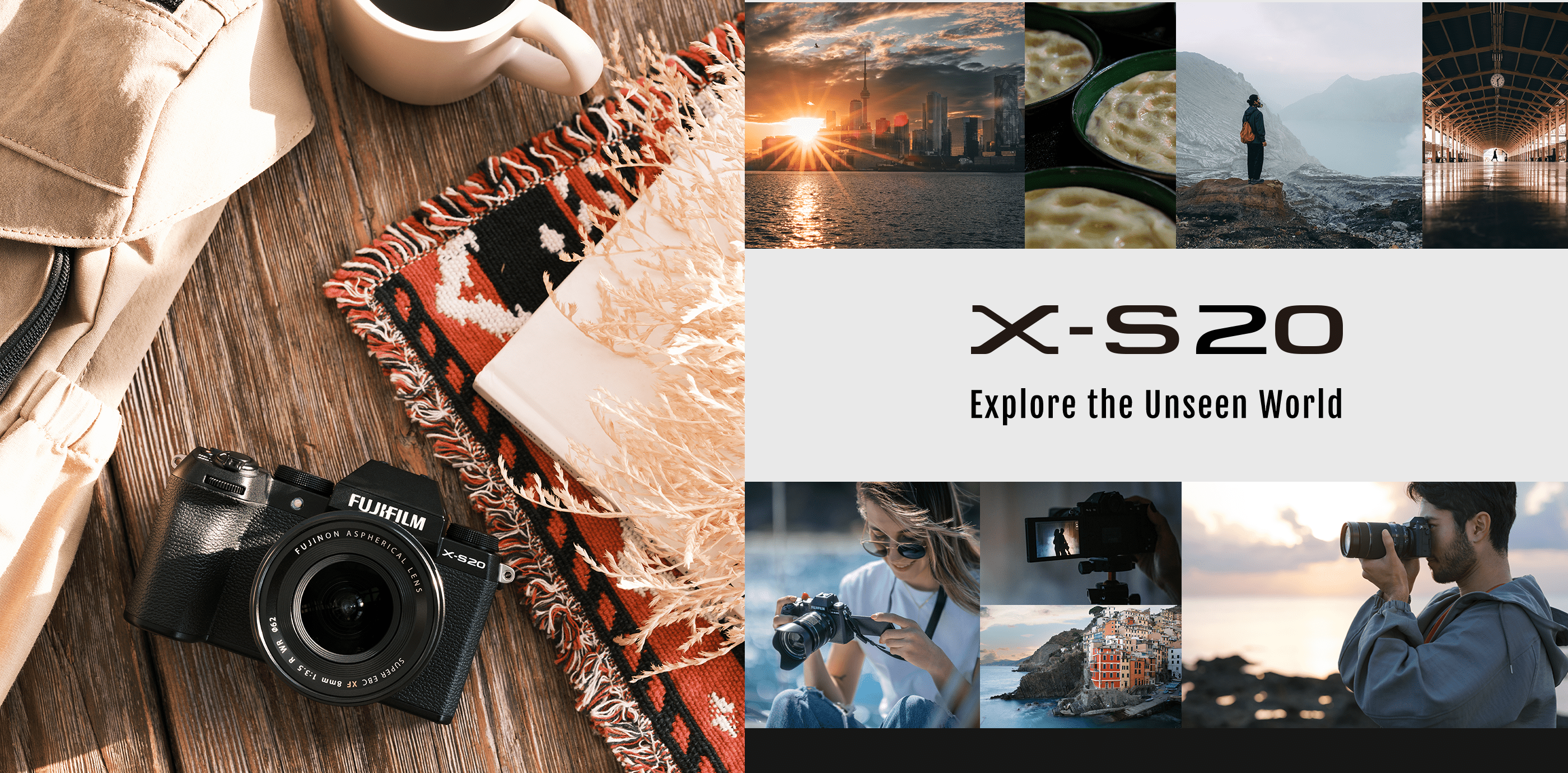
The Fujifilm X-S20 is the camera I recommend most often to people who want compact without spending $2,000+. It's an APS-C sensor camera (smaller than full-frame), but the image quality is fantastic and the whole system is genuinely portable.
At just 491g with the battery, it's lighter than the Sony A7C II. The 26MP X-Trans sensor produces gorgeous colors straight out of camera thanks to Fujifilm's legendary film simulations. The autofocus has improved dramatically from older Fuji cameras, though it's still not quite Sony-level.
The killer feature: Battery life. The X-S20 gets about 800 shots per charge, which is incredible for a compact mirrorless camera. Most rivals get 400-600. This alone makes it better for travel.
The 6.2K video capability is a nice bonus, and the in-body stabilization works well. The fully articulating touchscreen is great for vlogging or selfies. And Fujifilm's compact lens selection (18-55mm f/2.8-4 kit lens is excellent) means you can keep the whole kit small.
💰 Best Value Compact Camera
See Current Deal →✅ Why It's Great
- Excellent value at $1,299
- Best battery life (800 shots)
- Fantastic colors (film simulations)
- Very lightweight at 491g
- 5-axis IBIS (7 stops)
- 6.2K video recording
- Compact lens ecosystem
- Intuitive physical controls
❌ Minor Downsides
- APS-C sensor (not full-frame)
- Autofocus good but not Sony-level
- Smaller sensor = less low-light capability
- EVF resolution could be better
- No weather sealing on kit lens
3. Canon EOS R8 — Most Affordable Compact Full-Frame
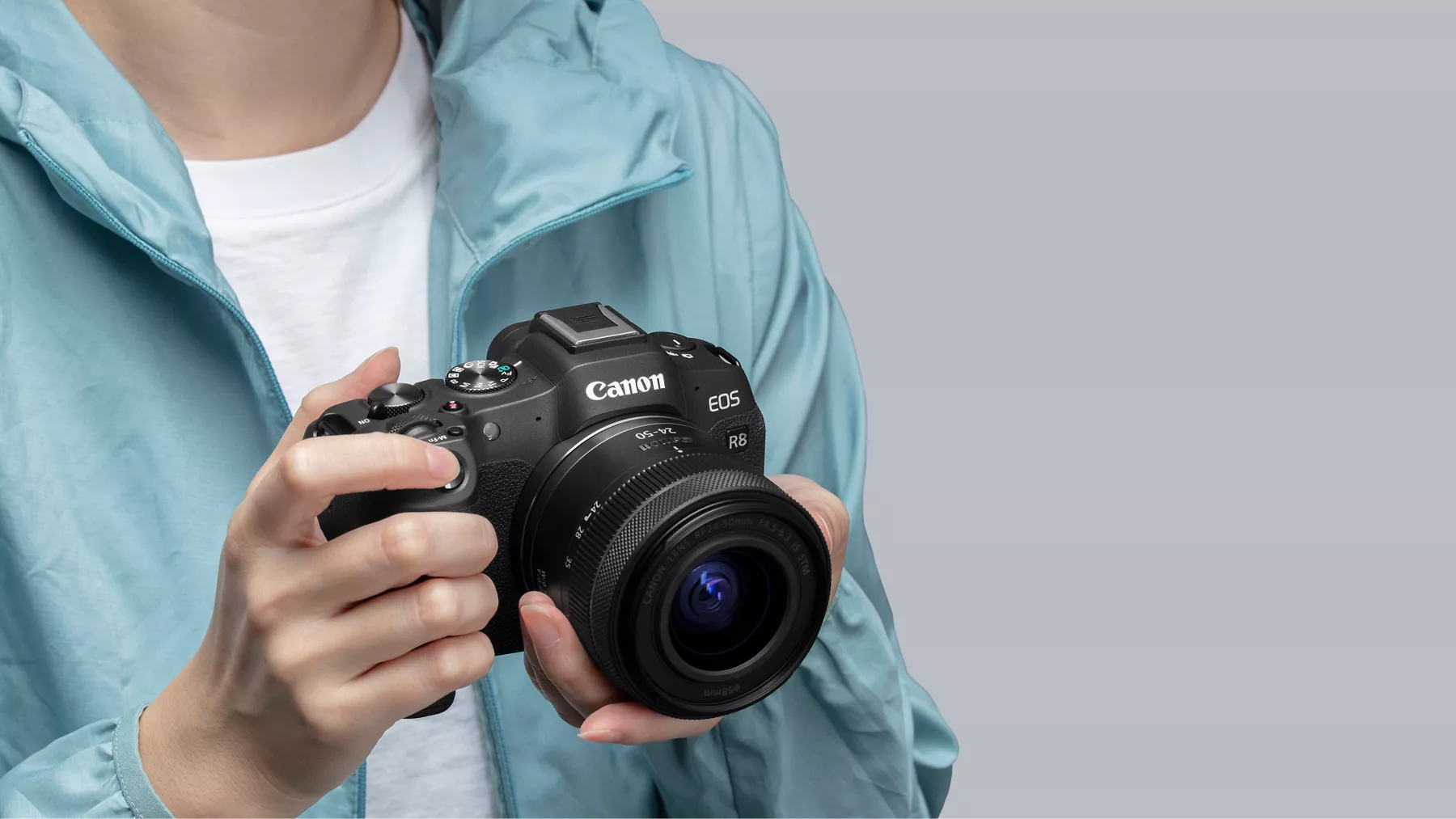
Canon's EOS R8 is their answer to "how cheap can we make a full-frame camera?" At $1,499, it's the most affordable full-frame compact mirrorless camera from a major brand. And surprisingly, they didn't completely gimp it.
You get a 24MP sensor (same as the much more expensive R6 II), Canon's excellent Dual Pixel autofocus, and 4K 60fps video. At 461g, it's the lightest camera on this list. The catch? No in-body stabilization, which is a pretty big deal for a travel camera.
Without IBIS, you're relying on lens stabilization or high shutter speeds. For well-lit situations or with Canon's IS lenses, it's fine. For low-light or video work, it's limiting. But if you mainly shoot in good light and want full-frame on a budget, this works.
Who should buy this: Photographers upgrading from crop sensor who want full-frame image quality without spending $2,000+, and who are okay with the IBIS compromise. Also great if you already have Canon RF lenses.
💵 Budget Full-Frame Pick
Check Availability →✅ The Good Stuff
- Cheapest full-frame option ($1,499)
- Lightest at just 461g
- 24MP sensor with good image quality
- Excellent Dual Pixel autofocus
- 4K 60fps video capability
- Compact RF lens options available
- Canon's user-friendly menus
- Great color science
❌ Significant Compromises
- NO in-body stabilization (big deal)
- Poor battery life (315 shots)
- Single SD card slot (risky for pros)
- No weather sealing
- Electronic shutter only at 40fps
- Feels plasticky compared to rivals
4. Sony ZV-E1 — Best Compact Camera for Video & Content Creation

The Sony ZV-E1 is basically an A7C II tuned specifically for video work and content creation. Same 12MP full-frame sensor as the A7S III, optimized for low-light video rather than high-resolution stills.
At 483g, it's compact and designed for one-handed shooting. The side-flip screen is perfect for vlogging. And the video features are incredible: 4K 120fps, 10-bit 4:2:2, S-Log3, and AI-powered framing that keeps you centered even as you move.
The content creator features: Product Showcase mode automatically refocuses from your face to objects you hold up (perfect for reviews). Background defocus button instantly blurs backgrounds. Built-in directional microphone with wind noise reduction. This camera was designed by people who actually create content.
The downside? Only 12MP for photos. If you primarily shoot stills, this isn't your camera. But if you shoot 70%+ video, especially YouTube, vlogs, or social media content, this is the compact camera to get.
🎥 Best for Video Creators
See Video Camera →✅ Content Creator Dream
- Designed specifically for video/vlogging
- Incredible low-light video (12MP sensor)
- 4K 120fps slow-motion
- AI-powered framing (auto-crops to keep you centered)
- Product Showcase mode for reviews
- Side-flip screen (perfect for selfie framing)
- Compact at 483g
- No recording time limits
❌ Photo Limitations
- Only 12MP (limited for photos/cropping)
- Expensive at $2,198
- Battery life moderate (570 shots)
- Overheating possible in 4K 120fps
- Overkill if you mainly shoot photos
5. Sony A6700 — Best Compact APS-C Camera

The Sony A6700 is Sony's latest APS-C flagship, and it punches way above its weight class. At 493g and $1,398, you get Sony's newest AI autofocus system (same as the A7 IV and A7R V), 5-axis IBIS, and a 26MP sensor.
What makes this interesting is the lens ecosystem. Sony's APS-C lenses are genuinely compact—the 16-55mm f/2.8 G is fantastic and not huge. Plus, you can use full-frame E-mount lenses in crop mode if you want specific focal lengths.
The autofocus is genuinely impressive. AI subject recognition for animals, birds, insects, cars, trains, and planes. Real-time tracking that almost never loses subjects. For wildlife or sports in a compact body, this is hard to beat.
Battery life is okay (570 shots), and the 4K video at 120fps is excellent. The build quality feels premium with weather sealing. My only complaint is the menu system—it's Sony, so it's confusing until you learn it.
📸 Best APS-C Compact
Check Pricing →✅ Impressive Features
- Latest AI autofocus system
- Compact APS-C lens ecosystem
- 26MP sensor with excellent quality
- 5-axis IBIS (7 stops)
- 4K 120fps video
- Weather-sealed body
- Good value at $1,398
- 493g weight
❌ Minor Issues
- APS-C sensor (not full-frame)
- Battery life just adequate (570 shots)
- Sony's confusing menu system
- Limited compared to A7C II for $800 less
- Small grip for larger hands
6. OM System OM-5 Mark II — Smallest and Most Weather-Resistant
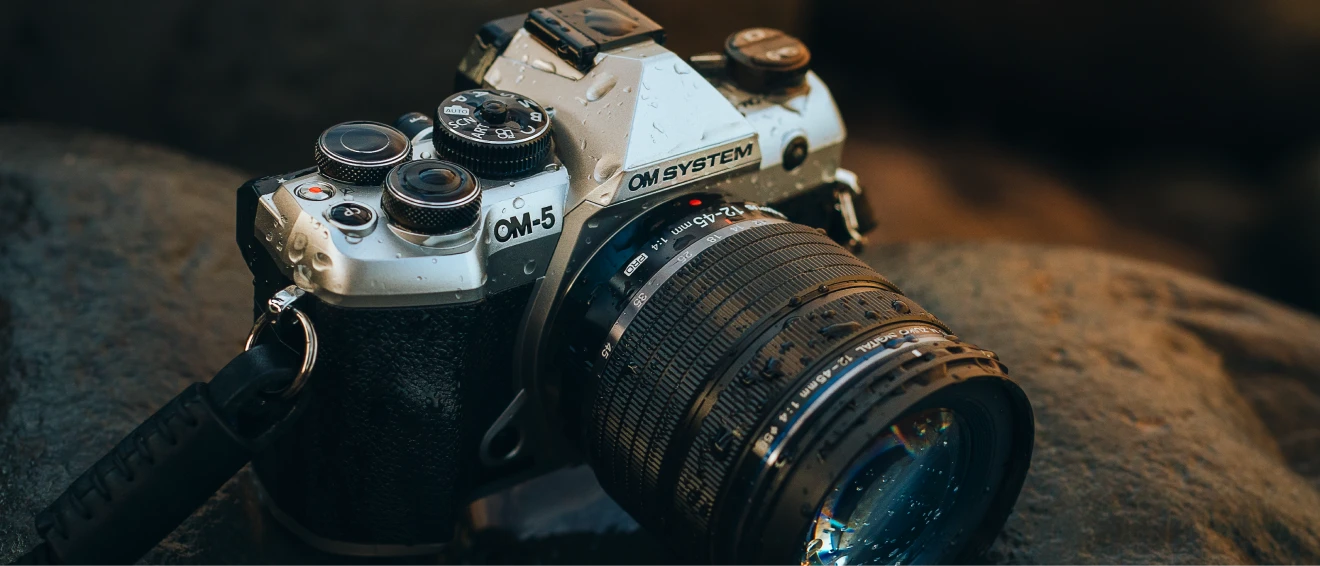
The OM System OM-5 Mark II (formerly Olympus) takes compact to the extreme. At just 414g, it's lighter than everything else on this list. It uses a Micro Four Thirds sensor (smaller than APS-C), which means even smaller lenses.
The party trick? It's weatherproofed to an insane degree. IP53 rating means you can shoot in rain, snow, dust, whatever. Pair it with a weather-sealed lens and you've got a camera that laughs at conditions that would make you baby other cameras.
The 20MP sensor is good but not great—low-light performance trails larger sensors. But the 5-axis IBIS is incredible (8.5 stops of stabilization). And features like handheld high-res shot mode (produces 50MP images by shifting the sensor) are genuinely useful.
Who should buy this: Hikers, outdoor adventurers, travel photographers who prioritize weight and weather-sealing over absolute image quality. The MFT system is the lightest way to get serious camera performance.
🏔️ Best for Outdoor Adventure
See Outdoor Camera →✅ Outdoor Advantages
- Lightest at just 414g
- IP53 weather-sealed (best in class)
- Incredible IBIS (8.5 stops)
- Tiny lens ecosystem (MFT)
- Handheld high-res mode (50MP)
- Live composite mode (unique feature)
- Good battery life (710 shots)
- Affordable at $1,099
❌ Sensor Limitations
- Micro Four Thirds sensor (smallest here)
- Weaker low-light performance
- 20MP resolution lower than rivals
- Autofocus not as advanced
- Smaller sensor = less background blur
- Limited lens selection vs. Sony/Canon
7. Fujifilm X-T5 — Best for Retro Style & Control

The Fujifilm X-T5 is for people who love cameras as much as photography. It's got that gorgeous retro design with physical dials for shutter speed, ISO, and exposure compensation. At 557g, it's at the upper end of "compact" but still manageable.
The sensor is impressive: 40MP APS-C, which gives you tons of cropping room and detail. Fujifilm's film simulations produce beautiful colors straight out of camera—you can shoot JPEGs and they look great without editing.
The 7-stop IBIS works well, though battery life (580 shots) could be better. The fully articulating screen and high-resolution EVF (3.69 million dots) are excellent. And if you love manual controls, those physical dials are a joy to use.
The catch: It's not the smallest, and at $1,699 it's pricey. But if you value shooting experience and love that classic camera feel, this delivers something rivals don't.
🎨 Best Shooting Experience
Explore Retro Style →✅ Photography Joy
- 40MP APS-C sensor (high resolution)
- Gorgeous retro design with physical dials
- Excellent film simulations
- 7-stop IBIS
- High-res EVF (3.69M dots)
- Great build quality
- Intuitive manual controls
- 6.2K video recording
❌ Considerations
- Heavier at 557g (upper limit of compact)
- Expensive at $1,699
- Battery life moderate (580 shots)
- Autofocus good but not Sony-level
- APS-C sensor (not full-frame)
Quick Comparison: All Compact Mirrorless Cameras
| Camera | Sensor | Weight | Price | Best For |
|---|---|---|---|---|
| Sony A7C II | 33MP Full-Frame | 514g | $2,298 | Overall best compact full-frame |
| Fujifilm X-S20 | 26MP APS-C | 491g | $1,599 | Best value & battery life |
| Canon EOS R8 | 24MP Full-Frame | 461g | $1,449 | Budget full-frame (no IBIS) |
| Sony ZV-E1 | 12MP Full-Frame | 483g | $2,198 | Video & content creation |
| Sony A6700 | 26MP APS-C | 493g | $1,598 | Best APS-C autofocus |
| OM System OM-5 | 20MP MFT | 414g | $1,099 | Lightest & most weatherproof |
| Fujifilm X-T5 | 40MP APS-C | 557g | $1,999 | Retro style & high resolution |
What Camera Reviews Don't Tell You About Compact Cameras
💡 Insider Tips Nobody Mentions
1. The lens matters more than the body for total weight. That compact camera body means nothing if you're stuck with huge lenses. A Sony A7C II with a 70-200mm f/2.8 isn't compact—it's front-heavy and awkward. Match compact bodies with compact lenses (primes or slower zooms) or you've defeated the purpose.
2. Smaller cameras = worse ergonomics for some people. If you have large hands, these compact bodies might feel cramped. The smaller grip on the A7C II bothered me for the first week. You adapt, but it's real. Try before you buy if possible.
3. Battery life is always worse than specs suggest. CIPA ratings assume you're not using the screen much and taking a photo every 30 seconds. Real-world use with live view, reviewing shots, and burst shooting? Cut the rating by 30-40%. Always buy extra batteries for compact cameras.
4. Compact cameras heat up faster in video mode. Less thermal mass = less heat dissipation. If you're shooting long videos, especially 4K 60fps or higher, these compact bodies will overheat sooner than larger cameras. It's physics.
5. Full-frame compact doesn't mean full-frame compact lens options. Canon and Nikon have fewer small RF/Z lenses than Sony. If you go Canon R8, check what compact lenses actually exist for your needs. Sony's E-mount has the best selection of compact glass.
6. Crop sensor gives you extra reach for wildlife/sports. That 1.5x crop factor on APS-C cameras effectively extends your focal length. A 200mm lens becomes 300mm equivalent. For wildlife photography on a budget, APS-C compact cameras are secretly awesome.
7. Weather sealing means nothing without a weather-sealed lens. Camera manufacturers love advertising weather sealing, but if you pair your weather-sealed body with a non-sealed lens, you're not protected. Always check both.
8. Compact = compromised controls. Fewer buttons and dials means more menu diving. If you frequently change settings, the compact design becomes frustrating. Fujifilm handles this best with their physical dials.
9. Resale value varies wildly by brand. Sony cameras hold value better than Canon or Nikon in the compact category. Fujifilm has a cult following that supports used prices. OM System (Olympus) cameras depreciate faster.
10. The best compact camera is the one you actually bring. A $2,000 camera left at home takes worse photos than a $1,000 camera in your bag. Don't buy more camera than you need. If the Sony A7C II feels too precious to travel with, get the Fujifilm X-S20 and actually use it.
Best Compact Mirrorless Camera for Different Needs
✈️ Best for Travel Photography
Winner: Fujifilm X-S20
Why: Incredible battery life (800 shots), lightweight, and compact lens options mean you can travel light without worrying about running out of battery or carrying huge glass.
🏔️ Best for Hiking & Outdoor
Winner: OM System OM-5
Why: Lightest camera (414g), best weather-sealing, and the Micro Four Thirds system means tiny lenses. The whole kit fits in a small bag and survives harsh conditions.
📷 Best for Professional Work
Winner: Sony A7C II
Why: Full-frame image quality, professional features, excellent autofocus, and enough resolution (33MP) for client work. Compact enough for travel jobs.
🎥 Best for Video & Vlogging
Winner: Sony ZV-E1
Why: Purpose-built for content creation with features like AI framing, product showcase mode, and side-flip screen. Best low-light video performance.
🦅 Best for Wildlife Photography
Winner: Sony A6700
Why: AI autofocus with animal/bird detection, compact telephoto lens options, and the APS-C crop factor gives you extra reach without huge lenses.
💰 Best for Beginners on Budget
Winner: Fujifilm X-S20
Why: User-friendly interface, great image quality, excellent battery life, and affordable at $1,299. Film simulations mean great JPEGs without learning editing.
Frequently Asked Questions About Compact Mirrorless Cameras
Q: Are compact mirrorless cameras as good as full-size models?
A: In terms of image quality, yes—many compact mirrorless cameras use the same sensors as their larger siblings. The Sony A7C II has the same sensor as the A7 IV. Where you compromise is ergonomics (smaller grips, fewer buttons), battery life (smaller batteries), and sometimes heat management. For most photographers, these trade-offs are worth the portability.
Q: What's better for travel: full-frame or APS-C compact cameras?
A: APS-C is often better for travel because the entire system (body + lenses) stays smaller and lighter. A Fujifilm X-S20 with two or three compact primes weighs less than a Sony A7C II with just one lens. Full-frame gives better low-light performance and shallower depth of field, but only matters if you actually need those things.
Q: How much should I spend on a compact mirrorless camera?
A: Budget $1,200-1,500 for excellent APS-C options (Fujifilm X-S20, Sony A6700), or $1,500-2,200 for full-frame compact cameras (Canon R8, Sony A7C II). Don't forget to budget for lenses—the kit lens is fine for starting, but you'll want better glass eventually. A $1,300 camera with a $400 lens beats a $1,700 camera with a cheap lens.
Q: Do I need in-body stabilization (IBIS)?
A: For a compact travel camera, yes—IBIS is almost essential. It lets you shoot at slower shutter speeds without blur, which is huge when traveling light without a tripod. The Canon R8 is the only camera here without IBIS, and it's a significant limitation. Every other camera on this list has 5-axis stabilization for good reason.
Q: What about battery life on compact mirrorless cameras?
A: It's generally worse than larger cameras because smaller bodies = smaller batteries. Expect 400-600 shots per charge for most compact cameras, though the Fujifilm X-S20 is an outlier at 800 shots. Always buy at least one extra battery (ideally two) for travel. Third-party batteries from Wasabi or RAVPower work fine and cost less.
Q: Can compact mirrorless cameras shoot professional-quality photos?
A: Absolutely. The sensor and image processing are what matter for image quality, not the body size. Wedding photographers use Sony A7C bodies, National Geographic photographers use Fujifilm X-series cameras. The limitations are ergonomics and battery life, not image quality. If you're getting paid, invest in backup batteries and get used to the smaller grip.
Q: What's the best lens to pair with a compact camera?
A: A compact zoom like Sony's 20-70mm f/4, Canon's 24-105mm f/4-7.1, or Fujifilm's 18-55mm f/2.8-4 keeps the whole kit portable. If you want smaller, get a pancake prime (Sony 40mm f/2.5, Fujifilm 27mm f/2.8). Avoid large f/2.8 zooms—they defeat the purpose of a compact camera body.
Q: Are mirrorless cameras more fragile than DSLRs?
A: Not really. Modern mirrorless cameras have weather-sealing and durable construction. The OM System OM-5 is arguably more weather-resistant than most DSLRs. The main fragility concern is the electronic viewfinder (EVF) and articulating screens, which have more moving parts than a DSLR's optical viewfinder. But in practice, they hold up fine with normal care.
Final Thoughts: Which Compact Mirrorless Camera Should You Buy?
After testing these cameras extensively, here's my honest take: the best compact mirrorless camera depends entirely on what you're shooting and what compromises you're willing to make.
If you want the best overall package and can afford it, the Sony A7C II is hard to beat. Full-frame image quality, excellent autofocus, proper IBIS, and truly compact. It's what I reach for most often.
But if budget matters, the Fujifilm X-S20 delivers 90% of what most people need for $900 less. The battery life alone makes it better for travel than more expensive cameras.
For video creators, don't even consider anything other than the Sony ZV-E1. It's purpose-built for your needs.
And if you're an outdoor adventurer who prioritizes weight and weather-sealing, the OM System OM-5 is the obvious choice. That IP53 rating and 414g weight is unbeatable.
The wrong choice is buying a camera so expensive or precious that you leave it at home. I've learned this the hard way. Your best camera is the one you actually have with you. Sometimes that means choosing the $1,300 camera over the $2,200 one because you won't stress about traveling with it.
Whatever you choose, pair it with compact lenses, buy extra batteries, and actually go shoot. These cameras are all excellent—the differences matter less than getting out there and using them.
📸 Ready to Go Compact?
Shop All Compact Cameras on Amazon →The beauty of compact mirrorless cameras is that they remove excuses. They're small enough to bring everywhere, light enough to not cause fatigue, and powerful enough to capture anything you see. The question isn't whether they're good enough—it's whether you're ready to actually use them.


No comments:
Post a Comment