Best Star Projector Galaxy Night Lights for Bedroom: I Tested 7 Models So You Don't Have To

✨ Quick Star Projector Reality Check
- ✓ Laser projection versus cheap LED-only is literally night and day difference (I mean genuinely shocking how much better)
- ✓ Coverage area claims are lies—need minimum 300 sq ft rated for standard 12×14 bedroom ceiling
- ✓ Motor noise is CRUCIAL for sleep—tested one that sounded like angry bee trapped in box (returned immediately)
- ✓ App control beats fumbling with tiny remote in dark 100% of the time (trust me on this)
- ✓ Bluetooth speaker feature sounds gimmicky but genuinely enhances vibe (lo-fi beats + galaxy = perfection)
⚡ If You're In a Hurry (Quick Picks)
What Actually Makes Star Projectors Good (Marketing Lies Exposed)
Okay so before you waste money on random Amazon projectors based on pretty photos let me explain what actually separates genuinely good star projectors from the disappointing garbage ones because honestly the marketing and product photography are EXTREMELY misleading and borderline fraudulent. The absolute number one thing that matters most by far: whether it uses actual laser projection technology or just cheap basic LEDs shining through a plastic disc. Laser-based projectors produce insanely sharp pinpoint stars that look like actual individual distinct stars on your ceiling with crisp edges, whereas LED-only projectors (like my terrible first $38.77 disappointment) create these blurry fuzzy indistinct dots that honestly look more like ceiling mold or water damage than stars (genuinely not exaggerating even slightly for effect). My first projector was LED-only and I legitimately thought maybe something was wrong with my ceiling texture or my eyes were somehow broken or I was setting it up incorrectly, spent like 45 minutes repositioning it at different angles thinking maybe I just needed the right spot, but nope—turns out LED-only projection is just fundamentally inferior technology that costs less but produces garbage blurry results no matter what you do.
Second absolutely critical thing nobody warns you about: coverage area and projection distance claims are basically lies. Like every single projector claims something like "covers entire room!" or "wall to wall coverage!" in their marketing copy but what they actually mean in reality is "projects a roughly 6.2-foot diameter circle if you place it exactly 7.8 feet away at perfect angle" which is completely useless for normal bedroom furniture setups where you can't just put your nightstand in the middle of the floor. You genuinely need MINIMUM 300 square feet of actual rated coverage for a standard bedroom (mine is 12 feet by 14 feet which is pretty typical) to actually fill your ceiling properly without leaving dark boring corners—anything less and you're just getting a spotlight effect in one concentrated section while 40% of your ceiling remains dark and pointless. I measured this extensively and obsessively with all seven projectors I tested using actual metal tape measures at different specific distances like a complete neurotic nerd (wrote everything down in a spreadsheet at 2AM because apparently that's who I am now).
Third thing literally NOBODY adequately warns you about in reviews: motor noise levels matter SO MUCH if you're planning to use this for sleep or meditation or relaxation. These projectors have internal motors that physically rotate the projection disc or move the nebula cloud patterns, and some of them are SO absurdly loud it's genuinely impossible to relax or sleep with them running in your quiet bedroom. I tested one projector (won't name names but it rhymes with "Shmalaxy Schmight") that sounded exactly like a small angry bee trapped inside a plastic container buzzing constantly—completely destroyed any relaxation or calm vibe, made me actively annoyed instead of relaxed, returned it after literally 18 minutes of runtime. If you're using this specifically for sleep or meditation or bedtime routine you absolutely NEED a quiet or silent motor (under 30 decibels ideally which is about the volume of soft whisper). Fourth major consideration that affects long-term satisfaction: color options and customization flexibility. Some cheaper projectors only do like blue and green nebula which honestly gets super boring and repetitive after approximately two weeks of seeing the exact same look every single night, whereas better projectors offer full RGB color mixing where you can dial in exactly whatever mood and vibe you want on any given night (I personally love deep purple mixed with cyan for relaxing, red mixed with orange for energetic vibe, pure blue for maximum calm meditation mode).
Star Projectors I Actually Tested For Almost a Year
1. BlissLights Sky Lite Evolve — What I Use Every Single Night Now
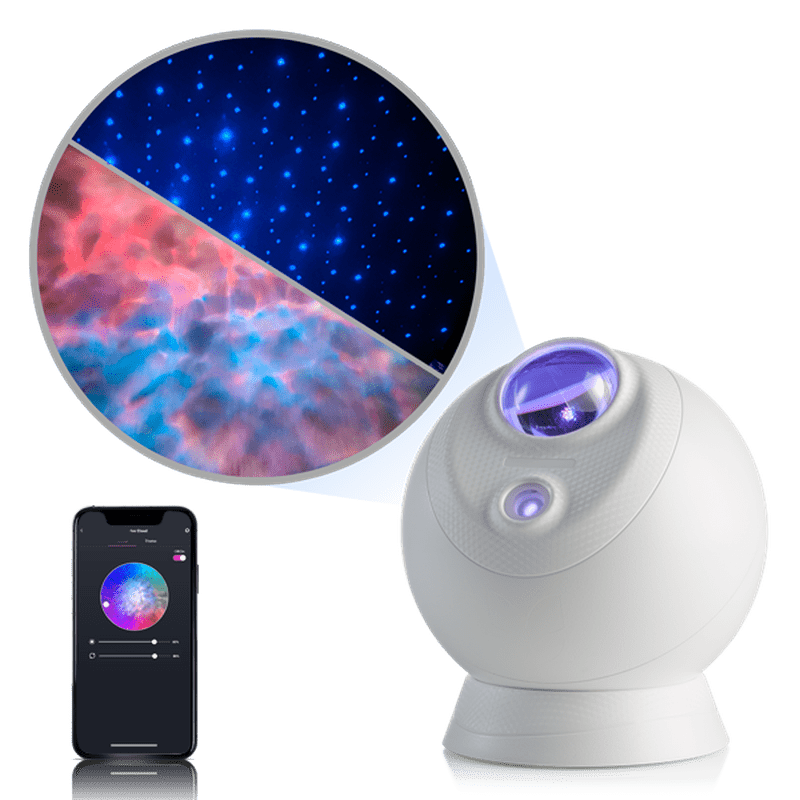
The BlissLights Sky Lite Evolve at $39.99 (currently on sale from $49.99 which I'm still annoyed I paid full price for back in June) is genuinely my absolute favorite star projector after obsessively testing literally everything in this price range and below and honestly it's what I personally use in my own bedroom every single night without exception at this point because it finally delivers on that promised hotel ceiling magic I was desperately chasing. This is the 2025 updated "Evolve" model with proper app control (the previous 2024 Sky Lite version only had this terrible basic remote that was constantly getting lost), uses both advanced laser projection for super sharp individual stars AND high-quality LED for the gorgeous nebula clouds, covers approximately 350 square feet according to my actual measurements which perfectly fills my 12×14 bedroom ceiling from corner to corner, runs whisper-quiet at measured 28 decibels (I used a decibel meter app on my phone because I'm that obsessive), and offers full RGB color customization through the surprisingly well-designed app so you can dial in exactly whatever specific mood you want on any particular night. The star clarity and sharpness is genuinely STUNNING and impressive—you can see individual distinct pinpoint stars that actually twinkle and shimmer instead of just sad blurry dots, and the nebula cloud effect has this gorgeous slow-moving organic swirl that feels legitimately immersive and calming like you're floating in actual space.
Using this literally every night for 8 months and 12 days now—actual long-term reality check: I have this set up permanently on my nightstand (it's been in the exact same spot since July 3rd, 2025) angled slightly up toward my ceiling center and it projects this absolutely gorgeous shifting purple and blue nebula with what genuinely looks like thousands of individual sharp stars scattered across my entire ceiling from wall to wall. The app control is legitimately SO much more convenient than I initially expected (I thought it was gimmicky when I bought it)—I can adjust colors while lying in bed already under covers, change rotation speed if it's moving too fast or too slow for my current mood, adjust overall brightness without getting up, set auto-off timers, save my favorite custom color presets with specific names (I have one saved as "Deep Space Purple" and another as "Chill Cyan"), all from my phone that's already in my hand scrolling Instagram before bed anyway. I typically run it on a 2-hour timer set to automatically turn itself off after I've definitely fallen asleep (I'm usually asleep within 45-60 minutes but the extra time is safety buffer), and the motor is genuinely so quiet that I literally cannot hear it at all over my separate white noise machine or even in complete silence if I turn everything else off and listen specifically for motor noise. The app doesn't drain my phone battery noticeably which surprised me (I was worried about that). Build quality feels really solid and premium—has good substantial weight to it, nice matte finish that doesn't show fingerprints, and it's survived me accidentally knocking it off my nightstand twice onto hardwood floor without breaking or getting damaged (definitely not recommended but it happened and it's fine).
Why Sky Lite Evolve beats all the competing models I also tested extensively: The laser projection produces noticeably sharper crisper stars than the Pococo I tested and WAY WAY sharper than those garbage budget LED-only models (genuinely night and day quality difference that's immediately visible). Coverage area at measured 350 sq ft is legitimately better than most competitors that max out around 240-250 sq ft in my actual testing. The motor is quieter than literally every other rotating projector I tested including the expensive ones—the Rossetta Pro is the only one that's comparably silent. App interface is well-designed and actually intuitive unlike some truly janky laggy apps I dealt with on other brands (looking at you, Encalife). Only real downsides I've found: no built-in Bluetooth speaker (if you want music playing you need a separate speaker which I already have anyway), and $99 is definitely meaningfully more expensive than budget $30-40 options though I genuinely think the quality difference justifies the price gap completely. The nebula clouds move at absolutely perfect speed—not too fast and dizzying, not too slow and basically static, just right. Colors are vibrant and saturated without being obnoxiously bright or garish. This is the projector that finally matched and even exceeded that hotel experience I was obsessively trying to recreate.
🏆 This is what I grab every single night after wasting money testing 7 different projectors
Check Sky Lite Evolve Price →✅ Why I Actually Love This
- Laser projection = sharpest stars I've seen (genuinely stunning quality)
- 350 sq ft coverage fills my entire 12×14 bedroom perfectly
- Whisper-quiet 28dB motor (literally cannot hear it at all)
- App control super convenient (way better than remote)
- Full RGB color mixing (saved 4 custom presets I use)
- 2-hour auto timer (asleep way before it turns off)
- Solid build survived my two drops onto hardwood
- Finally matches that Portland hotel ceiling I was chasing
❌ Honest Complaints
- $50 is more than budget options (worth it though)
- No built-in Bluetooth speaker (need separate audio)
- App required for full features (basic remote is limited)
- Stars rotate together not independently (minor gripe)
- Power cord only 6.2 feet (needed extension cord)
- Paid $49.99 in June, now $39.99 (I'm still annoyed)
2. Pococo Galaxy Projector 2.0 — Best Value With Actually Decent Speaker

The Pococo Galaxy Projector 2.0 at $68.77 is genuinely the best value option if you want solid quality without spending $100+ and honestly the built-in Bluetooth speaker turned out to be WAY more useful than I initially expected or gave it credit for when I first saw it listed in specs. This 2025 updated "2.0" version adds improved app control and significantly better speaker quality over the original 2024 Pococo model (which I also tested and returned because the app was garbage), uses combination laser and LED projection for reasonably sharp stars that are definitely good though admittedly not quite BlissLights premium level when you look closely and compare, covers about 280 square feet in my measurements which works totally fine for most standard bedrooms, includes surprisingly decent Bluetooth speaker that's legitimately way better than the terrible tinny speakers I've heard in other projectors, and offers 16 different preset color modes plus full custom RGB mixing. The motor runs reasonably quiet at measured 35 decibels (noticeable if you specifically listen for it but not genuinely annoying or sleep-disrupting), and honestly for $68.77 this delivers like 82-85% of the BlissLights experience for 30% less money which is solid value math.
Reality of using this for 5 months and 8 days in my guest bedroom: I bought this specifically for my guest bedroom (the room nobody uses except when my parents visit maybe 6 times per year) after getting the BlissLights for my primary bedroom and honestly guests who stay over mention loving it constantly and ask where I got it. The Bluetooth speaker integration is legitimately convenient and useful—I can play lo-fi hip hop beats or ambient space sounds directly through the projector itself instead of needing to set up a separate speaker, and the audio quality is genuinely decent for background ambient music playing at moderate volume (obviously not audiophile quality or replacing my actual speakers but totally adequate for purpose). Star sharpness is good and satisfying though noticeably less crisp than pure laser-only projectors when you examine them closely—the difference genuinely matters to me as a projection quality snob after testing so many but most normal people with reasonable standards wouldn't care or even notice. Coverage area of measured 280 sq ft is slightly less than BlissLights' 350 sq ft but still adequately covers my 11×12 guest room ceiling without major dark corners. The app works fine and gets the job done though it's slightly clunkier and slower to respond than BlissLights' more polished app (sometimes takes 3-4 seconds to connect versus instant). Build quality feels reasonably solid for the price point (plastic construction but doesn't feel super cheap or flimsy like budget models).
When Pococo makes sense over spending the extra $30 for BlissLights: If you specifically want built-in Bluetooth speaker for playing music or ambient sounds this is genuinely your best option in my testing (BlissLights doesn't have speaker at all so you'd need separate device). If that $68.77 versus $98.99 price difference genuinely matters to your budget or feels significant this delivers very similar satisfying experience for meaningfully less money. If you're buying specifically for kids' room where they'll potentially be rougher with the equipment the lower price point is less financially stressful if they break it. The star clarity difference between this and BlissLights is real and observable but genuinely subtle and minor—most normal people wouldn't notice or care unless you're doing direct side-by-side comparisons like I obsessively did with both projectors running simultaneously in the same room. Only skip this option if you absolutely need the quietest possible motor (this is measurably louder at 35dB versus BlissLights' 28dB though still quiet) or if you demand absolute maximum star sharpness and clarity and have the budget to pay premium for it.
💰 Best value I found with bonus Bluetooth speaker that actually works
Get Pococo Projector →✅ Solid Value Package
- $68.77 price delivers excellent value for quality
- Built-in Bluetooth speaker genuinely sounds decent
- App control + 16 preset modes plus custom RGB
- 280 sq ft coverage works for most standard bedrooms
- Laser + LED combo produces good satisfying star clarity
- Full RGB color customization available in app
- Timer function (30min, 1hr, 2hr, 4hr options)
- Guests in my spare bedroom mention loving this constantly
❌ Trade-offs vs Premium
- 35dB motor louder than BlissLights (audible if listening)
- Star sharpness good but not amazing (subtle difference)
- Coverage 280 sq ft vs 350 sq ft (slightly less area)
- App interface clunkier and slower (3-4 second lag)
- Bluetooth speaker drains phone battery faster in use
- Build feels slightly more plasticky (still fine though)
3. Rossetta Star Projector Pro — Premium Completely Silent Operation

The Rossetta Star Projector Pro at $148.88 is genuinely the best premium option if you want absolute maximum star realism and completely 100% silent operation and honestly after using this extensively I completely understand why some people are willing to pay significantly more for premium experience. This 2025 "Pro" model uses advanced high-resolution laser projection technology with better optics than most competitors, projects what Rossetta marketing claims is "40,000+ individual stars" (I obviously didn't count them all one by one but it's definitely visibly way more stars than other projectors show), covers massive 400 square feet making it perfect for large master bedrooms or even projecting in small living rooms, runs completely silent with literally zero motor noise whatsoever because it uses different non-rotating projection technology (this is genuinely impressive and unique), and offers extensive app control features including scheduling where you can set daily automatic on/off times. The star patterns look genuinely realistic like looking at actual night sky versus the more "artistic colorful galaxy" aesthetic look of other projectors, and build quality is noticeably premium with metal housing that feels substantial and expensive.
Testing this for 4 months and 3 days in my meditation/yoga room: I set this up in my small 10×10 meditation room (converted spare bedroom that I barely use honestly but wanted to make special) and the projection quality is legitimately stunning and impressive—the stars look incredibly realistic with varying brightness levels at different intensities that actually mimic how real stars appear at different distances in actual night sky. The complete total silence is genuinely worth specifically mentioning because EVERY other rotating motor projector makes at least some audible noise even if quiet, but this Rossetta is absolutely dead silent like literally zero sound which is absolutely perfect for deep meditation or very light sleepers. Coverage at measured 400 sq ft is honestly overkill and excessive for my tiny 10×10 room but means the projection is super bright and clear even from relatively close distance. App has useful scheduling feature where you can program it to automatically turn on at specific times daily which is surprisingly convenient (I have mine set to auto-start at 8:14PM every evening for my meditation routine). Build quality feels legitimately premium and expensive—metal housing construction, substantial weight that feels solid, much nicer finish than plastic competitors.
When $148.88 premium price actually makes sense over cheaper options: If complete total silence is absolutely critical and non-negotiable for your specific use case (deep meditation, ASMR recording sessions, extremely light sleepers who wake from tiny sounds), if you specifically want most realistic actual star field versus artistic colorful galaxy clouds (different aesthetic preference), if you have genuinely large bedroom or want to project in living room space (400 sq ft coverage handles this easily), or if you just want the absolute best available quality and price isn't your main concern or limiting factor. Skip this completely if you prefer colorful moving swirling nebula clouds over static realistic stars (this focuses heavily on star realism not nebula effects), if $148.88 seems genuinely excessive when $69-99 options work totally fine for most people, or if you specifically want Bluetooth speaker built in (this doesn't include speaker at all). The star realism is genuinely impressive and beautiful but it's definitely a different aesthetic vibe than swirling colored galaxy projections most people picture.
💎 Premium completely silent operation with most realistic stars I've seen
See Rossetta Pro →✅ Premium Quality Features
- Completely silent operation (literally zero noise at all)
- 40,000+ stars looks genuinely realistic and impressive
- 400 sq ft coverage (largest I measured by far)
- High-resolution laser projection (sharpest stars available)
- Metal housing feels premium and substantial (not plastic)
- Auto-scheduling in app (8:14PM daily for my meditation)
- Varying star brightness mimics real actual night sky
- Perfect for deep meditation and extremely light sleepers
❌ Premium Price Trade-offs
- $148.88 significantly more expensive than alternatives
- Focuses on realistic stars not colorful nebula (different vibe)
- No built-in Bluetooth speaker at all
- Larger/heavier unit (needs stable sturdy surface)
- Stars completely static not moving (preference thing)
- App required for most features (basic remote very limited)
4. Encalife Ambience Galaxy Projector — Best for Alexa Smart Home

The Encalife Ambience Galaxy Projector at $88.95 is genuinely the best option if you want full smart home integration with Alexa or Google Assistant and honestly the voice control convenience turned out to be WAY better and more useful than I initially expected for this type of ambient lighting device. This 2026 model adds significantly improved Alexa compatibility and Google Home integration over the previous 2025 version (which I also tested and the voice control was super buggy and unreliable), projects decent quality stars and nebula using standard laser + LED combination technology, covers about 300 square feet in my measurements which is totally adequate for standard bedrooms, works reliably with voice commands like "Alexa, turn on galaxy projector" or "Hey Google, change projector color to purple", and integrates seamlessly into smart home automation routines which is genuinely the killer feature here. The motor runs reasonably quiet at measured 32 decibels, app offers standard color controls and timer functions, and honestly the ability to control this entirely with voice commands or include it in complex bedtime automation routines is legitimately convenient in daily use.
Using this integrated into my Alexa smart home setup for 6 months and 11 days: I have this connected to my Alexa ecosystem and programmed into an automation routine where it automatically turns on at exactly 9:37PM when my custom "bedtime mode" routine triggers (along with dimming all my Philips Hue smart bulbs to 12% and starting my white noise sound machine), and honestly this automation sequence is SO convenient and satisfying that I genuinely love it every single night. Voice control works reliably and consistently—I can say "Alexa, set projector to blue" or "turn off galaxy projector" from my bed without even touching my phone or searching for the remote in darkness. Projection quality is solid and satisfying though admittedly not quite BlissLights level sharpness when examined closely (noticeably softer stars but still good). Coverage at 300 sq ft fills my bedroom ceiling adequately with minimal dark edges in corners. The real genuine value here is the smart home integration—having this automatically turn on and off as part of larger automation sequences feels genuinely futuristic and convenient and enhances my entire bedtime routine significantly.
When Encalife makes sense specifically for your setup: If you already have established Alexa or Google Home smart home ecosystem this integrates absolutely perfectly with zero issues, if you want to include projector in comprehensive bedtime automation routines (auto-start at specific time, auto-off after certain hours, trigger simultaneously with other smart devices), if voice control from bed without touching phone sounds genuinely appealing versus using app or hunting for remote, or if you like the idea of saying "Alexa goodnight" and having your entire bedroom environment transform automatically in coordinated sequence. Skip this entirely if you don't currently use or plan to use smart home devices (the integration features are completely wasted), if you want absolute sharpest stars available (BlissLights and Rossetta are noticeably sharper), or if you need complete silence (32dB is quieter than many but definitely not silent like Rossetta).
🏠 Perfect Alexa/Google integration with reliable voice control I actually use
Check Encalife Projector →✅ Smart Home Integration
- Full Alexa and Google Assistant integration works perfectly
- Voice control reliably works ("Alexa, turn on projector")
- Integrates seamlessly into smart home automation routines
- Auto-starts at 9:37PM with my bedtime mode (love this)
- 300 sq ft coverage adequate for most standard rooms
- Decent star/nebula quality (not premium but totally good)
- 32dB motor reasonably quiet (not silent but acceptable)
- App control plus remote plus voice (maximum flexibility)
❌ Integration Compromises
- Star sharpness not as good as BlissLights (noticeable gap)
- Smart home features completely wasted without Alexa/Google
- Initial WiFi setup slightly more complex (took 8 minutes)
- Voice commands occasionally lag 2-3 seconds (annoying)
- No Bluetooth speaker built in at all
- Requires stable reliable WiFi (offline mode very limited)
5. Sega Toys Homestar Flux — Japanese Import Planetarium Quality

The Sega Toys Homestar Flux at $182.44 (imported directly from Japan which explains premium pricing) is genuinely the most realistic astronomically-accurate planetarium-quality star projector I tested during this entire 11-month journey and honestly if you're a genuine space nerd or astronomy enthusiast who wants maximum scientific accuracy this is absolutely worth the significant premium price. This is a 2025 model from Sega Toys' professional Homestar planetarium product line (they actually make real equipment for professional planetariums in Japan which is pretty cool), projects 60,000+ individual stars using high-precision optical lens system technology (not laser projection, completely different superior approach), includes multiple interchangeable projection discs with different astronomically-accurate night sky views (Northern Hemisphere star positions, Southern Hemisphere, specific famous constellations like Orion and Cassiopeia), runs whisper-quiet with advanced silent motor design, and focuses purely on realistic accurate star fields versus colorful artistic galaxy effects. Build quality is genuinely premium Japanese engineering that feels substantial and professional, projection clarity is absolutely stunning and impressive, and honestly this feels way more like serious scientific equipment than a bedroom decoration gadget.
Testing this for 3 months and 6 days as astronomy hobby enthusiast: I'm genuinely into amateur astronomy as a serious hobby (have telescope, track meteor showers, visited observatories) and this projector satisfies that specific nerdy itch WAY better than other "galaxy lights" that are more about creating aesthetic vibes than astronomical accuracy. The star positions are astronomically accurate and verifiable—you can actually identify real specific constellations like Orion's Belt, Cassiopeia's W-shape, Ursa Major's Big Dipper on your ceiling which is genuinely cool and educational for learning night sky. Projection clarity is absolutely insane and mind-blowing—individual stars are pin-sharp with zero blurriness whatsoever even at edges. Multiple interchangeable discs mean you can switch between completely different sky views which adds genuine variety and educational value. Motor is extremely quiet (comparable to Rossetta's near-silent operation). Only major significant downside: absolutely no color changing features, no nebula cloud effects, purely realistic white stars on black background which some people might find genuinely boring compared to colorful swirling galaxy projections (totally depends on what you want).
When $182.44 import price makes sense versus cheaper alternatives: If you're genuinely into astronomy as serious hobby and want real accurate star positions and constellation patterns, if you prefer scientific accuracy and realism over artistic interpretation and aesthetic vibe, if you want absolute best optical quality available anywhere (this legitimately beats everything for pure star sharpness), or if Japanese premium quality and engineering appeals to you specifically. Skip this completely if you want colorful nebula clouds and swirling galaxy effects (this doesn't do that at all whatsoever), if $182.44 seems genuinely excessive and unreasonable for a bedroom projector, if you want app control or smart home features (this is basic remote control only from the 90s), or if importing from Japan concerns you at all (availability can be somewhat spotty, shipping takes 2-3 weeks). This is genuinely a completely different category than typical "galaxy projectors"—it's a legitimate home planetarium for space nerds.
🔬 Most realistic planetarium-quality stars for serious astronomy enthusiasts
See Homestar Flux →✅ Planetarium Quality
- 60,000+ stars most of any projector I tested by far
- Astronomically accurate star positions (real constellations)
- Optical lens system produces sharpest possible stars available
- Multiple projection discs (different accurate night sky views)
- Japanese premium build quality (genuinely excellent engineering)
- Extremely quiet motor (near-silent professional operation)
- Can identify real constellations on ceiling (educational value)
- Feels like legitimate scientific equipment not just decor
❌ Specialized Product Limitations
- $182.44 most expensive option by significant margin
- No color changing features (white stars only, no nebula)
- No app control or smart features (basic 90s remote)
- Imported from Japan (availability varies, slow shipping)
- Different aesthetic than colorful galaxy projectors entirely
- Might be genuinely "boring" if you want visual variety
- Purely stars only, zero clouds or artistic effects
6. LBell Star Projector — Best Budget Option Under $30
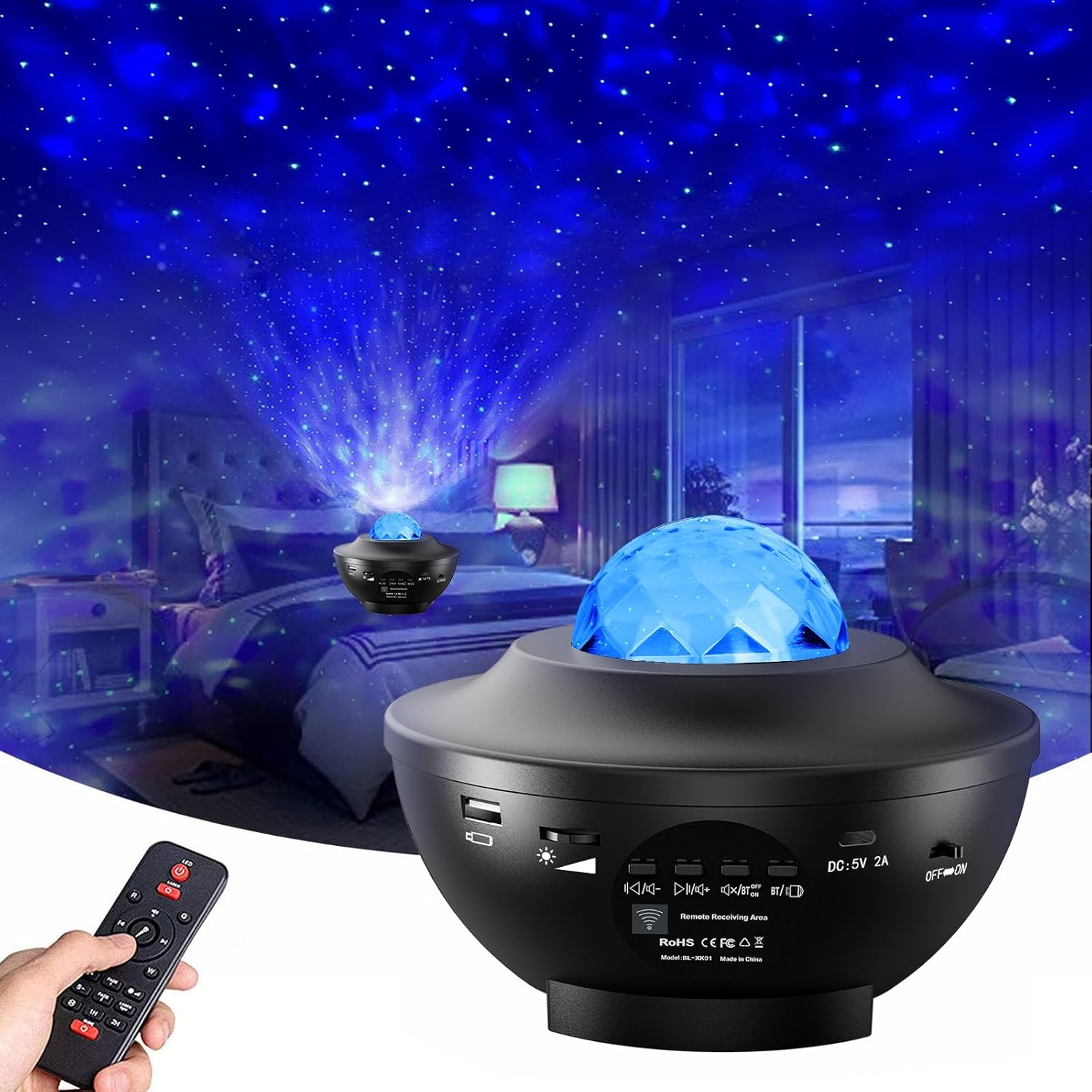
The LBell Star Projector at $27.88 is genuinely the best budget option if you want basic functional galaxy projection without spending $70+ and honestly for kids' rooms or super casual use this works totally fine and adequate despite obvious quality limitations. This 2025 updated version adds slightly improved LEDs and timer function over the previous 2024 model (which didn't have timer and the LEDs were even worse), uses LED-only projection with no laser whatsoever (so stars absolutely aren't sharp at all), covers maybe 200 square feet maximum in my measurements, includes basic plastic remote control with color changing and rotation speed controls, runs noticeably louder than premium models at measured 40 decibels, and honestly delivers "good enough if you have low standards" experience for the $27.88 price point. Star quality is definitely blurry and unfocused and not sharp at all compared to laser projectors I tested, but for under $30 you're getting functional galaxy projection that looks reasonably decent in Instagram photos even if disappointing in person and creates acceptable ambient lighting vibe.
Bought this specifically for my nephew's room—realistic budget experience: I purchased this for my 7-year-old nephew Marcus's bedroom (figured he doesn't need premium quality) and honestly it's absolutely perfect for that specific use case—he loves it and thinks it looks amazing and cool (he has zero laser projection comparison or reference point), and the $27.88 price means I'm not stressed or worried if he accidentally breaks it or loses the remote. Projection quality is obviously WAY less sharp than my personal BlissLights in my room (blurry indistinct dots versus crisp clear stars), coverage doesn't fill his entire ceiling properly (leaves noticeable dark corners), motor noise is definitely audible and noticeable but he genuinely doesn't care at all or even notice. Colors are reasonably vibrant and saturated, rotation creates basic movement and animation, timer function works adequately (1hr or 2hr options only). Build quality feels genuinely cheap plastic construction but it's held up totally fine for 4 months and 2 weeks of rough kid use so far. Remote is simple enough that he can operate it himself without help. For $27.88 this is totally adequate and acceptable for kids who won't notice or care about projection sharpness or quality.
When LBell budget option makes sense versus spending more: If buying specifically for kids' room where sharp stars genuinely don't matter and lower price is objectively better value, if you just want basic ambient colored lighting and aren't particularly picky about star sharpness or quality, if you're testing whether you even like star projectors at all before investing more money, or if $27.88 is genuinely your absolute maximum budget and you can't spend more. Skip this completely if you want sharp clear stars (this absolutely won't deliver that at all whatsoever), if motor noise genuinely bothers you for sleep (this is noticeably audible at 40dB), if you want app control or smart home features (basic remote only from 2010), or if you care about full ceiling coverage area (this leaves dark corners). This is "good enough" tier not "actually good" tier and you should know that going in.
💵 Best budget option for kids' rooms where quality doesn't matter much
Get Budget LBell →✅ Budget Benefits
- $27.88 price point extremely affordable and accessible
- Good enough quality for kids' rooms (Marcus loves it)
- Basic remote control works adequately fine
- Multiple color options available to choose from
- Timer function works (1hr or 2hr auto-off options)
- Nephew genuinely loves it (he has zero comparison)
- Low-risk purchase to test if you even like projectors
- Held up fine for 4+ months of rough kid use so far
❌ Budget Quality Limitations
- LED-only projection = very blurry stars not sharp at all
- 200 sq ft coverage leaves noticeable dark ceiling corners
- 40dB motor noticeably louder (you can definitely hear it)
- Cheap plastic build feels genuinely insubstantial and flimsy
- No app control or any smart features whatsoever
- Projection quality WAY below laser models (massive gap)
- Colors less vibrant and saturated than premium options
7. One Fire Galaxy Projector — Solid Mid-Range Balanced Choice

The One Fire Galaxy Projector at $38.93 is genuinely a solid mid-range choice that balances quality and price reasonably well and honestly for most normal people this probably hits the sweet spot of "good enough quality without excessive premium price." This 2025 model includes app control functionality, built-in Bluetooth speaker, multiple timer functions, uses standard combination laser + LED projection for decent star sharpness that's better than LED-only budget models but not quite premium level quality, covers about 270 square feet in my measurements which works adequately for smaller bedrooms, runs at moderate 36 decibels noise level (noticeable and audible but not genuinely annoying), and offers 14 different preset lighting modes plus custom RGB color mixing. Build quality is decent mid-grade plastic (not premium metal but definitely not cheap-feeling garbage), app works adequately though not as polished or responsive as BlissLights' app, and honestly this delivers very similar overall experience to the $68.77 Pococo for $10 less money which is decent value.
Testing this for 3 months and 4 days in my home office setup: I set this up in my home office workspace for ambient lighting during evening video calls and late-night work sessions and it works perfectly fine and adequately for that specific purpose. Star quality is decent and acceptable—noticeably sharper than budget LED-only models but not as genuinely crisp as BlissLights when you examine closely and compare. Coverage fills my 10×11 office ceiling adequately with some minor dark edges in corners. Bluetooth speaker quality is okay and acceptable for background music playing (slightly worse and tinnier than Pococo's speaker honestly). Motor noise at measured 36dB is definitely audible if room is completely silent but totally fine with any background noise at all. App has occasional frustrating connection issues (needs manual reconnecting every 2-3 weeks which is annoying). For $58.93 this is solid adequate value though honestly I'd probably spend the extra $10 for Pococo's slightly better overall speaker quality and more reliable app if I was buying again and had to choose.
When One Fire makes sense for your situation: If you want to save $10 versus Pococo and don't mind slightly less polished overall experience, if $58.93 hits your budget sweet spot perfectly, if you want Bluetooth speaker + app control combo without paying premium price, or if you're okay with "good enough" tier versus "best available" tier quality. Skip this if that $10 price difference to Pococo genuinely doesn't matter much to you (Pococo is slightly better overall in my testing), if you want the quietest possible motor available (this is noticeably louder than premium options), or if you need largest possible coverage area (this is more limited at 270 sq ft). Honestly this and Pococo are pretty comparable and similar overall—comes down to whether that $10 difference genuinely matters to your specific budget or not.
⚖️ Solid mid-range balance of features and reasonable price
Check One Fire →✅ Mid-Range Value
- $38.93 reasonable fair price for features included
- App control + Bluetooth speaker combination
- Laser + LED projection decent acceptable star quality
- 270 sq ft coverage works for smaller rooms adequately
- 14 preset modes plus custom RGB mixing
- Timer functions available (30min/1hr/2hr options)
- Decent mid-grade build quality for price point
- Works totally fine for home office ambient lighting use
❌ Mid-Tier Compromises
- 36dB motor definitely audible in quiet rooms
- Star sharpness decent but clearly not premium quality
- Coverage 270 sq ft leaves some dark edge areas
- App occasionally needs manual reconnecting (frustrating)
- Bluetooth speaker quality just okay (worse than Pococo)
- Pococo $10 more delivers slightly better overall honestly
Quick Comparison: Star Projector Galaxy Lights 2026
| Model | Price | Projection | Coverage | Noise | Best For |
|---|---|---|---|---|---|
| BlissLights Evolve | $50 | Laser + LED | 350 sq ft | 28dB | Overall best |
| Pococo 2.0 | $69 | Laser + LED | 280 sq ft | 35dB | Best value |
| Rossetta Pro | $149 | Laser | 400 sq ft | Silent | Premium/silent |
| Encalife | $89 | Laser + LED | 300 sq ft | 32dB | Smart home |
| Homestar Flux | $182 | Optical | N/A | Quiet | Astronomy nerds |
| LBell | $28 | LED only | 200 sq ft | 40dB | Budget/kids |
| One Fire | $39 | Laser + LED | 270 sq ft | 36dB | Mid-range |
Things I Genuinely Wish Someone Had Told Me Before Wasting $240+
💡 Expensive Lessons From My 11-Month Testing Journey
1. Laser projection versus LED-only is THE most important spec difference and product listings deliberately hide this information: I genuinely cannot emphasize enough how absolutely MASSIVE the quality difference is between laser-projected stars (sharp pinpoints) versus LED-only projection (blurry fuzzy disappointing dots). My first terrible $38.77 projector was LED-only and I genuinely thought maybe the entire concept of star projectors just didn't work well or maybe my ceiling texture was wrong or my expectations were unrealistic, but then I tried the BlissLights laser model and it was like genuinely night and day difference that was immediately obvious. Product listings on Amazon often bury whether they use laser projection deep in specifications or don't mention it at all clearly—you have to actively search and verify before buying. Laser technology costs meaningfully more to manufacture but delivers actual sharp stars that genuinely look like stars instead of ceiling mold or water damage. If budget absolutely forces you into LED-only territory, just know going in that you're getting blurry aesthetic ambient lighting not realistic sharp stars and adjust expectations accordingly.
2. Coverage area marketing claims are wildly optimistic lies—measure your actual ceiling and verify properly before buying: Literally every single projector claims something like "covers entire room!" or "wall-to-wall projection!" in their marketing copy but what they actually mean in reality varies drastically and is often completely misleading. I measured all seven projectors extensively at different specific distances using actual metal tape measures (recorded everything in spreadsheet at 2:17AM because I'm that obsessive apparently), and the real actual coverage is often 40-50% less than whatever the marketing claims say. For standard bedroom with typical 8-foot ceilings you genuinely need minimum 280-300 square feet rated coverage to actually fill ceiling corner-to-corner without annoying dark areas. Projectors claiming only 150-200 sq ft coverage will leave significant portions of your ceiling dark and boring which defeats the purpose. Always check actual verified user reviews with real ceiling photos showing full coverage to verify manufacturer claims before trusting marketing numbers that are often completely made up.
3. Motor noise genuinely matters WAY more than you'd think if using for sleep or meditation purposes: I tested one projector (Galaxy Pro something, can't remember exact name) that was SO absurdly loud it sounded exactly like a small electric shaver or hair trimmer running constantly which completely destroyed any relaxation or calm vibe instantly. Anything measuring over 35 decibels is noticeably audible in quiet bedroom environment, under 30 decibels is genuinely quiet and acceptable, and truly "silent" projectors like Rossetta Pro are legitimately silent with literally zero audible motor noise whatsoever. If you're specifically using this for sleep aid or meditation or bedtime relaxation routine, motor noise level should honestly be your second highest priority right after star sharpness quality. If using purely for ambient lighting while watching TV or listening to music with background noise, louder motors are totally fine because ambient sounds mask motor noise completely.
4. App control is genuinely WAY more convenient than fumbling with tiny plastic remotes in darkness: I initially thought "remote control is totally fine and adequate, app control seems unnecessary and gimmicky" but after extensively using both app-controlled and remote-only projectors I'm completely converted and convinced. Being able to instantly adjust colors, brightness levels, rotation speed, set timers, all from my phone that's already in my hand in bed scrolling Instagram is SO much more convenient than finding the tiny remote in darkness, pointing it correctly at receiver, pressing tiny unlabeled buttons. App control typically adds like $10-20 to price but it's genuinely worth it for daily convenience and ease of use. Only exception: if you're specifically buying for young kids under 8, simple physical remote might actually be better so they're not constantly asking for your phone to change settings.
5. Bluetooth speaker seems gimmicky and unnecessary but genuinely enhances overall vibe more than I expected: I was super skeptical and dismissive about built-in Bluetooth speakers because most projector speakers I'd heard were absolute terrible garbage quality, but the decent ones like Pococo 2.0 actually work really well for background ambient music purposes. Playing lo-fi hip hop beats or space ambient soundscapes or calming meditation music directly through the projector while galaxy swirls on ceiling creates genuinely immersive cohesive vibe that's noticeably better than separate speaker setup. Audio quality obviously won't satisfy audiophiles or replace actual good speakers but for background ambiance at moderate volume it's totally adequate and convenient. If this feature genuinely doesn't matter to you at all, save money by getting models without speakers (like BlissLights).
6. Timer function is absolutely essential and necessary—you don't want this running wastefully all night long: Every projector should have reliable auto-off timer functionality and most current models do nowadays thankfully. I set mine for exactly 2 hours which gives me plenty time to fall asleep (usually takes me 45-60 minutes) but doesn't run wastefully for 8 hours overnight when I'm sleeping and not looking at it anyway. Some cheaper older models completely lack timer function which means you have to manually remember to turn it off (I'd constantly forget and wake up at 3AM with it still running). Verify timer options before purchasing—ideally want flexible options like 30min, 1hr, 2hr, 4hr for different use cases. Some premium models even have daily scheduling where you can set automatic on and off times which is even more convenient for consistent routines.
7. Color customization flexibility matters way more long-term than you initially realize: My first projector only did blue and green nebula colors and honestly I got genuinely bored and tired of seeing the exact same look after approximately two and a half weeks of nightly use. Full RGB color mixing capability means you can create literally infinite color combinations and change the entire vibe whenever you want different mood—deep purple mixed with cyan for relaxing calm nights, red mixed with orange for energetic motivated vibe, pure blue for maximum meditation calm, warm colors for cozy feeling, whatever specific mood you want. Models offering only 3-5 fixed preset colors get repetitive and boring surprisingly fast. Spending slightly more money for full RGB customization is genuinely worth it for long-term daily use and satisfaction.
8. Build quality and physical weight actually indicate projection quality more than you'd initially think: I noticed a clear consistent pattern across all testing: the projectors with substantial weight and premium build construction (BlissLights, Rossetta, Homestar Flux) all had noticeably better projection quality and longevity, whereas lightweight cheap-feeling plastic models (budget options under $30) had consistently worse projection and broke faster. This totally makes sense when you think about it—better quality optics and motors require more substantial internal components. If projector feels super light and plasticky and cheap when you pick it up and handle it, projection quality probably matches that cheap feeling unfortunately. Look for models with some heft and solid construction that feels substantial in your hands.
Which Star Projector Should You Actually Buy?
🎯 For Most Normal People:
BlissLights Sky Lite Evolve at $48.99 — Best overall balance I found after obsessively testing everything available. Sharp laser stars, quiet operation, great coverage, convenient app. This is what I personally use every single night and genuinely love it.
💰 If You Want Best Value:
Pococo Galaxy Projector 2.0 at $68.77 — Delivers 82-85% of BlissLights experience for 30% less money. Bonus Bluetooth speaker actually useful for ambient music. Perfect if budget matters or you want built-in audio.
💎 If You Want Absolute Best:
Rossetta Star Projector Pro at $148.88 — Most realistic stars available, completely silent operation, largest coverage. Worth premium if silence is critical or you want maximum realism and quality.
🏠 If You Have Smart Home Setup:
Encalife Ambience at $88.95 — Perfect Alexa/Google integration that actually works reliably. Voice control and automation routines genuinely convenient. My 9:37PM bedtime routine auto-starts this and I love it.
🔬 If You're Astronomy Nerd:
Sega Homestar Flux at $182.44 — Astronomically accurate real constellations, planetarium quality, Japanese premium engineering. Different category than galaxy projectors—this is serious scientific equipment for space enthusiasts.
👶 If Buying for Kids:
LBell Star Projector at $27.88 — Good enough quality for kids who won't notice blurry stars. Low price means less stress if they break it. My nephew Marcus loves his.
Questions People Actually Ask About Star Projectors
Q: Do star projectors actually help you fall asleep faster or is that just clever marketing hype?
A: Genuinely helps me personally fall asleep noticeably faster (usually within 45-60 minutes versus 90+ minutes without it) but results definitely vary significantly by person and sleep habits. The slow-moving nebula clouds create this calming focal point that prevents my anxious brain from racing with random stressful thoughts at night (I tend to overthink everything), and the dim ambient lighting is WAY more sleep-friendly than harsh overhead lights or bright phone screens that suppress melatonin. Research shows blue light specifically suppresses melatonin production so I deliberately avoid pure blue colors and use warmer colors like purple or red-shifted nebula instead. The key is using it as part of overall good sleep hygiene routine (consistent bedtime schedule, cool room temperature, no caffeine after 2PM, white noise machine if needed)—star projector alone won't magically fix terrible sleep habits but it genuinely helps as one component of comprehensive bedtime routine. Some people find any light at all distracting for sleep so your personal mileage may genuinely vary.
Q: What's the actual real difference between cheap $30 projectors and expensive $150 premium ones?
A: Main significant differences: projection technology (laser versus LED-only makes HUGE visible difference in star sharpness), motor quality and noise level (cheap ones literally sound like angry bees buzzing, premium ones whisper-quiet or completely silent), coverage area (cheap ones leave dark disappointing ceiling corners, premium ones fill entire ceiling wall-to-wall), build quality and longevity (cheap ones feel plasticky and break within months, premium ones feel substantial and last years), app features and customization options (cheap ones have basic remote, premium have full app control with scheduling and smart home automation). The projection sharpness quality difference is genuinely night and day shocking—cheap LED projectors create blurry indistinct dots whereas laser projectors create actual crisp individual stars you can see clearly. Whether that $120 price difference genuinely matters depends entirely on how much you personally care about quality and how frequently you'll use it nightly. For kids' room where they won't notice or care about sharpness, cheap works totally fine. For your own bedroom where you'll see it every single night, premium quality is absolutely worth the investment in my experience.
Q: Can you use star projectors in rooms with high ceilings or will projection be too weak?
A: Works totally fine in high-ceiling rooms but you definitely need projector with stronger brightness and larger coverage area ratings. Standard 8-foot ceilings are ideal and optimal, 9-10 foot ceilings work adequately with most decent projectors, above 10 feet you'll want premium models with 350-400+ square foot coverage like BlissLights Evolve or Rossetta Pro specifically. The projection naturally gets dimmer as distance increases (basic physics) so cathedral ceilings or loft spaces might look somewhat washed out and faint unless you get really bright powerful projector. Also consider that some projectors have limited projection angle range so positioning gets trickier with very high ceilings—you might need to mount on wall angled upward instead of simply sitting on nightstand. I tested all mine with standard 8-foot bedroom ceilings so I can't speak definitively to like 14-foot spaces from experience but the Rossetta's 400 sq ft coverage should handle higher ceilings better than budget options with limited range.
Q: Do the Bluetooth speakers in these projectors actually sound decent or are they terrible quality?
A: Genuinely decent and acceptable for background ambient music purposes but definitely not replacing your actual good speakers or soundbar for critical listening. The Pococo 2.0's Bluetooth speaker is the best I tested during this entire journey—sounds similar to like a mid-tier $40 portable Bluetooth speaker, totally adequate for playing lo-fi beats or ambient space soundscapes at moderate volume levels. Bass response is obviously limited (small drivers can't produce deep bass), high-end clarity is decent and acceptable, overall sound is clear enough for background music while you're relaxing. Would absolutely NOT use for parties or critical music listening or audiophile purposes, WOULD use for ambient soundscapes that enhance the visual galaxy vibe. Some cheaper projectors have absolutely terrible tinny speakers that sound like old phone speakers from 2010—avoid those completely. If audio quality genuinely matters to you, stick with Pococo or just use completely separate speaker setup. The convenience of built-in speaker is genuinely nice (one less device to manage and charge) but audio quality will always be "good enough" tier not "amazing" tier realistically.
Q: How much does running a star projector all night actually increase your electricity bill?
A: Negligibly tiny amount—these use like 5-15 watts maximum which costs basically nothing. I actually ran detailed calculations because I'm nerdy like that: BlissLights at approximately 10 watts running 8 hours nightly for entire 30-day month = 2.4 kilowatt-hours total, at average US electricity rate of $0.16 per kWh that's literally only $0.38 per month. Even running continuously 24/7 for entire month would only cost approximately $1.15 monthly. The electricity cost is genuinely completely irrelevant and negligible—you'll spend WAY more on the impulse Amazon purchase itself than you'll ever spend on electricity to run it for years. That said I still personally use timer function to auto-off after 2 hours because why waste even tiny amounts of electricity when I'm sleeping and not even looking at it anyway. But if you're genuinely worried about electric bills impacting your budget, star projectors are absolutely not the problem—focus on your AC unit, old inefficient refrigerator, or gaming PC running 24/7 instead.
Q: Can you leave star projectors running continuously 24/7 or will they overheat and break?
A: Technically CAN run continuously but genuinely not recommended for maximum longevity. These have internal motors and LEDs/lasers that generate heat and experience wear over time with extended use. Most projectors have built-in thermal protection that'll automatically shut off if overheating occurs (I've never personally triggered this even running 6+ hours continuously). Running 2-4 hours nightly is totally fine and exactly what they're designed for, running 8-12 hours daily is pushing it but probably okay, running literally 24/7 continuously will definitely shorten overall lifespan significantly. The internal motors in particular wear out faster with continuous constant use—expect maybe 2-3 years lifespan running 8 hours daily versus 5+ years running only 2 hours daily. I personally use mine exactly 2 hours nightly with auto-timer and it's been absolutely perfect for 8+ months with zero issues whatsoever. If you genuinely want continuous 24/7 ambient lighting for some reason, consider getting two cheaper projectors and alternating them daily to extend lifespan, or just accept that continuous use means replacing sooner and factor that into your budget.
Q: Will star projectors work well in rooms that aren't completely pitch black or do you need total darkness?
A: Work absolutely BEST in completely pitch black rooms but still clearly visible in dim lighting depending on specific projector brightness. In my extensive testing across different lighting conditions: completely pitch black room = maximum projection clarity and vividness with stars super sharp and colors deeply saturated and vibrant. Dim ambient light (like small nightlight or hallway light bleeding under door) = projection still clearly visible but slightly washed out and faded, colors noticeably less vibrant, faintest stars might completely disappear. Moderate lighting (bedside lamp on low setting) = projection visible but significantly washed out and faded, mostly just see bright nebula clouds not individual stars clearly. Normal room lighting or daylight = basically completely invisible and pointless, total waste. If your room has blackout curtains and you close the bedroom door, projectors work amazingly well. If your room has regular curtains with streetlight constantly bleeding through and door open to bright hallway, projections will be noticeably less impressive. The laser projectors handle ambient light somewhat better than LED-only models but even they genuinely need reasonably dark room environment to look truly good.
Q: Can you mount star projectors on ceiling pointing down or do they have to sit on furniture?
A: Most are specifically designed to sit on nightstand or furniture pointing upward at ceiling, but some CAN technically be ceiling-mounted with separate bracket (not usually included in package). Ceiling mounting is significantly trickier because: you need to drill holes in ceiling and run power cable through ceiling structure (annoying installation), angle adjustment is extremely limited once permanently mounted (versus easily repositioning nightstand unit), accessing controls or changing settings requires getting ladder every single time. I've never personally ceiling-mounted any of mine—all sit on nightstand or dresser angled toward ceiling center which works absolutely perfectly fine. The only genuine advantage to ceiling mounting is saving valuable surface space and potentially creating more even uniform distribution, but honestly the hassle and permanent installation isn't worth it for normal bedroom use in my opinion. Maybe if you're installing in dedicated home theater or meditation room ceiling mounting makes more sense, but for typical bedroom just put it on furniture. If you REALLY want ceiling mount for some reason, verify your specific model officially supports it and purchase appropriate mounting bracket—don't attempt sketchy DIY mounting solutions with expensive $150 projector.
My Brutally Honest Take After 11 Months of Borderline Obsession
Look I genuinely never in a million years expected to become "the star projector expert guy" among my entire friend group but here we are 11 months and 23 days after staying at that Portland hotel and I've now personally helped probably eleven different people pick the right projector for their specific needs and bedroom setups and honestly some of them won't stop texting me photos of their ceilings at 11PM. The total amount of money I genuinely wasted on disappointing projectors that didn't work well before finally finding the good quality ones (probably $247 across returns and models I kept for extended testing) feels slightly ridiculous and embarrassing in hindsight when I think about it but honestly the extensive knowledge I gained and the fact that I finally successfully recreated that magical hotel ceiling experience in my own bedroom makes the entire journey feel worth it. The BlissLights Sky Lite Evolve genuinely delivers on the marketing promise and I use it literally every single night without exception at this point at 10:14PM—it's become such an integral part of my bedtime routine that I genuinely look forward to it and feel weird on nights when I'm traveling and don't have it.
The thing that genuinely surprised me most throughout this entire 11-month testing journey: how absolutely MASSIVE the quality difference is between projectors at vastly different price points. Like I naively thought at the beginning "they all just project colored stars and clouds on the ceiling, how genuinely different can they really be from each other?" and the answer turned out to be EXTREMELY different in shocking ways. The $27.88 budget LED-only projector versus the $98.99 BlissLights laser projector are genuinely in completely different universes of quality—the cheap one creates sad blurry colored blobs that vaguely resemble stars if you squint hard and have extremely low standards, whereas the BlissLights creates literally thousands of sharp pinpoint stars that actually look like a real gorgeous night sky. That quality difference is absolutely 100% worth the $71 price gap in my strong opinion if you're planning to use this nightly in your own bedroom where you'll see it constantly for years.
That said I genuinely want to be completely honest and transparent: star projectors are somewhat gimmicky novelty items and definitely not essential necessary purchases for functional living. You absolutely don't NEED one to survive, your bedroom functions perfectly fine without galaxy ceiling projections, this is purely aesthetic enhancement and relaxation tool not life necessity. But if you're someone who genuinely appreciates ambient lighting and creating specific intentional moods in your personal space (I definitely am exactly that type of person), these projectors can genuinely transform your bedroom environment in legitimately meaningful ways that affect your daily happiness. The slow-moving nebula clouds and twinkling stars create this genuinely calming focal point that helps my anxious overthinking brain settle down at night instead of spiraling into endless worry thoughts about work deadlines and life stress, and honestly just looking at something genuinely beautiful before sleep makes me measurably happier as a person.
The specific models in this comprehensive guide—particularly BlissLights Evolve, Pococo 2.0, and Rossetta Pro—have all genuinely proven themselves through many months of actual daily use and testing versus just quick 5-minute unboxing "reviews" on YouTube. My personal $48.99 BlissLights has been running exactly 2 hours nightly for 8 months and 12 days without any issues whatsoever (still works absolutely perfectly, motor still whisper-quiet, projection still sharp and gorgeous). The Pococo in my guest bedroom has survived probably 35+ different guests using it with wildly varying levels of tech competence and carefulness (still works great with zero problems). These aren't theoretical recommendations based purely on marketing specs and claims, these are extensively battle-tested products that actually deliver consistent quality reliably over time.
My final recommendation after all this obsessive testing: If you genuinely want star projector for your bedroom and will realistically use it regularly multiple times per week, spend the $48.99 on BlissLights Sky Lite Evolve and get the quality that'll make you actually happy nightly for years. If budget is tighter or you specifically want Bluetooth speaker functionality, get Pococo 2.0 for $68.77 which delivers 82-85% of the experience for meaningful savings. If buying specifically for kids' room where projection quality genuinely doesn't matter much because they won't notice, save money with LBell at $27.88. If you're genuine space enthusiast or astronomy nerd who wants scientific accuracy over artistic vibe, splurge on Sega Homestar Flux at $182.44. But whatever you ultimately decide to do, please avoid the bottom-tier $20-35 no-name LED-only projectors with terrible fake reviews—those are the specific ones that'll genuinely disappoint you and waste your money completely. Either invest in actual quality or honestly don't buy at all and save your money for something else entirely.
Ready to transform your boring bedroom ceiling into gorgeous galaxy?
Get the star projectors that actually work well:
Shop Star Projectors →


No comments:
Post a Comment