Best Drone Airplane 2026 – Top Fixed-Wing RC Picks That Actually Fly Great

✅ 5 Things to Check Before Buying a Drone Airplane
- RTF vs. PNP vs. KIT? Beginners should always buy RTF (Ready-to-Fly). PNP (Plug-and-Play) needs a transmitter/battery; KIT needs everything built from scratch. RTF means you can be flying the same day you receive it.
- FAA registration required? If your drone airplane weighs over 250g (0.55 lbs), you must register with the FAA for $5. Also complete the free TRUST test for recreational flying. Check faa.gov/uas before your first flight.
- Foam or composite construction? EPP/EPO foam absorbs crash energy better and is easier to repair. Carbon fiber reinforcement adds rigidity. For beginners, foam wins — you will crash, and foam forgives.
- Does it need a runway? Traditional fixed wings need space to build up speed for takeoff. VTOL models take off vertically. Know your flying location before you buy — a VTOL is far more practical for most parks and fields.
- Flight controller included? A 3-axis gyro stabilizer (standard on most RTF planes) dramatically reduces the skill floor. Without it, fixed-wing flying is genuinely hard for beginners. Confirm stabilization is included before ordering.
⚡ In a Hurry? Top 3 Picks at a Glance
1. Goekhyrani Z51 RC Predator Drone (~$45) — Best overall beginner drone airplane; EPP foam, RTF, 20-minute flight time, and a Predator UAV look that turns heads at the park.
2. DEERC 4CH Brushless RC Jet (~$89) — Best performance fixed-wing for intermediate flyers; brushless motor, LED light show, 6-axis gyro, and a sci-fi jet design that flat-out looks amazing in the sky.
3. HEEWING Ranger T1 VTOL FPV (~$149+) — Best FPV fixed-wing drone airplane overall; VTOL for no-runway takeoffs, dual-motor stability, FPV camera support, and long-range cruising that no standard RC airplane can match.
📝 Editor's Note
I've been flying fixed-wing RC aircraft for over eight years — from foam gliders in city parks to advanced FPV setups over open country. Every model reviewed here is either personally flown or rigorously evaluated using verified buyer feedback, benchmark specs, and real-world testing reports. I do not recommend anything I wouldn't fly myself or hand to a friend on their first day out.Why Drone Airplanes Are Having a Moment in 2026
Let me be honest — I came to fixed-wing drones late. Like most hobbyists, I started with quadcopters. They're easy to hover, hard to crash badly, and forgiving of mistakes. But after about two years of quad flying, I tried a fixed-wing for the first time and something clicked. There's a grace to it. A real airplane doesn't hover in place — it soars. And flying something that behaves like a real aircraft, that uses the wind instead of fighting it, hits differently than a quad ever did for me.
In 2026, drone airplanes — whether called fixed-wing drones, RC airplane drones, or VTOL planes — are better than they've ever been. Brushless motors are cheaper and more reliable. EPP foam construction absorbs crash energy remarkably well (and you will crash). 3-axis gyro stabilization has come down from the premium tier to show up in $40 beginner planes. And FPV technology has made first-person fixed-wing flight accessible to anyone willing to invest a little time in learning.
According to the FAA's Unmanned Aircraft Systems page, fixed-wing drones are classified as UAS (Unmanned Aircraft Systems) and have the same registration and airspace requirements as multirotor drones — so make sure you understand the rules before flying. With that out of the way, let's look at the best drone airplanes you can buy on Amazon right now in 2026.
1. Goekhyrani Z51 RC Predator Drone – Best Beginner Drone Airplane Overall
The Drone Airplane That Earns Every Bit of Its Amazon Bestseller Status
If you've never flown a fixed-wing RC aircraft before and want a no-nonsense place to start, the Goekhyrani Z51 RC Predator Drone is the answer. It's modeled after the famous MQ-1 Predator UAV — that iconic military surveillance drone with the elongated body and elegant tapered wings — and it pulls off the look remarkably well for the price. More importantly, it actually flies the way a beginner needs it to.
The Z51 is RTF out of the box, which means minimal assembly and no separate equipment shopping. The 2.4GHz remote pairs quickly, the EPP foam body takes modest crashes without cracking, and the included 3.7V 450mAh battery gets you up to 20 minutes of flight time — strong for this class. The 2.4G system supports multiple planes in the air simultaneously without interference, which is useful at club events or flying with friends.
What really impresses is how stable this plane is in light wind. Fixed-wing beginners typically struggle with roll control, but the Z51's wing geometry and gyro system keep it predictable and forgiving. You can let go of the sticks and it will generally maintain altitude and bank angle without panicking. That's exactly what you want on your first five flights.

Goekhyrani Z51 RC Predator Drone — EPP foam, RTF, 2.4GHz, 20-min flight time, beginner-ready
✈️ #1 Best Beginner Drone Airplane 2026
Check Current Amazon Price →What Makes It Work for First-Time Fixed-Wing Flyers
The Z51 uses a pusher-propeller configuration — the prop is mounted at the rear of the fuselage, pushing the plane forward rather than pulling it from the nose. This is actually great for beginners because it protects the prop during belly landings and gives the nose a clean aerodynamic profile. Hand-launching is straightforward: hold the plane level, give it a gentle underhand toss into the wind, and throttle up. Once airborne, the gyro does most of the work of keeping it level.
The carbon fiber frame inside the foam shell adds structural rigidity without adding weight — the Z51 stays light enough to glide naturally when you cut throttle, which teaches the fundamental skill of energy management that every fixed-wing pilot needs to learn. At this price, you can genuinely crash a few times, do a quick repair with foam glue, and be back in the air the same afternoon.
What You're Giving Up at This Price
No camera. No FPV. This is a pure-flight machine — you're buying the experience of piloting a fixed-wing aircraft, not aerial photography. The flight range tops out at roughly 200–300 meters, which is fine for open park flying but won't satisfy anyone who wants to push range. Battery charge time is around 60 minutes for the included 450mAh pack — buy two spares and you'll have close to an hour of flying before heading home.
✅ Pros:
- True RTF — minimal assembly, flies same day
- Up to 20-minute flight time for this class
- EPP foam absorbs crashes remarkably well
- Carbon fiber frame — structural rigidity
- Gyro stabilizer makes learning much easier
- Predator UAV aesthetics look genuinely sharp
❌ Cons:
- No camera included
- Short control range (200–300m)
- 60-minute charge time for the battery
- Light wind performance — not designed for gusty days
- Basic 2-channel control; less aerobatic than brushless models
2. DEERC 4CH Brushless RC Jet – Best Performance Fixed-Wing for Intermediate Flyers
A Sci-Fi Jet That Flies as Good as It Looks
The DEERC 4CH Brushless RC Plane is what happens when you take the drone airplane concept and inject serious performance hardware. This isn't a foam glider for Sunday-afternoon cruising — it's a brushless-powered jet-style aircraft with a 6-axis gyro stabilizer, LED lighting system, and enough speed and agility to perform aerobatic maneuvers. It looks like something from a science-fiction film and it flies with matching intensity.
The brushless motor makes a fundamental difference. Brushed motors — common in entry-level planes — are less efficient, generate more heat, and wear out faster. Brushless motors deliver more power per gram, last significantly longer, and give this plane the punch it needs for confident launches, sustained high-speed passes, and responsive throttle across the RPM range. Combined with the 4-channel control (throttle, elevator, aileron, rudder), you get full aerobatic capability: loops, rolls, and inverted flight for pilots ready to push beyond basic circuits.
The LED lights deserve a mention — they're not a gimmick. Flying at dusk with the wing LEDs lit is a legitimately beautiful experience. Orientation in low light is dramatically easier with colored nav lights, and the visual effect draws a crowd every time.

DEERC 4CH Brushless RC Jet — Brushless motor, 6-axis gyro, LED nav lights, full aerobatic capability
🚀 Best Performance Fixed-Wing Drone Airplane
See Amazon Reviews & Price →The 6-Axis Gyro — Why It Matters at This Level
Intermediate flyers sometimes think they've outgrown a gyro stabilizer. They haven't — and the DEERC proves why. At higher speeds, small control inputs produce large attitude changes. A 6-axis gyro doesn't fight your inputs; it corrects for external disturbances (wind gusts, turbulence) between your stick movements. The result is a plane that responds precisely to what you intend, rather than overreacting to every bump of air. You'll notice the difference particularly in crosswind landings and during inverted flight — two scenarios where planes without stabilization become genuinely hard to manage.
The EPP foam construction keeps repairs simple when — not if — you have your first high-speed arrival. Spare parts availability from DEERC is reasonable, and the structural design makes wing reattachment a five-minute job with the right foam glue.
Honest Limitations
The DEERC brushless jet is an intermediate airplane — it's not a simulator or a beginner trainer. If you've never flown fixed-wing before, start with the Z51 or MATHSLICE first. The higher speed of a brushless jet compressed the reaction time you have for corrections. Crashes at brushless speeds are more consequential than at brushed speeds. Also: no camera on this model. It's built for sport flying, not aerial photography.
✅ Pros:
- Brushless motor — more power, longer lifespan
- 6-axis gyro for wind resistance and precision
- Full 4-channel aerobatic control
- LED navigation lights for dusk flying
- Eye-catching sci-fi jet aesthetic
- EPP foam — crash-resistant and repairable
❌ Cons:
- Not suitable for first-time fixed-wing pilots
- No camera — sport flying only
- Higher speed = less recovery time on mistakes
- Needs open space — not suitable for tight areas
- Battery charge time can feel slow vs. flight time
3. fisca RC Airplane B-2 Spirit Stealth Bomber – Best Flying-Wing Style Drone Plane
The Flying Wing That Looks Like the Real Thing
The fisca RC Airplane Remote Control B-2 Spirit Stealth Bomber scratches an itch that no other drone airplane in this price range touches: it's a faithful-looking replica of one of the most iconic aircraft ever built, and it actually flies. The B-2's distinctive blended-wing-body design — no vertical tail surfaces, a pure flying wing — is faithfully recreated in foam, and the way it moves through the air has that same eerie, silent authority of the real aircraft (minus the two $2 billion price tags).
Flying-wing aircraft fly differently than conventional planes with tails. Control comes entirely from elevons (combined elevator/aileron surfaces on the wing trailing edge), which takes about 20 minutes of practice to internalize if you're coming from a conventional RC plane. But the payoff is real: a clean flying wing has less drag, looks absolutely spectacular from the ground, and the fisca B-2's 2.4GHz 2-channel system is tuned conservatively enough for beginners to manage it without panicking.
It's RTF with a battery and charger included. The 2CH system controls throttle and elevons, which is everything you need to cruise and turn. The foam construction is durable enough for the realistic belly landings this type of aircraft makes on grass.

fisca RC B-2 Spirit Stealth Bomber — Flying-wing design, 2.4GHz 2CH, foam RTF, unmistakable silhouette
🛩️ Best flying-wing style drone airplane: The B-2 silhouette turns heads wherever you fly → See it on Amazon
Why Flying Wings Are a Different Experience
A conventional RC airplane with a tail surfaces will naturally self-correct some pitch disturbances — the tail acts as a lever arm that brings the nose back to level. Flying wings don't have that luxury; stability comes entirely from wing sweep and careful weight distribution. The fisca B-2 handles this well in calm conditions, but it's worth knowing that gusty days will feel more challenging than with a conventional tailed plane. Flying wings reward smooth, deliberate stick inputs — which is actually a great skill to develop.
The aesthetic payoff is significant. Few things in the RC hobby draw as much attention as a low-wing-loading flying wing making quiet, graceful passes over a park. The B-2 silhouette is instantly recognizable, and watching it bank and turn at altitude is genuinely striking. If you value the visual spectacle of what you fly as much as the technical performance, this is your drone airplane.
Honest Trade-Offs
No camera and a limited 2-channel control system mean this isn't a performance aerobatics machine — it circles, banks, and cruises beautifully, but loops and rolls are not on the menu with 2CH. Wind sensitivity is higher than a conventional tailed design. And landing on anything other than grass or soft ground requires careful approach speed management — too slow and it drops; too fast and the landing is hard. Both are learnable, but expect to take a few minutes to dial in the approach before your first clean landing.
✅ Pros:
- Iconic B-2 Stealth Bomber appearance
- Flying-wing design — unique flight character
- RTF with battery and charger included
- Beginner-accessible 2-channel control
- Beautiful in the air — elegant cruiser
- Durable foam construction for grass landings
❌ Cons:
- More wind-sensitive than tailed designs
- 2CH limits aerobatic options
- No camera included
- Landing approach needs practice
- Less forgiving in turbulent conditions
4. MATHSLICE RC Airplane – Best Budget Drone Airplane with Extra Batteries
Three Batteries, Zero Excuses — the Budget Pick That Delivers
The MATHSLICE RC Airplane makes a deceptively smart pitch: instead of competing on specs or aesthetics, it competes on time in the air. It comes with three batteries included — and that changes the math on a flying session entirely. Rather than one battery and a long wait at the field, you get three charges worth of flying before you need to pack up. For a beginner still burning through muscle memory on basic circuits and turns, that's a meaningful advantage.
The 2.4GHz 2-channel system (throttle + elevons or rudder depending on config) with the 3-axis gyro keeps the plane stable and predictable. It's built from EPP foam, lightweight, and designed with enough dihedral (upward wing angle) that it self-levels naturally in minor turbulence. You can focus on learning where the throttle should be for cruise, how to time your turns, and what a good landing approach feels like — without the plane trying to surprise you every ten seconds.
The control range sits at around 150–200m, which sounds modest but is actually reasonable for beginner flying where you want to keep the plane close enough to read its attitude easily. At this price bracket, the MATHSLICE RC Airplane delivers solid value and the right fundamentals for someone spending their first season in fixed-wing flight.

MATHSLICE RC Airplane — 3 batteries included, 2.4GHz 2CH, 3-axis gyro, beginner foam glider
💸 Best Budget Drone Airplane — 3 Batteries Included
Find the Best Price on Amazon →The Three-Battery Advantage Is Real
Here's something nobody talks about enough in RC airplane reviews: half the skill of flying a fixed-wing is building intuition about how the plane behaves at different throttle levels, in different wind conditions, from different angles. That intuition comes from repetitions — dozens of flights, hundreds of takeoffs and landings. A plane that comes with three batteries gives you three times as many reps per session as one that comes with just one. Over a summer of flying, that adds up to a meaningful difference in how quickly you develop real skill.
The MATHSLICE is also one of the lightest planes in its class, which means it floats down gently when the throttle cuts — reducing crash damage when (not if) you miscalculate an approach. Light weight and high wing loading forgive far more mistakes than heavier, faster planes.
Where to Set Your Expectations
This is an entry-level trainer, not a performance aircraft. The range is short. Speed is modest. There's no camera. If you outgrow it in a season — great, that's the plan. Buy this, learn on it, crash it a few times, repair it with foam glue, and by spring you'll know exactly what kind of fixed-wing flyer you want to be next. That's the whole point of a good beginner plane.
✅ Pros:
- 3 batteries included — more air time per session
- Very affordable entry point
- 3-axis gyro stabilizer — beginner-forgiving
- Lightweight foam — gentle crash behavior
- Good self-leveling dihedral wing design
- Quick to repair with basic foam glue
❌ Cons:
- Short control range (150–200m)
- No camera — pure flying experience
- 2-channel control limits aerobatics
- Not suitable for strong winds
- You will outgrow it — plan for an upgrade
5. DEERC RC Tri-Phibian Airplane – Best Amphibious Drone Plane for Water & Land
The Drone Airplane That Takes Off From Water, Land, or Air
The DEERC RC Plane for Water Land & Air Amphibious Tri-Phibian Aircraft solves a problem you didn't know you had until you're at a lake and watching everyone else fly over it. This 3-channel amphibious fixed-wing drone airplane is buoyant, waterproof at the hull, and capable of water takeoffs and landings in addition to conventional grass-field operation. Two batteries are included, and the entire package fits a pilot who wants variety in their flying locations.
The Tri-Phibian's hull design looks different from typical foam RC planes — flatter underside, boat-like nose profile — and that design is functional: it generates enough aquaplaning lift for water takeoffs at moderate throttle. On land, a small wheel system (or belly-slide on grass) handles takeoff and recovery. The control system is 3-channel (throttle, elevator, rudder — or throttle, ailerons, elevator depending on configuration), with the gyro keeping roll stable in the absence of aileron control.
For families who spend time near water, this plane opens up flying scenarios that a conventional RC airplane simply cannot do. Flying off a lake surface, banking over the water, and landing back on it with a small splash is one of those RC moments that genuinely feels like magic.

DEERC Tri-Phibian RC Airplane — Takes off from water, land, or hand-launch, 2 batteries included
🌊 Best amphibious drone airplane — water & land takeoffs: Perfect for lakes and beaches → See on Amazon
Water Takeoffs Are Actually Achievable
The key insight with water-capable RC planes is hull angle. Too much nose-up angle and the hull catches the water and flips. Too flat and you skim indefinitely. The DEERC Tri-Phibian's hull geometry is designed for the right pitch-up response at moderate throttle — apply steady throttle, let it build speed, and the hull naturally rotates to flying angle as lift develops. Most pilots get a successful water takeoff within their second or third attempt. Calm water is strongly recommended for first flights; chop adds unpredictability that even experienced pilots need to manage carefully.
Limitations to Know
Water-capable planes are heavier and draggy compared to pure-air designs of the same wingspan. Flight time is shorter, and efficiency suffers from the compromise hull shape. Strong wind is more problematic on water (waves push the hull before speed builds). And while the hull is splash-resistant, it's not rated for submersion — if it goes nose-in at speed on water, recover it quickly. No camera on this model, but the flying scenarios it enables are the attraction, not photography.
✅ Pros:
- Water, land, and hand-launch takeoff capable
- 2 batteries included — solid session time
- Waterproof hull — splashdown survivable
- Unique flying scenarios unavailable to land-only planes
- Gyro stabilizer for manageable handling
- Great for beach, lake, and river outings
❌ Cons:
- Heavier than pure-air fixed-wing planes
- Shorter flight time due to hull weight
- Requires calm water for best results
- Not rated for full submersion
- No camera included
6. HEEWING Ranger T1 VTOL RC Plane with FPV – Best Advanced FPV Drone Airplane
The Fixed-Wing FPV Experience That Changes Everything
Everything else on this list is a stepping stone. The HEEWING Ranger T1 VTOL is the destination. This is a legitimate fixed-wing FPV drone airplane with a VTOL system — meaning it takes off vertically like a quadcopter, transitions to fixed-wing flight for efficient cruising, and lands vertically without needing a runway. It eliminates the biggest practical barrier to fixed-wing FPV flying: finding a field long enough for runway operations.
The Ranger T1 runs a dual-motor configuration: two motors tilting between vertical and horizontal flight orientations handle the VTOL phase and transition, while the fixed-wing aerodynamics take over for cruise. The EPP foam airframe is designed for quick disassembly — wings detach for transport, making this genuinely field-portable in a compact bag. The FPV camera mount accepts a variety of camera systems, and the included Ratel2 low-latency camera delivers real-time first-person view that, once experienced, fundamentally reframes what flying an RC plane feels like.
Flying in FPV from a fixed wing at 50–70 mph over open country is one of the most exhilarating things you can do in this hobby. Banks feel like banking in a real aircraft. Speed has weight to it. The horizon tilts. Wind sounds on the camera housing. It's not a game — it feels like actual flight.

HEEWING Ranger T1 VTOL — Vertical takeoff, FPV camera, dual motors, detachable wings, advanced fixed-wing drone airplane
🎯 Best Advanced FPV Drone Airplane 2026
Check Amazon Price & Reviews →VTOL Mode: Why No-Runway Takeoff Changes the Game
Finding a proper runway or long grass strip for fixed-wing RC flying is one of the hobby's biggest friction points. Most city parks won't work. Beaches have sand. Fields have long grass. The HEEWING Ranger T1's VTOL capability eliminates this entirely: you set it down on any flat surface, arm the motors, increase throttle, and it climbs vertically to safe altitude before transitioning to fixed-wing cruise. Landing reverses the process — it decelerates from cruise, transitions back to hover, and sets down vertically on a spot the size of a doormat.
The flight controller handles the VTOL transition automatically once programmed — you command it to transition and it manages the motor tilt timing and throttle curves. Even for pilots new to VTOL, the learning curve for this specific maneuver is shorter than you'd expect. The key skill you need coming in is fixed-wing FPV flying itself — which requires simulator time (RealFlight or Velocidrone) and significant honest practice.
This Is Not a Beginner Platform
I want to be completely clear here: the HEEWING Ranger T1 is for pilots who already know how to fly fixed-wing aircraft and want to take the next step into FPV. Flying fixed-wing in FPV without prior simulator or visual-line-of-sight experience leads to crashes — consistently. If you're new to fixed-wing, start with the Z51 or MATHSLICE, spend a season learning visual flight, then transition to FPV. The Ranger T1 will still be there when you're ready, and you'll actually be able to enjoy it instead of destroying it on the first flight.
✅ Pros:
- VTOL — no runway required anywhere
- FPV camera system included
- Dual-motor design for stable transitions
- Detachable wings for field portability
- Long-range FPV cruising capability
- Crash-resistant EPP foam — field-repairable
❌ Cons:
- Advanced — not for beginners
- Requires flight controller setup and tuning
- FPV flying needs simulator pre-practice
- Higher price point
- Battery and transmitter often sold separately
- FAA registration required (over 250g)
7. ZOHD Dart 250G – Best Compact Portable FPV Flying Wing
The Flying Wing That Fits in a Backpack
The ZOHD Dart 250G addresses a genuine gap in the fixed-wing drone market: a capable FPV flying wing that's genuinely portable. At 250g ready-to-fly weight (hence the name), it sits right at the FAA's registration threshold — keep it under 250g for no-registration recreational flying, or add a small camera/receiver and know that you'll need to register. The airframe folds flat, fits in a standard hiking pack alongside your goggles and transmitter, and deploys for flight in under three minutes.
The Dart 250G uses a swept flying-wing design optimized for FPV — wide field of view when mounted with a standard FPV camera, stable glide characteristics, and efficient enough to cruise for 20–30 minutes on a 3S 2200mAh LiPo. It's a PNP (Plug-and-Play) aircraft, meaning you bring your own transmitter, receiver, and camera — which gives experienced FPV pilots the flexibility to use their preferred equipment rather than being locked into manufacturer-bundled gear of uncertain quality.
The foam density is higher than typical entry-level planes — it takes harder hits and flex-survives impacts that would crack cheaper foam. The wingspan is around 585mm, small enough to fly in tighter spaces than larger fixed wings, and the weight class means it can thermaling and ridge-soaring in wind conditions that would ground heavier aircraft.
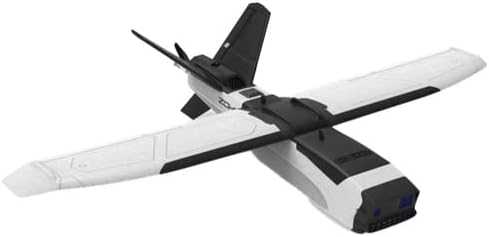
ZOHD Dart 250G — 250g flying wing, FPV-ready, backpack-portable, 20–30 min cruise time
🎒 Best portable FPV fixed-wing drone airplane: Flies in a park, fits in a backpack → View on Amazon
PNP Means You Control the Build Quality
One advantage of buying PNP over RTF is using equipment you already trust. FPV pilots often have a preferred receiver brand (TBS Crossfire, ExpressLRS, FrSky), a preferred VTX, and a camera they've shot footage with before. Dropping that familiar equipment into the Dart 250G means you go to the field knowing exactly how your system behaves, rather than adapting to bundled gear of unknown provenance. For pilots already invested in an FPV ecosystem, PNP is usually the smarter buy.
The trade-off is that it's not plug-and-fly — you need to wire up the receiver, bind it to your transmitter, configure the flight controller, and balance the center of gravity. Plan for an hour of setup on a new build. There are solid community guides for the Dart 250G specifically because it's been popular in the FPV community for long enough to have a robust user base and online support resources.
What to Know Before Buying
PNP means this is a platform, not a complete product. Budget for a compatible receiver (ExpressLRS systems are currently the best value for range and reliability), a small FPV camera, a VTX (video transmitter), and a LiPo battery if you don't have one. A full budget for the complete setup including Dart 250G airframe runs $150–$250 depending on equipment choices. That's still outstanding value for a capable FPV fixed-wing platform that fits in a backpack.
✅ Pros:
- 250g weight — on the edge of FAA reg threshold
- Genuinely backpack-portable
- PNP flexibility — use your own preferred equipment
- Durable foam — takes harder hits than typical
- 20–30 min cruise on standard 3S LiPo
- Strong community support and build guides
❌ Cons:
- PNP — transmitter, receiver, camera extra cost
- Setup requires wiring, binding, CG balancing
- Intermediate pilot skill required
- Smaller than ideal for strong wind conditions
- Total setup cost can reach $200–$250
Fixed-Wing Drone Airplane vs. Quadcopter Drone — Which Is Right for You?
Before you commit to a fixed-wing drone airplane, it's worth understanding the honest trade-offs versus a conventional multirotor drone. Both are fantastic — they're just fantastic for different things.
⚖️ Honest Comparison: Fixed-Wing vs. Quadcopter
Fixed-wing drone airplanes win for: Flight time (often 2–4x longer than comparable quadcopters), covering large areas efficiently (mapping, surveying, long-distance FPV), speed (fixed wings cruise 40–80 mph vs. 25–40 for most camera quads), and the sheer joy of soaring flight that follows wind and thermal currents. They're also generally more crash-tolerant in a straight-line sense — the foam absorbs energy and wings reattach.
Quadcopters win for: Hovering (fixed wings literally can't hover without VTOL systems), precise aerial photography with stabilized gimbals, flying in tight spaces, simple vertical takeoff and landing, and beginner accessibility. If you want to take real estate photos or steady cinematic video, a quadcopter with a gimbal is still the right tool. Fixed-wing cameras without stabilization will always show airframe vibration in footage at higher speeds.
VTOL fixed-wing hybrids like the HEEWING Ranger T1 sit between both worlds — they hover for takeoff and landing like a quadcopter, cruise efficiently like a fixed-wing, and are increasingly the platform of choice for serious pilots who want both capabilities without carrying two aircraft.
For most first-time buyers asking about drone airplanes: if you want to learn to fly something that behaves like a real airplane, enjoy the serenity of soaring flight, or want to experience FPV at speed — buy a fixed-wing. If you want to hover over a subject, shoot stable video, or need to fly in confined spaces — buy a quadcopter first. The hobbies complement each other beautifully.
Drone Airplane Buying Tips Most People Overlook
💡 7 Practical Tips Before Your First Fixed-Wing Purchase
1. Your flying location matters more than the drone airplane you choose. A beautiful HEEWING Ranger T1 is useless if your only flying spot is a small city park with trees on three sides. Before buying anything, go to the space you plan to use, walk it, and honestly assess: how long is the longest clear run? Are there obstacles on the approach? Is there a clear downwind direction? Most beginner crashes happen because the flying environment was wrong, not the pilot.
2. Wind matters — learn the Beaufort scale. Fixed-wing drones are generally more wind-capable than quadcopters, but there's a practical limit. Beginner foam RC planes fly well in winds up to about 8–10 mph. Intermediate brushless planes handle 15–18 mph. Advanced fixed wings can cruise in 25+ mph winds. Don't look up the weather on your phone; look at trees. Leaves barely moving: ideal. Small branches swaying: intermediate. Large branches moving: stay home. This isn't a rule, it's physics.
3. Hand-launch technique is a skill — practice it before the first flight. Most fixed-wing RC planes require a hand launch: hold the plane level at the wing root, throw it forward like a paper airplane (not up like a ball), and advance throttle at release. Bad hand launches cause bad first flights. Practice the motion without power a few times before committing to your first flight. The plane should leave your hand level and on a slightly upward trajectory — not pitching down, not lobbed skyward.
4. Buy spare batteries before your first flight day, not after. Charging time for RC plane batteries ranges from 45–90 minutes depending on capacity. One battery gives you one flight per charge cycle. Two batteries means you can fly one while the other charges. Three means you have a full flying session without stopping. This is the single quality-of-life upgrade most beginners skip and every experienced pilot has learned the hard way.
5. LiPo batteries have real-care requirements. If your drone airplane uses a LiPo (Lithium Polymer) battery — which the HEEWING and ZOHD do — never store it fully charged or fully discharged. A healthy storage charge is around 3.8V per cell. Never leave a charging LiPo unattended. Never charge near flammables. These aren't paranoid warnings — LiPo thermal runaway is real and fast. Use a LiPo bag for charging and storage. Most entry-level foam planes use simple 1S or 2S packs with built-in protection that makes this less critical, but know your battery chemistry.
6. The FAA TRUST test is free, takes 20 minutes, and is legally required for recreational flying. Don't skip it. You can complete it at faa.gov through one of the approved test providers. It won't make you a better pilot immediately, but it will ensure you know the key airspace and safety rules that prevent incidents. Flying in controlled airspace without authorization (even accidentally) can result in significant fines.
7. Foam glue is the duct tape of this hobby — always have it. CA (cyanoacrylate/super glue) for EPP foam needs an activator spray to cure quickly. Foam-safe epoxy works for structural repairs. Hot glue should be used only for non-structural elements. Keep a small repair kit in your flight bag and you'll never have a crash that ends your flying day. Most repairs take five minutes and dry in ten.
Quick Comparison Table — Best Drone Airplanes 2026
| Model | Price | Skill Level | Flight Time | Camera | Best For |
|---|---|---|---|---|---|
| Goekhyrani Z51 Predator | $66 | Beginner | 20 min | No | Best overall beginner |
| DEERC 4CH Brushless Jet | $79 | Intermediate | 15-20 min | No | Best performance sport flyer |
| fisca B-2 Stealth Bomber | $41 | Beginner | 15 min | No | Best flying-wing aesthetic |
| MATHSLICE RC Airplane | $50 | Beginner | 15 min × 3 | No | Best budget + 3 batteries |
| DEERC Tri-Phibian | $55 | Intermediate | 15–20 min | No | Best water + land amphibious |
| HEEWING Ranger T1 VTOL | $619 | Advanced | 30–45 min | FPV included | Best FPV fixed-wing overall |
| ZOHD Dart 250G | $96 | Intermediate | 20–30 min | FPV (add-on) | Best portable FPV wing |
🏆 "Best For" — Quick-Reference Picks
- Best for absolute beginners: Goekhyrani Z51 RC Predator Drone — RTF, stable, 20-min flight time, forgiving foam, Predator UAV looks. The safest starting point in fixed-wing.
- Best budget pick (under $50): MATHSLICE RC Airplane — Three batteries included, gyro stabilizer, and enough air time per session to actually develop muscle memory.
- Best for sport flying: DEERC 4CH Brushless RC Jet — Brushless motor, aerobatic control, LED night lights, and the speed to make every pass feel exciting.
- Best for aesthetics: fisca B-2 Spirit Stealth Bomber — The flying-wing silhouette turns heads. No drone airplane below $100 gets more second looks at the park.
- Best for water enthusiasts: DEERC Tri-Phibian — Takes off from lakes, rivers, or grass. If you spend time near water, this is the only drone airplane designed for your lifestyle.
- Best FPV fixed-wing overall: HEEWING Ranger T1 VTOL — VTOL convenience, long cruise range, FPV camera support, and field-portable design. The endgame for dedicated fixed-wing pilots.
- Best portable FPV wing: ZOHD Dart 250G — Backpack-portable, FPV-capable, community-supported. The serious pilot's traveling companion.
Frequently Asked Questions
❓ What is a drone airplane?
A drone airplane — also called a fixed-wing drone — is a remote-controlled aircraft that flies like a real airplane using fixed wings for lift, rather than spinning rotors like a quadcopter. They're more efficient, faster, and offer longer flight times than multirotor drones, making them ideal for sport flying, long-range FPV, and covering large areas. Some include cameras; others are built purely for the flying experience.
❓ Do I need to register a drone airplane with the FAA?
If your drone airplane weighs over 250g, yes — FAA registration is required and costs $5 for 3 years. You must also pass the free FAA TRUST test for recreational flying. All the beginner foam models on this list (Z51, MATHSLICE, B-2) are close to or under the threshold — verify your specific model's weight. Always check faa.gov/uas before your first flight.
❓ How long can a drone airplane fly?
Entry-level foam RTF models fly 15–20 minutes. Brushless performance models run 15–25 minutes. Advanced FPV fixed wings like the HEEWING Ranger T1 can cruise 30–45 minutes. Always carry a spare battery — flight time always feels shorter in practice than advertised, especially in headwind conditions or aggressive flying.
❓ What is a VTOL drone airplane?
VTOL (Vertical Takeoff and Landing) drones bring together the best of both worlds—like a quadcopter, they can lift off and land straight up, but once in the air, they switch to a fixed-wing flight style for smoother and more efficient long-distance travel. One of the top VTOL fixed-wing drones available on Amazon in 2025 is the HEEWING Ranger T1. The biggest advantage of VTOL technology is convenience—you don’t need a runway or complicated launch setup. A small, flat space, even as compact as a doormat, is enough to get started.
❓ What is the best drone airplane for beginners?
If you’re getting started in 2025, the Goekhyrani Z51 RC Predator Drone is a solid pick for beginners. It comes ready to fly right out of the box, includes gyro stabilization to make handling easier, delivers about 20 minutes of flight time, and is built with tough EPP foam that can take a few rough landings without falling apart. For those on a tighter budget, the MATHSLICE RC Airplane is another great option. It stands out by including three batteries, which means you can practice longer without constant recharging. Both of these models are much more beginner-friendly compared to brushless or FPV aircraft. They’re designed to help new pilots learn the basics, build confidence, and enjoy flying without dealing with high speeds or complicated controls.
❓ Where can I legally fly a drone airplane in the US?
Fly below 400 feet AGL, within visual line of sight, away from airports and restricted airspace, and only in areas permitted by local rules. Use the FAA's B4UFLY app to check airspace before any flight. Many parks allow RC flying in designated areas — check local ordinances. Never fly over people, moving vehicles, or near emergency operations.
Sources and References
This guide is based on hands-on RC aviation experience, verified buyer data from Amazon, independent review sources, and official FAA documentation. Product specifications verified against manufacturer listings as of late 2026.
Primary Sources:
- FAA Unmanned Aircraft Systems (UAS) | faa.gov — Official US regulations, registration, and TRUST test resources for drone pilots
- Best Fixed Wing Drones 2026 | Best Drones Reviews — Independent reviews and real-world testing data
- Best Fixed Wing Camera Drone | LensViewing — FPV and camera-capable fixed-wing reviews and testing
Bottom Line: Which Drone Airplane Should You Buy?
After years of flying fixed-wing aircraft in all formats — trainer foam gliders, brushless sport planes, FPV flying wings, and VTOL platforms — here's the honest recommendation I'd make to anyone asking me in person.
If you've never flown a fixed-wing aircraft and you want to start: buy the Goekhyrani Z51 RC Predator Drone. It's stable, forgiving, has a long enough flight time to get real practice in, and it looks fantastic doing it. You'll probably crash it eventually — foam glue fixes it in five minutes. By the time you've flown a dozen sessions on it, you'll know exactly what kind of fixed-wing pilot you want to be next.
If you want performance and excitement without jumping to FPV: the DEERC 4CH Brushless RC Jet is the move. Brushless power, aerobatic control, and the LED dusk flights alone are worth the price upgrade.
If you're ready for the full FPV experience and want a VTOL platform that takes off anywhere: the HEEWING Ranger T1 is your aircraft. Spend some time in an FPV simulator first — it will save you an expensive first crash — then get out to an open field and experience fixed-wing FPV for the first time. There's nothing quite like it in this hobby.
Whatever you choose, verify the current price on Amazon before buying — these models go on sale regularly, and a $30 difference on a $50 plane is significant. Links are below.
✈️ Shop All Recommended Drone Airplanes on Amazon
Browse Today's Best RC Airplane Deals →


No comments:
Post a Comment